

Table of Contents
This blog post may contain affiliate links. As an Amazon Associate I earn from qualifying purchases.
When you’re trying to negotiate with a creditor, the key is to get ahead of the problem. You need to be the one to start the conversation about your financial hardship and come to the table with a realistic plan, whether that’s a new payment schedule or a lump-sum offer. This means getting your financial documents in order, figuring out exactly what you can afford, and being clear and honest. It shows them you’re serious about making things right.
The aim of our blog is to provide valuable insights and practical tips to help readers manage their money more effectively. However, the information shared here is for general guidance and educational purposes only. It should not be regarded as professional financial advice. Any actions taken based on our content are entirely the responsibility of the reader, and we accept no liability for the outcomes of those actions. If you require financial advice tailored to your personal circumstances, we strongly recommend seeking assistance from a qualified financial adviser.
Why Negotiating with Creditors Is a Smart First Step

When debt starts to feel overwhelming, it’s easy to feel stuck. But you have far more power in this situation than you might realize. Learning how to negotiate with creditors isn’t admitting defeat—it’s one of the smartest financial moves you can make to regain control.
A lot of people avoid calling their lenders because they dread a difficult, judgmental conversation. In reality, creditors are often more open to finding a solution than you’d think.
The Creditor’s Perspective
Put yourself in their shoes for a moment. Chasing down a debt through collections agencies or legal action is a huge, expensive hassle for them, and there’s no guarantee they’ll ever see that money. It’s their last resort for a reason.
When a borrower actually calls them to work something out, it’s a good sign. It shows you’re committed to paying what you can, and that makes you a much better bet than an account that’s gone silent.
By opening that line of communication, you shift the dynamic. You’re no longer just a name on a delinquent account list; you’re a person trying to fix a problem, and it’s in their best interest to help you.
Common Goals of a Successful Negotiation
This isn’t just about begging them to lower your bill. It’s about finding a new arrangement that you can actually stick to, one that works for both of you. Some of the most common outcomes you can aim for include:
- Lowering your interest rate: Even a small reduction can make a huge difference in your monthly payment and the total amount you pay over time.
- Setting up a new payment plan: This could mean temporarily smaller payments while you get back on your feet or a longer repayment term to make the monthly amount more manageable.
- Settling the debt for less than you owe: If you can get your hands on a lump sum of cash, many creditors will agree to take a one-time payment—often for much less than the total balance—just to close the account and move on.
Exploring these options is about finding a real, sustainable solution, not just kicking the can down the road. It’s a powerful first step in a bigger strategy. Taking action is how you start to rebuild.
Building Your Case Before You Pick Up the Phone
Let’s be honest: a successful negotiation with a creditor doesn’t just happen. It’s not about winging it on a phone call and hoping for the best. The real work—the work that gets you results—happens long before you dial.
Walking into that conversation unprepared is a recipe for failure. You need to build a rock-solid case for yourself, grounded in facts and a crystal-clear picture of your financial reality.
This isn’t just some fringe tactic, either. With global debt levels soaring, everyone from massive institutions to everyday people is feeling the squeeze. As a result, negotiating is becoming a mainstream strategy for achieving financial freedom. The goal is always the same: reduce the amount owed, stretch out the payment timeline, or slash the interest rate to avoid a financial cliff.
Conduct a Clear-Eyed Financial Audit
Before you can tell a creditor what you can pay, you have to know for yourself. This means taking a completely honest look at your finances, leaving no stone unturned. Start by tracking every single dollar coming in and going out.
The point here isn’t to beat yourself up over past spending. It’s about gathering cold, hard data. You need to know your exact monthly income from every source and see where every cent of it goes. If this is new to you, don’t worry. Our guide on how to track your expenses walks you through it step-by-step.
After tracking for a few weeks, you’ll have the raw data you need to build a budget that will become the foundation of your entire negotiation.
Create a Realistic Budget
Your budget is your single most powerful tool in this process. It’s the proof you’ll use to show a creditor what you can realistically afford to pay them. The trick is to clearly separate your essential needs from your discretionary wants.
- Needs: These are your non-negotiables—the things you must have to live. We’re talking rent or mortgage, basic utilities like water and electricity, groceries, transport to get to work, and essential medical costs.
- Wants: This is everything else. Think streaming subscriptions, entertainment, dining out, and any non-essential shopping.
You have to be ruthless here. The goal is to slash every “want” you can to free up cash for your debt repayment offer. When a creditor sees you’ve already made significant personal sacrifices, they’re far more likely to take you seriously. It shows them you’re not trying to maintain a lifestyle you can’t afford at their expense.
A well-prepared budget does more than just show numbers. It tells a story of responsibility and demonstrates your commitment to resolving the debt, making you a partner in the solution rather than just a problem to be managed.
Gather Your Essential Documents
With your budget complete, it’s time to assemble your “evidence file.” Having all your documentation organized and at your fingertips will not only make you feel more confident, but it also sends a powerful signal to the creditor: you are serious, organized, and ready to talk business.
Here’s what you’ll need to pull together:
- Proof of Income: Grab your last two months of pay stubs. If you’re self-employed or have variable income, your most recent profit and loss statements will work.
- Bank Statements: Print out the last 2-3 months of statements for all your accounts. This backs up the income and expense figures in your budget.
- A Complete List of Debts: Make a simple spreadsheet. List every creditor, the total you owe them, the interest rate, and your current minimum monthly payment.
- Proof of Hardship: If a specific event—like a layoff, illness, or divorce—is the reason for your financial trouble, get the paperwork to prove it. This could be a termination letter, hefty medical bills, or disability statements.
Having this file ready means you can answer any question instantly and accurately. It takes the emotion and guesswork out of the conversation, grounding it in facts. This level of preparation shows you respect their time and are approaching this negotiation like a professional who is genuinely seeking a solution.
What Are Your Debt Negotiation Options?
Once you’ve got a clear picture of your finances, it’s time to look at the actual strategies you can use when you talk to your creditors. There’s no one-size-fits-all solution here. The key is to match your proposal to your situation, which dramatically increases the chances of them saying “yes.”
The right approach really hinges on your circumstances. Are you just hitting a temporary rough patch, or is this a longer-term financial struggle that needs a more permanent fix? Let’s walk through the most common paths you can take.
Temporary Relief for Short-Term Struggles
Sometimes life just happens. You get hit with a surprise medical bill, your hours get cut at work, or the car breaks down. In these situations, you don’t need to completely restructure your debt; you just need a little breathing room to get back on your feet.
That’s exactly what temporary relief options are for. They’re built for short-term hardship and can be a real lifesaver when you know your income will bounce back soon.
- Forbearance: This is basically asking to press pause. You and your creditor agree to temporarily stop or reduce your monthly payments for a set period, usually a few months. While interest often keeps adding up, forbearance keeps your account from going into default and gives you a much-needed break.
- Deferment: Deferment is very similar to forbearance, as it also lets you postpone payments. The main difference is that with certain loans (like subsidized student loans), the government might pay the interest for you. For credit cards and other personal loans, though, you can bet the interest will keep piling on.
Think of these as a pause button, not a stop button. They’re perfect for bridging a gap until your financial situation stabilizes.
Long-Term Solutions for Lasting Change
If your financial troubles are more than just a temporary hiccup, you’ll need to aim for a more permanent change to your agreement. These strategies are all about making your debt more manageable for the long haul, giving you a realistic plan to finally get in the clear.
When you go this route, you’re fundamentally changing the original contract you had with the creditor.
A successful long-term negotiation isn’t about getting a one-time break; it’s about restructuring your debt so you can consistently meet your obligations and avoid future delinquency.
Here are the primary long-term options:
- Modified Payment Plans: This is probably the most common goal in a negotiation. You could ask to extend the life of the loan, which in turn lowers your monthly payment. For example, stretching a three-year car loan out to five years will reduce how much you owe each month, making it easier to fit into a tight budget.
- Interest Rate Reduction: A high interest rate can feel like you’re running in place. You keep making payments, but the balance barely shrinks. If you can negotiate a lower interest rate—even just by a few percentage points—you can save a ton of money over time and actually start making a dent in the principal balance.
Creditors are often willing to consider these changes because it means they still get their money back, just over a longer timeline or with a bit less profit from interest.
The chart below gives you a good visual of how this whole process kicks off.
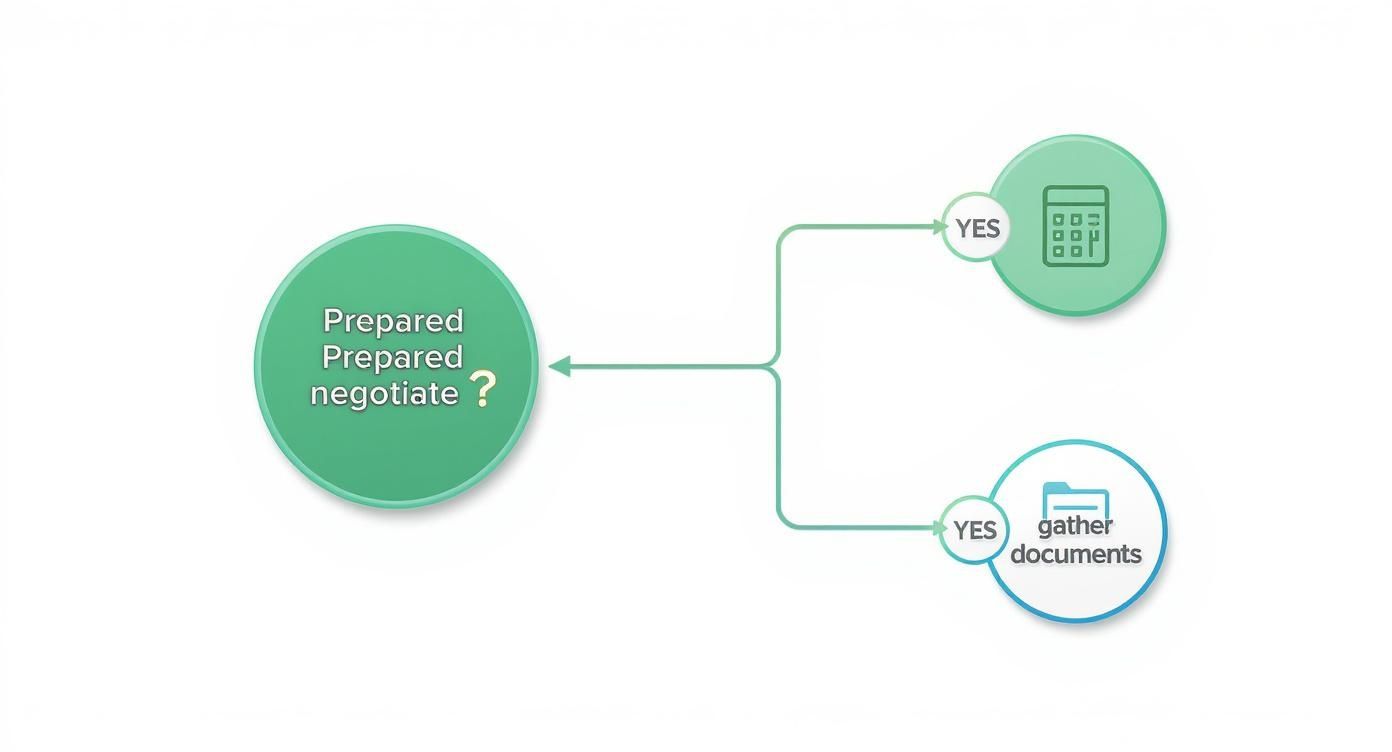
As you can see, it all begins with figuring out what went wrong, followed by the crucial work of getting your numbers straight and your paperwork in order.
The Power of a Lump-Sum Settlement
Now for a completely different kind of deal: the lump-sum settlement. With this strategy, you offer to pay a single, large amount—less than your total balance—and in return, the creditor agrees to forgive the rest of the debt and close the account.
Why would they do this? Because getting a guaranteed chunk of cash now is often better than trying to chase you for the full amount for months or years, which costs them time and money. A good starting point for an offer is often around 50% of what you owe, but the final number is always up for negotiation.
This approach works best if you’ve come into some unexpected money, like a tax refund, a small inheritance, or cash from selling something valuable.
Keep in mind that a settled debt will be noted on your credit report. The forgiven amount might also be considered taxable income by the IRS. For many people, though, the relief of wiping out a large debt for good is well worth these trade-offs.
Comparing Common Debt Negotiation Strategies
Choosing the right path forward can be tough. This table breaks down the main options to help you see which one might be the best fit for your unique financial situation.
| Negotiation Strategy | Best For | Potential Credit Impact | Typical Outcome |
|---|---|---|---|
| Payment Deferment or Forbearance | Short-term, temporary hardship (e.g., job loss, medical emergency) | Minimal to none, if the creditor agrees to not report missed payments | Payments are paused for 1-3 months; interest may still accrue. |
| Modified Payment Plan | Long-term affordability issues where you can still make consistent payments | Neutral to positive, as it shows a commitment to paying the debt | Monthly payment is lowered by extending the loan term. |
| Interest Rate Reduction | High-interest debts (like credit cards) that are hard to pay down | Neutral to positive, as it can help you pay off debt faster | The APR is lowered for a set period or for the life of the balance. |
| Lump-Sum Settlement | Old, delinquent debts and having access to a large sum of cash | Negative, as the account is marked “settled for less than full amount” | You pay a percentage (e.g., 40-60%) of the balance; the rest is forgiven. |
Each of these strategies serves a different purpose. A temporary pause is great for a hiccup, while a settlement is a more drastic step for a debt that’s become unmanageable. Reviewing your own budget and goals will make it clear which one to pursue.
Mastering the Negotiation Conversation

This is it. You’ve done the hard work of auditing your finances, gathering your documents, and understanding your options. Now it’s time to pick up the phone for the conversation that can genuinely change your financial future.
It’s natural to feel a bit intimidated, but remember this: approaching the call with a clear plan transforms a potentially stressful moment into a structured business discussion. Your goal is to be professional, firm, and fair—positioning yourself as a partner in solving a problem that affects both of you.
Setting the Right Tone from the Start
The first minute of the call sets the stage for everything that follows. You want to immediately establish that you’re serious, organized, and taking the initiative. It’s crucial to avoid launching into an emotional story right away. Instead, open the conversation with a calm, professional demeanor.
Start by clearly identifying yourself and your account number, then state the purpose of your call directly.
Here’s a simple, effective opening:
“Hello, my name is [Your Name], and my account number is [Your Account Number]. I’m calling today because I’m experiencing a financial hardship and want to proactively work with you to find a manageable solution for my account.”
This kind of opening immediately frames the conversation as a collaborative effort, not a confrontation. It signals to the representative that you’re taking responsibility and are ready to talk specifics.
Clearly Explaining Your Hardship
After stating your purpose, you’ll need to briefly explain why you can’t meet your original payment terms. This is where your documented hardship comes into play. The key is to be concise and factual, not emotional. You don’t need to share every private detail of your life.
Stick to the essential facts of your situation, whether it’s a job loss, a medical emergency, or a significant cut in income. Present it as a statement of fact, not an excuse.
Here are a few ways to phrase it:
- “Due to a recent layoff, my monthly income has been reduced by 40%, and I can no longer afford the current minimum payment.”
- “I’ve recently incurred significant, unexpected medical expenses that have impacted my ability to manage my existing financial obligations.”
- “My work hours were cut, and my budget is now focused solely on essential living costs. I’m calling to see what options are available to adjust my payment.”
By keeping your explanation direct, you maintain control of the conversation and guide it toward finding a solution rather than getting bogged down in the problem.
Making a Realistic and Confident Offer
This is the most critical part of the call. Based on the budget you created, you should have a specific, realistic number in your head that you know you can afford. Present this offer with confidence, grounding it in the financial reality you’ve already mapped out.
Whether you’re proposing a new monthly payment, a temporary forbearance, or a lump-sum settlement, be direct. State what you can do, not just what you can’t.
Key Takeaway: Never, ever make an offer you can’t honor. Agreeing to a payment plan you know is unsustainable will only land you back in this same situation a few months from now. It’s far better to get a “no” on an honest offer than a “yes” on an impossible one.
This isn’t just a hopeful strategy—it’s a common business practice. Research shows that around 60% of debt negotiation efforts result in a reduction of the amount owed. Successful settlements often land in the 45-60% range of the original balance. Creditors are frequently willing to negotiate because it’s more cost-effective for them to recover some of the debt than to spend a fortune on legal proceedings with no guarantee of success. For a closer look at these trends, you can explore a full debt negotiation market report.
Handling Objections and Steering the Conversation
It’s very unlikely the representative will accept your first offer without some discussion. You need to be ready for common objections or counteroffers. They might say they aren’t authorized to approve your request or that your offer is simply too low.
Don’t let this discourage you. It’s a completely normal part of the process.
- If they say “no”: Politely ask, “Is there a manager or someone in a specialized department I could speak with who might have more authority to discuss this?”
- If they counteroffer: Take a moment. Compare their offer to your budget. If it’s still too high, calmly explain why it won’t work. You can say, “I appreciate that offer, but based on my budget, the absolute maximum I can commit to is [Your Number].”
- If you feel pressured: Stay calm. You don’t have to agree to anything on the spot. It’s perfectly acceptable to say, “Thank you for that information. I need a moment to review my numbers to make sure I can honor that. Can I call you back?”
Your preparation is your anchor here. Because you know your budget inside and out, you can stand firm without being aggressive. Keep steering the conversation back to a solution that works for everyone. At the end of the day, an agreement you can actually fulfill is what the creditor wants, too.
Finalizing the Deal and Avoiding Common Pitfalls

After all the preparation and a tough conversation, hearing the creditor agree to your proposal is a massive relief. It’s a huge victory, but your work isn’t quite finished yet.
The steps you take next are just as critical as the negotiation itself. This is where you lock in the agreement and protect yourself from future headaches, ensuring the deal you just struck provides lasting financial relief.
The single most important rule here is simple but non-negotiable: get everything in writing before you send a single penny. A verbal agreement over the phone isn’t enough. It leaves too much room for misunderstandings or problems if the representative you spoke with leaves the company.
What Must Be in the Written Agreement
Once you have a verbal “yes,” immediately ask the creditor to send you a formal letter or email that details all the terms. Don’t make any payments until this document is in your hands and you’ve confirmed it matches your conversation perfectly.
This written confirmation is your proof of the new arrangement. It needs to clearly state several key pieces of information:
- The New Terms: The exact numbers must be listed, whether it’s a new monthly payment amount, a reduced interest rate, or a lump-sum settlement figure.
- Settlement Language: If you agreed to a settlement, the letter must explicitly say that your payment will satisfy the debt in full and that the remaining balance is forgiven.
- Credit Reporting Details: The agreement should specify how the account will be reported to the credit bureaus (e.g., “paid in full,” “settled for less than full amount”).
- Waiver of Legal Action: The document should confirm the creditor will cease all collection activities and waive their right to sue once you fulfill your end of the deal.
Go over this document with a fine-tooth comb. If even one detail is missing or incorrect, call the creditor right away to get a corrected version before you proceed.
Avoiding Common Post-Negotiation Mistakes
It’s easy to let your guard down after a successful call, but a few common mistakes can unravel all your hard work.
The biggest error I see is people relying on verbal promises alone. A friendly agent might assure you everything is taken care of, but without that written record, their promise is unenforceable. Always, always wait for the paperwork.
Another critical misstep is missing a payment on your newly negotiated plan. Sticking to the new agreement is essential to keep the deal intact. Missing even one payment could nullify the entire arrangement, putting you right back at square one.
Finally, don’t get blindsided by the tax implications of forgiven debt. It’s a detail that can have significant financial consequences if you aren’t prepared.
Understanding the Tax Implications of Forgiven Debt
Here’s something many people don’t realize: when a creditor forgives debt of $600 or more, the IRS often treats that forgiven amount as taxable income. This means the creditor will likely send you (and the IRS) a Form 1099-C, Cancellation of Debt.
Let’s say you settled a $5,000 credit card bill for $2,000. That $3,000 difference that was forgiven could be added to your taxable income for the year, resulting in a surprise tax bill you weren’t expecting.
However, there are exceptions. If you were insolvent—meaning your total debts were greater than the fair market value of your total assets—at the time the debt was canceled, you might not have to pay taxes on it. Because this can get complicated, it’s always a good idea to talk with a tax professional to understand your specific obligations after you finalize the deal.
When It’s Time to Call in the Pros
Learning to negotiate with your creditors is a powerful skill, but it’s just as important to know your limits. Sometimes, you’re just too far in to go it alone. Deciding to get professional help isn’t admitting defeat—far from it. It’s a smart, strategic decision to protect your financial future.
If you’re juggling multiple creditors, dealing with aggressive collection agencies, or just feel completely overwhelmed by the sheer amount of debt, it might be time to tag in an expert. When you’re stressed out and not making any real progress, that’s your cue.
Who Should You Call? Credit Counseling vs. Debt Settlement
Once you start looking, you’ll mainly run into two options: nonprofit credit counseling agencies and for-profit debt settlement companies. They sound similar, but their approaches are worlds apart. Knowing the difference is key to picking the right one for you.
- Nonprofit Credit Counseling Agencies: Think of these as your financial coaches. They focus on the big picture: budgeting, education, and managing your debt effectively. A certified counselor will sit down with you, go over everything, and help you build a realistic budget. They might suggest a Debt Management Plan (DMP), where you make one monthly payment to the agency, and they handle paying your creditors. The big win here is that they often negotiate lower interest rates, which can make a huge difference.
- Debt Settlement Companies: These are for-profit businesses with one primary goal: to negotiate a lump-sum payment with your creditors for less than what you actually owe. They do all the talking for you, which can be a massive weight off your shoulders if you find the negotiation process too intimidating.
The demand for these services has exploded right alongside consumer debt. The global debt settlement market is currently valued at around $9.6 billion and is expected to grow to $15 billion. This isn’t surprising when you see people wrestling with credit cards, personal loans, and medical bills. These firms often get debts reduced by 30-50% for their clients, proving that a structured, professional approach can deliver serious savings. You can dig into the numbers in the latest debt settlement market research.
The right choice really boils down to your end goal. Credit counseling helps you create a structured plan to pay everything back in full, just more manageably. Debt settlement aims to wipe the slate clean for a fraction of what you originally owed.
Watch Out for These Red Flags
Unfortunately, where there’s financial distress, there are scammers looking to take advantage. The debt relief industry has its share of bad actors, and you need to know how to spot them to avoid making a bad situation even worse.
Steer clear of any company that:
- Asks for Big Fees Upfront: A legitimate organization won’t ask for a ton of money before they’ve actually done anything for you. This is a massive warning sign.
- Guarantees They Can Erase Your Debt: No one can promise a specific outcome. Creditors don’t have to negotiate. Any company making these kinds of guarantees is being dishonest.
- Advises You to Stop Paying Creditors: Some shady outfits will tell you to stop paying your bills and pay them instead. This is terrible advice that will wreck your credit and could easily get you sued.
- Uses High-Pressure Sales Tactics: If they’re pressuring you to sign up on the spot, walk away. A reputable company will give you the time and space you need to review everything and make a clear-headed decision.
Getting through debt negotiation is a huge accomplishment, but the work isn’t over. Rebuilding your financial standing is the next crucial step. For a solid game plan, check out our guide on how to improve your credit score fast.
At Collapsed Wallet, our mission is to provide you with the clear, no-nonsense financial guidance you need to move forward. We firmly believe that with the right tools and a little support, you can conquer any financial challenge and build a more secure future. https://collapsedwallet.com

4 thoughts on “A Practical Guide on How to Negotiate with Creditors”