
Table of Contents
- 1. The Foundational Investment: Mastering Rice and Beans
- 2. Eggs as Primary Protein
- 3. Lentil-Based Dishes
- 4. Chicken Thighs and Budget Cuts
- 5. One-Pot and Sheet Pan Meals
- 6. Seasonal Produce and Sales Shopping
- 7. Bulk Buying and Pantry Staples
- 8. Slow Cooker and Budget Cuts
- 9. Breakfast-for-Dinner and Egg-Based Meals
- 10. Vegetarian and Plant-Based Budget Meals
- 10-Point Budget-Friendly Meals Comparison
- Integrating Your Meal Strategy into a Broader Financial Plan
This blog post may contain affiliate links. As an Amazon Associate I earn from qualifying purchases.
In the pursuit of financial stability and long-term freedom, every pound saved is a step forward. While many focus on large-scale investments or career changes, the cumulative power of mastering everyday expenses is often underestimated. Your grocery bill represents one of the most significant and flexible areas in your household budget. By strategically planning your food budget, you’re not just spending less; you’re actively redirecting funds towards your most important financial goals, whether that’s clearing debt, building an emergency fund, or accelerating your journey towards financial independence. This guide will explore 10 powerful financial strategies centered around budget friendly meals, demonstrating how small changes in your spending can lead to substantial gains for your wallet.
The aim of our blog is to provide valuable insights and practical tips to help readers manage their money more effectively. However, the information shared here is for general guidance and educational purposes only. It should not be regarded as professional financial advice. Any actions taken based on our content are entirely the responsibility of the reader, and we accept no liability for the outcomes of those actions. If you require financial advice tailored to your personal circumstances, we strongly recommend seeking assistance from a qualified financial adviser.
This comprehensive listicle moves beyond simple recipes. It provides a strategic framework for rethinking your food expenditure as a key component of your financial plan. We will detail specific, actionable approaches, from leveraging cost-effective protein sources like eggs and lentils to maximizing the value of bulk buying and seasonal produce. You’ll find practical examples, cost-per-serving insights, and tips for implementation that cater to different household sizes and dietary needs. By adopting these methods, you can systematically lower your food costs, freeing up capital to invest, save, or pay down liabilities, ultimately turning your daily meal budget into a powerful tool for building wealth and achieving financial autonomy.
1. The Foundational Investment: Mastering Rice and Beans
The combination of rice and beans is more than just a simple dish; it’s a foundational financial strategy for your grocery budget. This pairing creates a nutritionally complete protein, delivering essential amino acids, fiber, and carbohydrates at an exceptionally low cost per serving. Mastering this duo allows you to build dozens of satisfying, budget-friendly meals, drastically reducing your food expenditure and freeing up funds for other financial goals.

Why It’s a Top Financial Choice
The economic power of rice and beans lies in their low-cost bulk ingredients. A large bag of dried beans and rice can yield dozens of servings for the price of a single takeout meal. This approach is ideal for anyone looking to make a significant dent in their grocery spending, from students managing loans to families trying to build savings. The versatility means you won’t get bored; it can be the base for Mexican-inspired bowls, Caribbean-style dishes, or savory Indian curries.
Actionable Tips for Maximum Savings
- Buy Dried Beans: Opt for dried beans over canned. They are significantly cheaper and lack the added sodium. A one-pound bag of dried black beans can yield about six to seven cups when prepared.
- Leverage Technology: Dedicate one day a week to prepare a large pot of beans and rice. A simple rice cooker or an electric pressure cooker can make this a hands-off, energy-efficient process. Portion them into reusable containers for quick lunches and dinners.
- Flavor on a Budget: Elevate the taste without raising the cost. Sautéed onions and garlic form a delicious base. Use basic, cost-effective spices like cumin, paprika, and chili powder for variety. For those looking to feed a family, you can find more inspiration for meals on a budget for 4 on collapsedwallet.com.
2. Eggs as Primary Protein
Shifting your financial focus in the kitchen to eggs as a primary protein source is a powerful money-saving strategy. Eggs offer an incredible return on investment, delivering high-quality protein, essential vitamins, and minerals for a fraction of the cost of meat or fish. Integrating eggs more frequently into your meal plan directly lowers your grocery bill, allowing you to reallocate those savings toward debt reduction, investments, or building your emergency fund. They are the ultimate versatile ingredient for budget friendly meals.

Why It’s a Top Financial Choice
The economic advantage of eggs is undeniable. A dozen eggs can often be purchased for just a few dollars, providing at least six individual servings of protein. This low cost per serving makes them a superior choice for anyone meticulously tracking their food spending to achieve financial goals. Their quick preparation time also saves a valuable non-monetary resource: your time. A satisfying, protein-packed meal like a frittata can be ready in under 20 minutes, preventing costly last-minute takeout orders.
Actionable Tips for Maximum Savings
- Buy in Bulk: Larger cartons of eggs, such as 18-packs or 24-packs, almost always offer a lower price per egg. If you see a good sale, stock up.
- Batch Prep for Efficiency: Hard-boil a dozen eggs at the beginning of the week. This gives you an instant, high-protein snack or a quick addition to salads and sandwiches, preventing impulse buys when hunger strikes.
- Create “Use-It-Up” Meals: Use eggs to combat food waste. An omelet or frittata is the perfect vehicle for using up leftover vegetables, cheese, or cooked meats that might otherwise be thrown away, stretching your food budget even further.
3. Lentil-Based Dishes
Lentils are an exceptionally powerful tool for mastering your food budget, offering a potent combination of nutrition, affordability, and culinary flexibility. These small legumes prepare much faster than dried beans, requiring minimal effort while packing a significant amount of protein, fiber, and essential nutrients. Incorporating lentils is a direct strategy for lowering grocery costs, as they can replace expensive proteins in many dishes and form the base of countless satisfying, budget friendly meals.
Why It’s a Top Financial Choice
The financial advantage of lentils is their incredibly low cost-per-serving. A one-pound bag of dried lentils costs very little and can be the foundation for numerous meals, from hearty soups and stews to rich pasta sauces and savory fillings. This makes them a cornerstone ingredient for anyone looking to reduce their food spending and redirect that cash flow toward savings, debt repayment, or other financial goals. Their versatility combats meal fatigue, allowing you to create diverse dishes like Indian dal or lentil bolognese without straining your budget.
Actionable Tips for Maximum Savings
- Stock a Variety: Keep different types of lentils (brown, green, and red) on hand. Brown and green lentils hold their shape well, perfect for soups and salads, while red lentils break down and are ideal for creating creamy curries and sauces.
- Embrace Batch Preparation: Prepare a large batch of lentils at the beginning of the week. They store well in the refrigerator for several days and can be frozen in portions for quick, effortless meals later on.
- Simple Flavor Infusion: You don’t need expensive ingredients to make lentils delicious. Simmering them with a bay leaf, a few cloves of garlic, and an onion can build a deep, savory flavor base at a minimal cost.
- Create Complete Proteins: Combine prepared lentils with rice (a 2:1 ratio of rice to lentils is a good starting point) to form a complete protein, providing all essential amino acids without the high cost of meat.
4. Chicken Thighs and Budget Cuts
Shifting your protein focus from premium cuts to more economical options like chicken thighs is a powerful financial adjustment. Chicken thighs and other budget cuts offer significantly better value than breast meat, providing more flavor and moisture at a lower cost per pound. Embracing these cuts allows you to incorporate high-quality protein into your meal plan without straining your budget, turning a simple grocery choice into a strategic step toward your financial freedom.
Why It’s a Top Financial Choice
The financial benefit of choosing chicken thighs lies in the significant price difference compared to chicken breasts, often saving you 30-50% per pound. This saving accumulates quickly, especially for families or individuals who consume chicken regularly. These cuts are also more forgiving to prepare, reducing food waste from overcooked, dry meals. This simple swap is an effective way to lower your grocery bill, directly contributing to your savings goals or debt reduction plan. A versatile base for many budget friendly meals, thighs can be used in stews, curries, and sheet pan dinners.
Actionable Tips for Maximum Savings
- Buy Whole: Purchase a whole chicken and learn basic preparation from online tutorials. This is almost always the cheapest way to buy chicken, and it provides breasts, thighs, wings, and a carcass for making free, nutritious bone broth.
- Freeze in Bulk: Take advantage of sales by buying larger, family-sized packs of thighs or drumsticks. Use a vacuum sealer or freezer-safe bags to portion them and lock in the low price for future meals.
- Master High-Heat Roasting: For a crispy, delicious exterior that rivals more expensive cuts, roast chicken thighs on a sheet pan at a high temperature (around 400°F or 200°C). This method is quick, easy, and yields impressive results.
- Save the Bones: Never throw away chicken bones. Collect them in a bag in your freezer and, once you have enough, simmer them with vegetable scraps to create a rich, homemade stock that costs virtually nothing.
5. One-Pot and Sheet Pan Meals
Adopting one-pot and sheet pan meal strategies is a powerful financial tactic disguised as a kitchen convenience. This approach streamlines your meal preparation, consolidating an entire meal onto a single pan or into one pot, which directly translates into savings. By minimizing the use of multiple burners or pans, you reduce utility costs and significantly cut down on cleanup time, freeing up valuable hours that can be directed toward other financial goals or side hustles.
Why It’s a Top Financial Choice
The economic efficiency of one-pot and sheet pan meals extends beyond just saving on your energy bill. This method encourages the use of simple, whole ingredients like seasonal vegetables, affordable proteins, and starches, all prepared together. This minimizes food waste, as you can easily use up leftover produce before it spoils. For anyone looking to reduce their grocery spending and make their food budget work harder, these budget friendly meals offer a high return on investment with minimal effort.
Actionable Tips for Maximum Savings
- Strategize Ingredient Placement: Place ingredients that need longer preparation times, like potatoes or carrots, on the pan first. Add quicker-cooking items like broccoli or fish partway through to ensure everything is perfectly prepared without waste.
- Uniform Sizing is Key: Cut all your ingredients to a similar size. This promotes even preparation, preventing undercooked or burnt pieces that might get thrown away, ensuring you get the most out of every purchase.
- Embrace Parchment Paper: Lining your sheet pan with parchment paper virtually eliminates cleanup. This small investment saves water, soap, and most importantly, your time, which is a valuable non-renewable asset. For more strategies on how to incorporate these meals into a larger financial strategy, you can explore the principles of budget-friendly meal planning on collapsedwallet.com.
6. Seasonal Produce and Sales Shopping
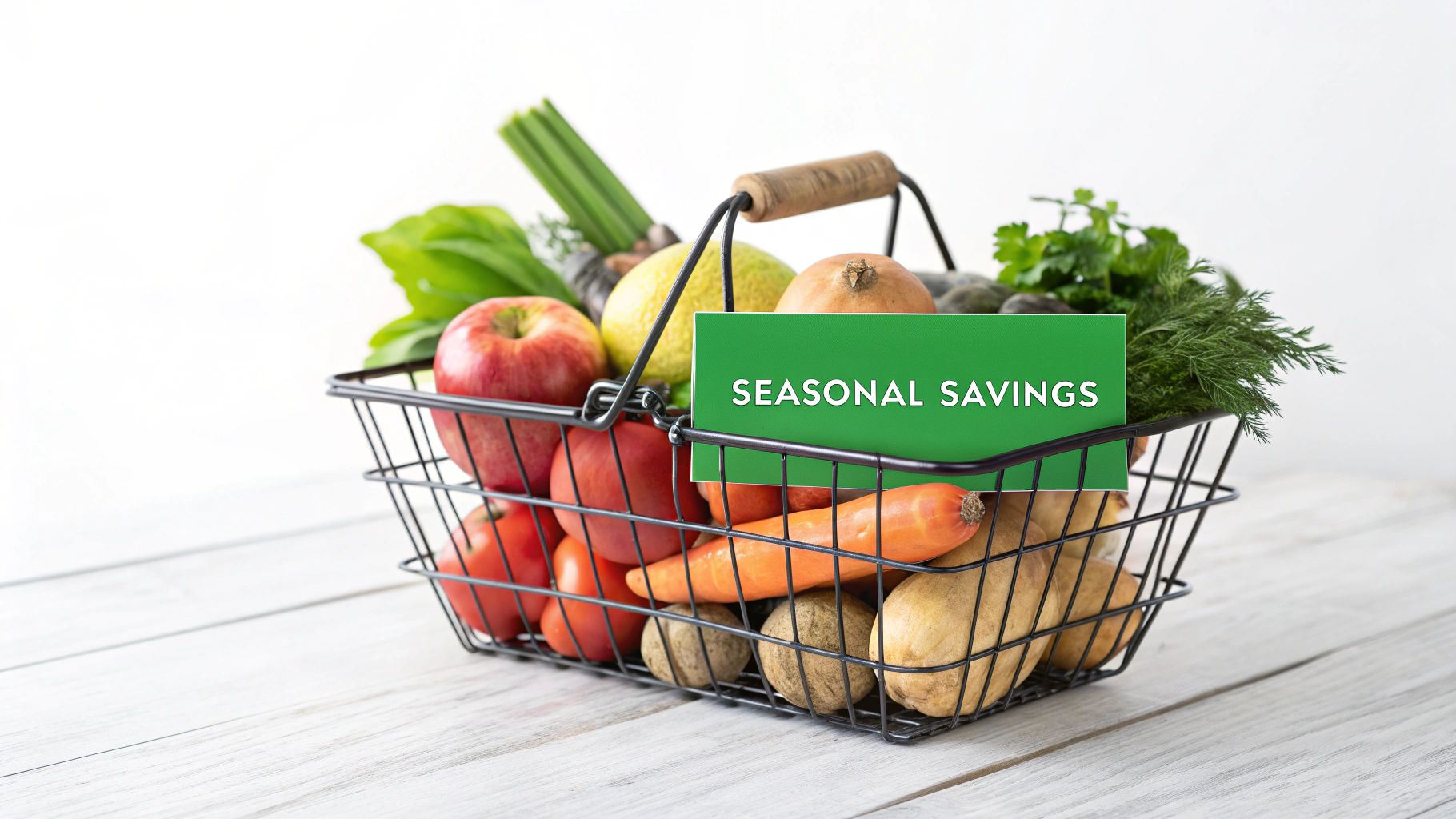
Aligning your grocery shopping with nature’s calendar is a powerful financial tactic for building budget friendly meals. By purchasing fruits and vegetables that are in season and on sale, you tap into the laws of supply and demand, often reducing produce costs by 30-50%. This strategy transforms your shopping trip from a reactive chore into a proactive financial decision, allowing you to enjoy fresh, high-quality ingredients without straining your budget.
Why It’s a Top Financial Choice
The financial advantage of this method is rooted in simple economics. When produce is in season, it is abundant and costs less to grow, harvest, and transport, leading to lower prices for the consumer. Planning meals around weekly grocery flyers magnifies these savings. For example, crisp apples in the fall or ripe tomatoes in the summer are not only at their peak flavor but also their lowest price point. This approach ensures your food budget goes further, providing nutritional variety while supporting your long-term financial stability.
Actionable Tips for Maximum Savings
- Plan Around Flyers: Before you create your shopping list, review your local grocery store’s weekly ads online or through their app. Build your meal plan based on what produce is on the front page.
- Embrace Frozen Produce: When a fresh item is out of season and expensive, its frozen counterpart is a fantastic alternative. Frozen fruits and vegetables are picked at peak ripeness and are often cheaper and just as nutritious.
- Visit Farmer’s Markets Strategically: Arrive at your local farmer’s market near closing time. Vendors are often willing to offer discounts on remaining produce to avoid taking it home.
- Preserve the Harvest: When you find a great deal on seasonal items like berries or zucchini, buy in bulk. Preserve the excess by freezing, canning, or dehydrating it for use in the off-season. This can be incorporated into an inexpensive healthy grocery list on collapsedwallet.com.
7. Bulk Buying and Pantry Staples
Building a well-stocked pantry is a powerful financial tactic, not just a lifestyle convenience. By purchasing non-perishable items like grains, legumes, oils, and spices in bulk, you drastically lower the per-unit cost of your food. This strategic approach minimizes frequent, expensive grocery trips and empowers you to create countless budget friendly meals from a core inventory, providing stability against fluctuating food prices and unexpected expenses.
Why It’s a Top Financial Choice
The financial leverage of a stocked pantry comes from the economics of scale. Buying a 25-pound bag of flour or a gallon of olive oil from a warehouse club like Costco or Sam’s Club can cut your costs by 30-50% compared to smaller supermarket packages. This strategy transforms your pantry into a financial asset, allowing you to “shop from home” and avoid impulse buys. A well-stocked pantry is your defense against budget-breaking takeout orders on busy nights, ensuring a low-cost, satisfying meal is always within reach.
Actionable Tips for Maximum Savings
- Calculate Per-Unit Cost: Before buying in bulk, always calculate the price per ounce, pound, or unit. Use your phone’s calculator to ensure the larger package truly offers a better value.
- Proper Storage is Key: Protect your investment. Store bulk items in airtight containers to prevent spoilage from pests, moisture, and air. This ensures your savings aren’t lost to waste.
- Practice FIFO (First-In, First-Out): Rotate your stock by moving older items to the front and placing new purchases behind them. This simple organizational habit prevents food from expiring before you can use it.
- Share the Savings: If a bulk quantity is too large for your household, consider splitting the purchase and cost with a friend or family member. This allows you to access bulk pricing without the risk of waste.
8. Slow Cooker and Budget Cuts
Investing in a slow cooker is a strategic financial move for anyone serious about reducing their grocery bills. This appliance excels at transforming tough, inexpensive cuts of meat into tender, flavorful dishes through a low-and-slow process. This method not only makes budget-friendly proteins more appealing but also develops deep, complex flavors, allowing you to create premium-tasting meals from economical ingredients and significantly lower your cost per meal.
Why It’s a Top Financial Choice
The slow cooker’s primary financial benefit is unlocking the value of cheaper proteins like beef chuck, pork shoulder, and chicken thighs. These cuts are often a fraction of the price of premium steaks or breasts but become incredibly tender after hours of gentle preparation. This appliance also promotes batch preparation, allowing you to create large quantities of stews, chilis, or pulled meats that can be portioned and frozen. This saves both time and money, preventing last-minute, expensive takeout orders and ensuring you always have a budget friendly meal on hand.
Actionable Tips for Maximum Savings
- Sear Meat First: For a deeper, richer flavor, briefly brown your meat in a pan before adding it to the slow cooker. This step is optional but adds a professional touch to your dishes.
- Layer Ingredients Strategically: Place root vegetables like potatoes and carrots at the bottom, as they take longer to prepare. Place the meat on top.
- Embrace Low and Slow: For the toughest, most economical cuts of meat, always opt for the ‘low’ setting for 8-10 hours. This ensures maximum tenderness and flavor development.
- Batch and Freeze: Double your recipe and freeze half for a future meal. Slow-cooked dishes like chili, beef stew, and pulled pork freeze exceptionally well, giving you a return on your initial investment.
9. Breakfast-for-Dinner and Egg-Based Meals
Adopting a “breakfast-for-dinner” strategy is a savvy financial move that leverages some of the most consistently low-cost, high-protein ingredients in the grocery store: eggs. By shifting traditionally morning-centric meals to the evening, you can create satisfying and nutritious dinners for a fraction of the cost of conventional meat-based options. This approach is a powerful tool for reducing your weekly food spend, allowing you to reallocate those savings toward debt repayment or investment goals.
Why It’s a Top Financial Choice
The financial brilliance of egg-based meals lies in their incredible cost-to-nutrition ratio. A dozen eggs can form the protein base for multiple dinners, offering a significant saving compared to chicken, beef, or fish. This makes it one of the most effective budget friendly meals for anyone needing to drastically cut costs without sacrificing health. These meals are also incredibly fast to prepare, saving you time and reducing the temptation to spend on expensive takeout after a long day. From a simple scramble to a more elaborate frittata, the versatility is endless.
Actionable Tips for Maximum Savings
- Load Up on Vegetables: Use eggs as a vehicle for leftover vegetables. Sautéing wilting spinach, peppers, or onions and adding them to a frittata or omelet prevents food waste and boosts nutritional value.
- Create Complete Meals: Pair egg dishes with other low-cost staples to make them more filling. Serve scrambled eggs with whole-grain toast and a side of black beans, or create breakfast burritos with eggs, beans, and a sprinkle of cheese in a whole-wheat tortilla.
- Master the Frittata: A frittata is the ultimate budget dinner. It requires just a few eggs, a splash of milk, and any leftover prepared vegetables or cheese you have on hand. It’s a perfect strategy to clean out the fridge before your next grocery trip.
- Explore Global Flavors: Keep things interesting without high costs. Try making Shakshuka, a delicious dish of eggs poached in a simple, spiced tomato and pepper sauce. Most of the ingredients are inexpensive pantry staples.
10. Vegetarian and Plant-Based Budget Meals
Adopting a vegetarian or plant-based eating strategy is a powerful financial move that naturally reduces food costs. By centering meals around affordable vegetables, grains, and legumes, you eliminate one of the most significant grocery expenses: meat. This approach provides complete nutrition and incredible dietary flexibility, making it one of the most sustainable financial and health strategies for creating budget friendly meals.
Why It’s a Top Financial Choice
The core financial benefit of plant-based eating is the dramatic cost difference between animal protein and plant protein. A pound of dried lentils or beans costs a fraction of what a pound of beef or chicken does, yet it can be the foundation for numerous satisfying dishes, from hearty curries to black bean and sweet potato tacos. This dietary shift isn’t about restriction; it’s about reallocating your food budget from high-cost items to a diverse range of nutrient-dense, low-cost ingredients, directly impacting your ability to save or pay down debt.
Actionable Tips for Maximum Savings
- Stock Up on Bulk Staples: Purchase dried beans, lentils, chickpeas, and whole grains like oats and brown rice in bulk. These shelf-stable items form the inexpensive backbone of your meals.
- Embrace Affordable Produce: Build your meals around low-cost, high-yield vegetables like cabbage, carrots, onions, potatoes, and seasonal greens.
- Make Broth from Scraps: Save vegetable peels and ends (onions, carrots, celery) in a bag in the freezer. Once full, simmer them in water to create a free, flavorful vegetable broth for soups and stews.
- Explore Global Cuisines: Many international food traditions, particularly Indian, Mediterranean, and Asian, have mastered delicious and inherently budget-friendly vegetarian dishes that offer endless variety.
10-Point Budget-Friendly Meals Comparison
| Item | Complexity 🔄 | Resources & Prep ⚡ | Expected Outcomes 📊⭐ | Ideal Use Cases 💡 | Key Advantages ⭐ |
|---|---|---|---|---|---|
| Rice and Beans | Moderate 🔄 — requires planning | Very low cost ⚡ — pantry staples, long shelf life | High 📊⭐ — complete protein, high fiber, very filling | Weekly meal prep, vegetarian protein base, low-budget households | Extremely affordable, versatile, low waste |
| Eggs as Primary Protein | Low 🔄 — simple, quick preparation | Low cost ⚡ — needs refrigeration; minimal equipment | High 📊⭐ — complete protein, nutrient dense, satiating | Quick meals, breakfast-for-dinner, protein boost in recipes | Fast, versatile, nutrient-rich per dollar |
| Lentil-Based Dishes | Low-Moderate 🔄 — short prep time, require seasoning | Low cost ⚡ — no soaking, shelf-stable, prepares quickly | High 📊⭐ — high protein/fiber, iron-rich, filling | Soups, curries, fast plant-based mains | Fast to prepare, nutritious, budget-friendly |
| Chicken Thighs and Budget Cuts | Moderate 🔄 — some prep and longer prep times | Moderate cost ⚡ — cheaper than breast, needs fridge/freezer | High 📊⭐ — flavorful, protein-rich, yields stock | Roasts, stews, family dinners, bone-broth production | Better flavor/value than breast; multi-use bones |
| One-Pot and Sheet Pan Meals | Low 🔄 — simple workflow, timing coordination | Low equipment needs ⚡ — single pan/pot, energy-efficient | Good 📊⭐ — saves time/energy, reduces waste | Weeknight dinners, family meals, efficient meal prep | Minimal cleanup, efficient, flexible ingredient swaps |
| Seasonal Produce & Sales Shopping | Moderate 🔄 — requires planning and flexibility | Variable ⚡ — can save 30–50%, needs market/grocery effort | High 📊⭐ — fresher, higher nutrient density at lower cost | Stretch grocery budget, diversify meals, preserve seasonally | Large cost savings, better nutrition, supports local farms |
| Bulk Buying & Pantry Staples | Low-Moderate 🔄 — upfront planning and rotation | Moderate upfront cost ⚡ — storage required, lowers unit price | High 📊⭐ — consistent long-term savings, food security | Long-term meal planning, emergency supplies, frequent cooks | Substantial per-unit savings, convenience, stability |
| Slow Cooker & Budget Cuts | Low 🔄 — hands-off but long prep time | Low cost ⚡ — uses cheap cuts, energy-efficient appliance | High 📊⭐ — tender, flavorful results; great for batch cooking | Set-and-forget dinners, stews, pulled meats, freezer meals | Turns tough cuts into tender meals; minimal active time |
| Breakfast-for-Dinner (Egg-Based) | Low 🔄 — very quick and forgiving | Very low cost ⚡ — few ingredients, minimal equipment | Good 📊⭐ — fast, balanced, kid-friendly | Fast weeknights, using leftovers, simple family meals | Speed, simplicity, low cost; familiar crowd-pleaser |
| Vegetarian & Plant-Based Budget Meals | Moderate 🔄 — requires protein pairing and recipe variety | Low cost ⚡ — relies on grains/legumes, pantry staples | High 📊⭐ — lowers grocery bill, health benefits, satiety | Meatless days, health-focused budgets, sustainable eating | Cost-effective, health-promoting, wide ingredient variety |
Integrating Your Meal Strategy into a Broader Financial Plan
We have journeyed through a comprehensive collection of ideas, from the humble power of rice and beans to the strategic use of slow cookers and seasonal produce. This article has laid out ten distinct avenues for creating delicious, satisfying, and incredibly budget friendly meals. Yet, the true value of these strategies extends far beyond the kitchen table. Mastering your food budget is not merely about saving a few pounds on groceries; it is a foundational step toward achieving lasting financial stability and freedom.
The aim of our blog is to provide valuable insights and practical tips to help readers manage their money more effectively. However, the information shared here is for general guidance and educational purposes only. It should not be regarded as professional financial advice. Any actions taken based on our content are entirely the responsibility of the reader, and we accept no liability for the outcomes of those actions. If you require financial advice tailored to your personal circumstances, we strongly recommend seeking assistance from a qualified financial adviser.
From Savings on the Plate to Gains in Your Portfolio
The core takeaway is this: every pound saved on food is a pound that can be allocated to more powerful financial instruments. Think of your grocery budget not as a simple expense line, but as an active part of your investment strategy. The discipline and planning required to consistently create budget friendly meals are the very same skills needed to manage debt, build an emergency fund, and grow your wealth.
Consider the tangible impact. If meal planning and strategic shopping save you £150 per month, that translates to £1,800 a year. This is not insignificant capital. It represents a sum that could be used for:
- Accelerating Debt Repayment: A single £1,800 overpayment on a mortgage could save you thousands in interest over the life of the loan.
- Building an Emergency Fund: This amount could form the bedrock of a safety net, protecting you from unexpected financial shocks and high-interest debt.
- Kickstarting Investments: That £1,800 could be your initial investment into a diversified, low-cost ETF, putting the power of compound interest to work for your future.
By viewing your food spending as a flexible financial asset, you unlock a powerful lever for wealth creation. The small, consistent choices you make in the supermarket directly fuel your larger financial goals.
Actionable Next Steps: Turning Knowledge into Habit
Information is only powerful when it is applied. To truly benefit from the concepts we have discussed, it is crucial to move from reading to doing. Here are your next steps to integrate these habits into your life:
- Conduct a Spending Audit: Before you can optimize, you must understand. Use a budgeting app or a simple spreadsheet to track your food-related spending for one full month. This includes groceries, takeaways, and dining out. The results might surprise you.
- Start with One Strategy: Do not try to implement everything at once. Choose one or two ideas from this article that seem most manageable. Perhaps it is dedicating Sunday to batch-preparing a large lentil soup or committing to one “breakfast-for-dinner” night per week.
- Automate Your Savings: Once you have a handle on your new, lower food budget, treat the difference as a real saving. Set up an automatic transfer to move the saved amount from your current account to a dedicated savings or investment account each month. This action makes the financial benefit tangible and prevents the saved money from being absorbed by other lifestyle expenses.
Adopting a strategy for budget friendly meals is about creating a positive feedback loop. The initial effort leads to financial savings, which in turn motivates you to maintain the habit, leading to even greater financial progress. It is a powerful cycle that builds momentum toward escaping financial worries and achieving the freedom you deserve.
Ready to take control of every aspect of your spending and accelerate your journey to financial freedom? The principles of planning and tracking that make budget friendly meals successful are the same ones we champion at Collapsed Wallet. Our platform provides the tools you need to see the big picture, track your progress, and make every pound work harder for you.
