
Table of Contents
- 1. Dried Beans and Lentils
- 2. Whole Grains and Rice in Bulk
- 3. Eggs
- 4. Seasonal and Frozen Vegetables
- 5. Canned Goods (Beans, Tomatoes, Fish)
- 6. Store Brand and Generic Products
- 7. Oats and Breakfast Cereals (Bulk)
- 8. Potatoes and Root Vegetables
- 9. Cooking Oils and Butter (Bulk Purchasing)
- 10. Flour, Sugar, and Baking Staples (Bulk)
- Top 10 Budget-Friendly Groceries Comparison
- Building Your Financial Future, One Grocery Trip at a Time
This blog post may contain affiliate links. As an Amazon Associate I earn from qualifying purchases.
Mastering your household budget is a cornerstone of achieving financial freedom, and it begins with one of the most significant and controllable expenses: groceries. By strategically building your shopping cart around a core set of high-value, low-cost staples, you can unlock hundreds, even thousands, of dollars in annual savings. This isn’t about extreme couponing or sacrificing nutrition; it’s about making smart, informed choices that align with your long-term financial goals.
A well-planned, budget friendly grocery list acts as a powerful tool, enabling you to reduce waste, avoid impulse purchases, and redirect your hard-earned money towards paying down debt, investing, or building an emergency fund. This guide provides a comprehensive roundup of the 10 most impactful items to anchor your grocery list, transforming a routine chore into a proactive step towards financial security.
The aim of our blog is to provide valuable insights and practical tips to help readers manage their money more effectively. However, the information shared here is for general guidance and educational purposes only. It should not be regarded as professional financial advice. Any actions taken based on our content are entirely the responsibility of the reader, and we accept no liability for the outcomes of those actions. If you require financial advice tailored to your personal circumstances, we strongly recommend seeking assistance from a qualified financial adviser.
The foundation of any successful grocery budget is a solid plan. A list without a purpose is just a collection of items, but a list derived from a financial strategy is a powerful tool. To truly optimize your supermarket spending, it’s essential to plan ahead and create your shopping list based on your financial goals. Learning how to master your grocery list from recipes is the first step towards smarter shopping and bigger savings. In this article, we’ll dive into the specific items that offer the best value, providing the building blocks for countless cost-effective financial decisions. Get ready to transform your finances, starting right in the supermarket aisle.
1. Dried Beans and Lentils
The cornerstone of any truly effective budget friendly grocery list is the inclusion of shelf-stable, high-value staples. Dried beans (like black, pinto, and kidney beans) and lentils are arguably the champions in this category. For a mere $1-2 per pound when purchased in bulk, these nutritional powerhouses offer an unparalleled return on investment for your food budget, directly impacting your ability to allocate funds toward other financial goals.
The aim of our blog is to provide valuable insights and practical tips to help readers manage their money more effectively. However, the information shared here is for general guidance and educational purposes only. It should not be regarded as professional financial advice. Any actions taken based on our content are entirely the responsibility of the reader, and we accept no liability for the outcomes of those actions. If you require financial advice tailored to your personal circumstances, we strongly recommend seeking assistance from a qualified financial adviser.
Why They Are a Financial Win
A single one-pound bag of dried beans, costing around $2, can yield between 6 to 8 servings. Compare this to canned beans, which often cost nearly the same for just 1.5 servings. This cost-per-serving difference is substantial and compounds over time, freeing up significant cash in your weekly budget. A $4 five-pound bag of black beans can be the foundation of a strategy to reduce reliance on more expensive proteins and help you hit your savings targets. This principle is so effective that nonprofits and schools frequently use bulk lentils and beans in their food programs to maximize their operational funds.
Actionable Tips for Maximum Savings
To fully leverage the financial benefits of dried legumes, follow these practical steps:
- Buy from Bulk Bins: Purchasing from the bulk section of your grocery store can reduce costs by 30-50% compared to pre-packaged bags. You only pay for the product, not the marketing and packaging.
- Invest in Airtight Storage: Protect your investment. Store dried beans and lentils in airtight containers to prevent moisture and pests, ensuring they last for years and eliminating waste.
- Batch Prepare and Freeze: Dedicate an hour on the weekend to prepare a large batch. Portion the prepared beans into freezer-safe bags or containers for quick, ready-to-use components, saving both time and money during busy weeks. A slow cooker or pressure cooker can make this process almost entirely hands-off.
2. Whole Grains and Rice in Bulk
Alongside legumes, bulk grains like brown rice, oats, and barley form the financial foundation of a cost-effective pantry. These items are fundamental to a budget friendly grocery list, providing a versatile base that can significantly lower your food costs. Purchasing them in bulk, often for as little as $0.60 to $1.50 per pound, dramatically lowers your food costs, creating more room in your budget to build savings or pay down debt.
The aim of our blog is to provide valuable insights and practical tips to help readers manage their money more effectively. However, the information shared here is for general guidance and educational purposes only. It should not be regarded as professional financial advice. Any actions taken based on our content are entirely the responsibility of the reader, and we accept no liability for the outcomes of those actions. If you require financial advice tailored to your personal circumstances, we strongly recommend seeking assistance from a qualified financial adviser.
Why They Are a Financial Win
The cost-per-serving value of bulk grains is exceptional. A single cup of dried rice, which costs just pennies, expands to yield three or more cooked cups. This volume makes it an incredibly efficient way to manage your food budget. For example, a 25-pound bag of rice from a warehouse club like Costco can cost under $15, providing the base for hundreds of servings. This strategy is so effective that food banks and aid organizations prioritize bulk grains to maximize the impact of their limited funds, demonstrating a proven model for financial efficiency in food purchasing.
Actionable Tips for Maximum Savings
To transform these staples into a powerful financial tool, implement the following strategies:
- Shop at Ethnic Markets: Asian, Indian, and Middle Eastern grocery stores often sell rice and other grains in large bags (10-50 pounds) at prices 20-40% lower than standard supermarkets.
- Invest in Proper Storage: Protect your bulk purchase from pests and spoilage by storing grains in food-grade buckets with oxygen absorbers. This one-time investment ensures your grains last for years, preventing waste and safeguarding your initial savings.
- Prepare in Batches: Use a rice cooker for perfectly prepared grains with minimal effort. Prepare a large batch weekly and freeze it in meal-sized portions for quick access, reducing the temptation to buy more expensive convenience foods.
3. Eggs
Often overlooked for its simplicity, the humble egg is a financial powerhouse on any budget friendly grocery list. Representing one of the most cost-effective and nutrient-dense proteins available, a dozen eggs can typically be purchased for $2 to $4. This breaks down to a mere $0.17 to $0.33 per serving, a price point that makes achieving protein goals significantly more affordable and helps keep your grocery spending aligned with your financial objectives.

The aim of our blog is to provide valuable insights and practical tips to help readers manage their money more effectively. However, the information shared here is for general guidance and educational purposes only. It should not be regarded as professional financial advice. Any actions taken based on our content are entirely the responsibility of the reader, and we accept no liability for the outcomes of those actions. If you require financial advice tailored to your personal circumstances, we strongly recommend seeking assistance from a qualified financial adviser.
Why They Are a Financial Win
The financial advantage of eggs lies in their low per-unit cost and high versatility. A single egg provides 6 grams of high-quality protein, which can serve as a protein source for pennies. Compare this to other protein sources, where the cost per gram of protein can be five to ten times higher. For example, popular budget bloggers consistently highlight eggs as a key ingredient for drastically reducing food costs without sacrificing nutrition. This versatility extends their financial impact; using eggs in frittatas or fried rice can stretch more expensive ingredients, helping you manage a budget for a family of 4 and freeing up cash for savings or debt repayment.
Actionable Tips for Maximum Savings
To integrate eggs into your financial strategy and maximize their value, consider these direct actions:
- Buy from Warehouse Clubs: Stores like Costco often price a dozen eggs well below standard grocery store prices, sometimes as low as $2.50. Buying in larger quantities here provides the lowest per-egg cost.
- Store for Longevity: Maximize the 3 to 4-week shelf life by storing eggs in their original carton on a main shelf, not the door. This protects them and maintains a consistent temperature, preventing waste and saving money.
- Batch Prepare for Efficiency: Hard-boil a dozen eggs at the start of the week for a ready-to-use protein source. This prevents you from spending money on expensive convenience snacks and keeps your budget simple and effective.
4. Seasonal and Frozen Vegetables
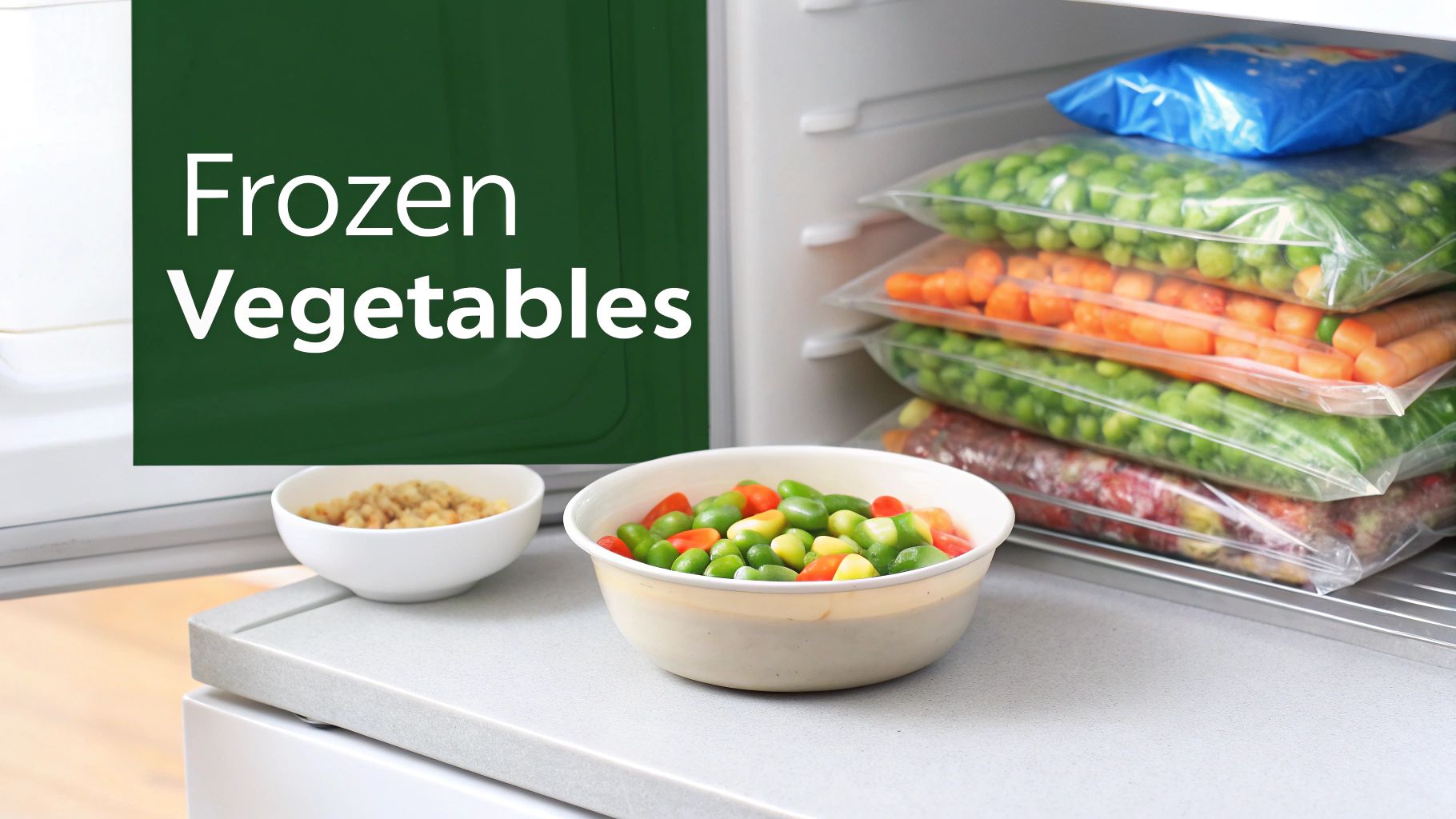
Strategically choosing your produce is a high-impact tactic for reducing your grocery bill and strengthening your overall financial position. Focusing on seasonal and frozen vegetables allows you to slash produce costs by 50-70% compared to buying fresh, off-season options. This deliberate purchasing strategy ensures you get maximum nutritional value for your money, freeing up capital that can be redirected toward savings, debt repayment, or other long-term financial goals.
The aim of our blog is to provide valuable insights and practical tips to help readers manage their money more effectively. However, the information shared here is for general guidance and educational purposes only. It should not be regarded as professional financial advice. Any actions taken based on our content are entirely the responsibility of the reader, and we accept no liability for the outcomes of those actions. If you require financial advice tailored to your personal circumstances, we strongly recommend seeking assistance from a qualified financial adviser.
Why They Are a Financial Win
The financial case for frozen and seasonal vegetables is compelling due to simple supply and demand economics. In-season produce is abundant and cheaper to harvest and transport, passing savings directly to you. For example, fresh strawberries in June can be 60% less expensive than in December. Frozen vegetables take this a step further; they are picked at peak ripeness and flash-frozen, locking in nutrients while eliminating spoilage and food waste, which is a major drain on household budgets. A one-pound bag of frozen broccoli might cost $1.50 year-round, while its fresh counterpart can spike to over $4 a pound in winter, a price difference that significantly impacts your weekly grocery spend.
Actionable Tips for Maximum Savings
To integrate this cost-saving strategy into your shopping routine, apply these practical tips:
- Prioritize the Freezer Aisle: For items you use frequently, like broccoli, peas, or spinach, make frozen your default choice. You avoid the risk of spoilage and benefit from a consistently low price, a key part of successful budget-friendly meal planning.
- Buy In-Season and Freeze: When fresh produce is at its cheapest and most abundant, buy extra and freeze it yourself. Blanch vegetables before freezing to preserve their color and texture for months.
- Check the Unit Price: Always compare the price per pound or ounce. Large, 5-pound bags of mixed vegetables from warehouse stores often offer the best value, dramatically lowering the cost per serving.
- Stick to Plain Varieties: Pre-seasoned or sauced frozen vegetables come with a significant markup. Buy plain vegetables and season them yourself to control both the cost and the ingredients.
5. Canned Goods (Beans, Tomatoes, Fish)
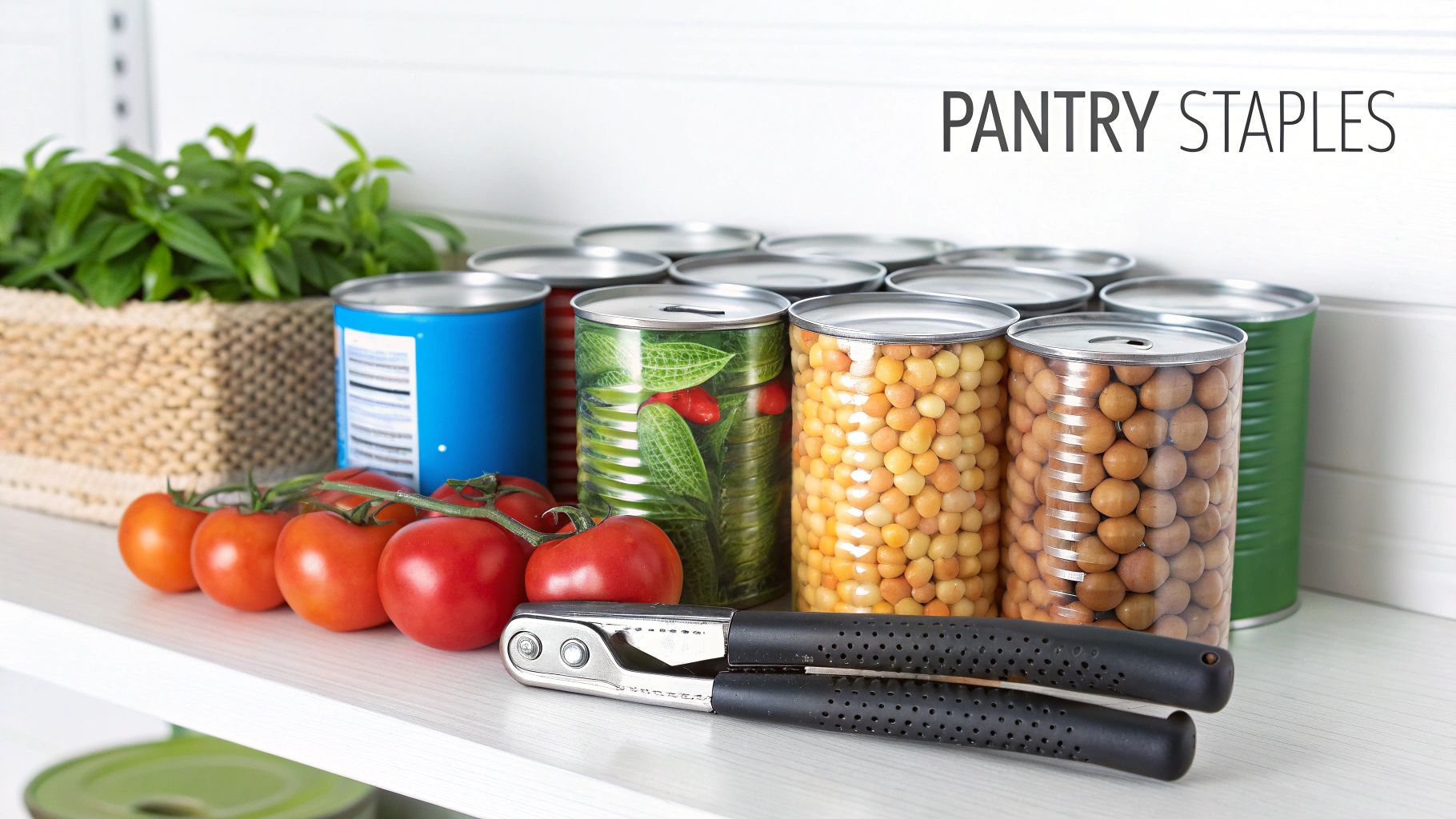
A well-stocked pantry is a powerful tool for financial stability, and canned goods are its backbone. Items like beans, diced tomatoes, and fish (tuna, salmon) offer unparalleled convenience and shelf stability, forming a critical part of any budget friendly grocery list. By leveraging the long shelf life and low cost of these goods, you can create a financial buffer against unexpected expenses, reduce impulse grocery trips, and ensure you always have the foundation for a budget-friendly plan, protecting your budget from unplanned takeout orders.
The aim of our blog is to provide valuable insights and practical tips to help readers manage their money more effectively. However, the information shared here is for general guidance and educational purposes only. It should not be regarded as professional financial advice. Any actions taken based on our content are entirely the responsibility of the reader, and we accept no liability for the outcomes of those actions. If you require financial advice tailored to your personal circumstances, we strongly recommend seeking assistance from a qualified financial adviser.
Why They Are a Financial Win
The primary financial advantage of canned goods is their ability to shield your budget from price volatility and food waste. A can of tuna, often around $2, provides a complete protein source that is significantly cheaper than its fresh counterpart, which can exceed $15 per pound. This strategic substitution allows you to meet nutritional needs while redirecting substantial funds toward savings or debt reduction goals. Furthermore, stocking up during sales (e.g., canned beans for $0.50 instead of $0.99) locks in a low price, insulating you from future inflation and providing a reliable food supply that prevents costly last-minute purchases.
Actionable Tips for Maximum Savings
To transform your pantry into a financial asset, implement these targeted strategies:
- Strategic Stockpiling: Monitor weekly flyers and digital coupons for sales on canned goods. When prices hit a low point, purchase enough to last until the next major sale cycle, typically every 6-8 weeks.
- Embrace Store Brands: Generic or store-brand canned products offer the same nutritional value as name brands but often cost 20-30% less. This simple switch generates consistent savings on every grocery bill.
- Practice FIFO (First-In, First-Out): Organize your pantry by placing newly purchased cans at the back and older ones at the front. This rotation system ensures you use items before their best-by dates, eliminating waste and protecting your financial investment in your food supply.
- Check Unit Pricing: Don’t assume a larger can is always cheaper. Compare the price per ounce or gram, listed on the shelf tag, to identify the true best value and maximize your purchasing power.
6. Store Brand and Generic Products
One of the most powerful strategies for building a budget friendly grocery list is systematically choosing store brand or generic products over their name-brand equivalents. Often produced by the same manufacturers using identical ingredients, these products offer significant savings of 20-40% simply by cutting out marketing and advertising expenses. This direct price reduction allows you to redirect funds from your grocery budget toward more critical financial goals, such as debt reduction or building savings.
The aim of our blog is to provide valuable insights and practical tips to help readers manage their money more effectively. However, the information shared here is for general guidance and educational purposes only. It should not be regarded as professional financial advice. Any actions taken based on our content are entirely the responsibility of the reader, and we accept no liability for the outcomes of those actions. If you require financial advice tailored to your personal circumstances, we strongly recommend seeking assistance from a qualified financial adviser.
Why They Are a Financial Win
The financial impact of switching to generics is immediate and substantial. For example, a box of store-brand cereal might cost $2.50, while its name-brand counterpart is priced at over $5. This 50% savings on a single item, when applied across your entire shopping cart, compounds into hundreds or even thousands of dollars in annual savings. Retailers like Costco have built their entire business model on this principle; their Kirkland Signature brand alone can save a family $500-$1,000 annually. This isn’t about sacrificing quality, as numerous blind taste tests, including those by Consumer Reports, show store brands frequently outperform well-known names.
Actionable Tips for Maximum Savings
To integrate this powerful tactic into your financial plan, apply these strategic steps:
- Start with Staples: Begin by swapping out pantry basics like flour, sugar, canned goods, and spices. These items have minimal ingredient variation, making the switch virtually unnoticeable in taste but very noticeable in your budget.
- Compare Unit Prices: Always check the unit price on the shelf tag. This calculation breaks down the cost per ounce or per item, providing clear evidence that store brands almost always offer better value.
- Test Before Committing: While many generics are identical, taste is personal. Buy a single unit of a new store-brand item to test it before purchasing in bulk, ensuring you don’t waste money on a product your family dislikes.
- Leverage Loyalty Programs: Combine the inherent savings of generics with store loyalty programs. Many retailers offer exclusive digital coupons and rewards specifically for their own brand lines, further amplifying your financial gains. To discover more ways to cut down your food expenses, explore our detailed guide on how to save money on groceries.
7. Oats and Breakfast Cereals (Bulk)
A key strategy for constructing a budget friendly grocery list that actively supports your financial goals is to focus on low-cost, high-impact breakfast options. Bulk oats and other cereals, such as rolled oats or basic granola, are quintessential examples. Costing as little as $0.10 to $0.30 per serving, these shelf-stable items provide a substantial nutritional return, helping you start the day strong without draining your cash reserves, which can then be redirected toward savings or debt reduction.
The aim of our blog is to provide valuable insights and practical tips to help readers manage their money more effectively. However, the information shared here is for general guidance and educational purposes only. It should not be regarded as professional financial advice. Any actions taken based on our content are entirely the responsibility of the reader, and we accept no liability for the outcomes of those actions. If you require financial advice tailored to your personal circumstances, we strongly recommend seeking assistance from a qualified financial adviser.
Why They Are a Financial Win
The cost difference between buying oats in bulk versus pre-packaged, branded options is a clear win for your wallet. A one-pound bag of bulk rolled oats can cost around $0.50, while the same amount in a branded container can easily cost $2.50 or more. This represents a savings of up to 80% on a staple food item. Over a year, a family that switches from daily sugary cereals to bulk oats can save hundreds of dollars, directly impacting their ability to build an emergency fund or invest for the future. The satiety provided by oats also reduces the need for expensive mid-morning snacks.
Actionable Tips for Maximum Savings
To transform this simple pantry item into a powerful savings tool, integrate these financial habits:
- Prioritize Bulk Bins: Always check the bulk bins at grocery stores or co-ops first. This simple act can cut your cost per pound by 50-70% compared to branded boxes, as you are paying for the product, not the marketing overhead.
- Embrace Overnight Oats: Prepare breakfast for the week in advance by making overnight oats. This not only saves precious morning time but also prevents impulsive, expensive breakfast purchases on busy days.
- Avoid Pre-Sweetened Varieties: Packaged, sweetened oatmeal packets carry a significant price premium for added sugar. Buy plain oats and add your own inexpensive flavor enhancers like a spoonful of honey, peanut butter, or frozen berries.
- Invest in Proper Storage: Protect your bulk purchase by storing oats in airtight containers. This prevents them from going stale, eliminating food waste and ensuring you get full value from every dollar spent.
8. Potatoes and Root Vegetables
No budget friendly grocery list is complete without its most dependable and cost-effective workhorses: potatoes and other root vegetables. Items like potatoes, sweet potatoes, carrots, and onions are incredibly affordable, often costing just $0.10 to $0.30 per pound when bought in larger quantities. Their long shelf life and nutritional density provide a solid foundation for many budget strategies, ensuring you can create filling, energy-sustaining dishes that directly support your financial savings goals.
The aim of our blog is to provide valuable insights and practical tips to help readers manage their money more effectively. However, the information shared here is for general guidance and educational purposes only. It should not be regarded as professional financial advice. Any actions taken based on our content are entirely the responsibility of the reader, and we accept no liability for the outcomes of those actions. If you require financial advice tailored to your personal circumstances, we strongly recommend seeking assistance from a qualified financial adviser.
Why They Are a Financial Win
The cost-per-serving of root vegetables offers a staggering return on investment for your food budget. A ten-pound bag of potatoes, which can often be found for $3-5, yields between 30 to 40 servings. This breaks down to around $0.10 per serving, a price point that is nearly impossible to beat. This low cost allows you to build plans that reduce reliance on more expensive ingredients, which frees up a significant portion of your grocery funds for saving, investing, or debt repayment. This strategy is so effective that many ultra-frugal financial plans rely heavily on potatoes as a core calorie source.
Actionable Tips for Maximum Savings
To maximize the financial impact of including root vegetables in your grocery plan, consider these practical strategies:
- Buy in Bulk Bags: Always opt for the larger 5- or 10-pound bags from discount grocers or warehouse clubs. Purchasing potatoes individually can cost upwards of $0.50 each, drastically reducing their value.
- Master Proper Storage: Protect your bulk purchase by storing root vegetables in a cool, dark, and well-ventilated area, like a pantry or basement. Ideal temperatures are between 45-50°F. This prevents sprouting and spoilage, eliminating food waste and protecting your investment.
- Prep for the Future: If you notice potatoes beginning to sprout, simply remove the sprouted sections. To preserve a large bag before it turns, you can chop and freeze excess potatoes, making them ready to be added directly to future budget-friendly dishes.
9. Cooking Oils and Butter (Bulk Purchasing)
A frequently overlooked yet highly effective strategy for a budget friendly grocery list involves strategically purchasing cooking essentials in larger quantities. Core ingredients like cooking oils (vegetable, olive) and butter are foundational to many recipes, and buying them in bulk can slash your per-unit cost significantly. This approach shifts these items from recurring weekly expenses to infrequent, high-value purchases, directly enhancing your cash flow and freeing up capital for savings or debt repayment goals.
The aim of our blog is to provide valuable insights and practical tips to help readers manage their money more effectively. However, the information shared here is for general guidance and educational purposes only. It should not be regarded as professional financial advice. Any actions taken based on our content are entirely the responsibility of the reader, and we accept no liability for the outcomes of those actions. If you require financial advice tailored to your personal circumstances, we strongly recommend seeking assistance from a qualified financial adviser.
Why They Are a Financial Win
The cost savings from bulk purchasing cooking fats are immediate and substantial. For example, a large jug of olive oil from a warehouse club like Costco might cost $0.08 per ounce, while the same quality oil in a standard grocery store bottle can easily exceed $0.20 per ounce. This represents a savings of over 50%. Similarly, buying a five-pound block of butter at Sam’s Club can be 25-40% cheaper per pound than purchasing individual sticks. These savings accumulate, allowing you to reallocate those funds toward higher-priority financial objectives, like building an emergency fund or investing.
Actionable Tips for Maximum Savings
To capitalize on the financial benefits of bulk oils and butter, implement these practical strategies:
- Prioritize Warehouse Clubs: Stores like Costco, BJ’s, and Sam’s Club consistently offer the lowest unit prices on these staples. A single bulk purchase can last for several months.
- Store for Longevity: Protect your investment from spoilage. Store large containers of oil in a cool, dark pantry away from the stove. Transfer bulk butter into smaller, airtight containers and freeze what you won’t use within a few weeks.
- Decant for Daily Use: Keep a smaller, refillable bottle of oil and a butter dish on hand for daily convenience. This prevents the large container from being opened frequently, preserving freshness and preventing waste.
- Compare Sale Prices: Before committing to a bulk purchase, check for sales at your local grocery store. Occasionally, a deep discount on a smaller size can rival warehouse pricing, offering a chance to stock up without a membership.
10. Flour, Sugar, and Baking Staples (Bulk)
Purchasing core baking ingredients like flour and sugar in bulk is a powerful strategy for anyone serious about creating a budget friendly grocery list. Instead of buying small, frequently marked-up packages, this approach focuses on acquiring large quantities at a significantly lower cost per unit. This simple shift from retail to bulk buying can reduce the cost of these essentials by over 50%, directly bolstering your savings and freeing up capital for investments or debt reduction.
The aim of our blog is to provide valuable insights and practical tips to help readers manage their money more effectively. However, the information shared here is for general guidance and educational purposes only. It should not be regarded as professional financial advice. Any actions taken based on our content are entirely the responsibility of the reader, and we accept no liability for the outcomes of those actions. If you require financial advice tailored to your personal circumstances, we strongly recommend seeking assistance from a qualified financial adviser.
Why They Are a Financial Win
The cost savings from buying baking staples in bulk are immediate and substantial. For example, a 25-pound bag of all-purpose flour from a warehouse club might cost $8-10, while a standard 5-pound bag from a grocery store often costs $4-5. The bulk purchase drops the price per pound from nearly $1 down to about $0.40. Preparing your own food already cuts costs on items like bread by 50-80% compared to store-bought versions; using bulk ingredients amplifies these savings. A loaf of homemade bread can cost as little as $0.75, a clear financial victory over a $3-4 store-bought equivalent, helping you reach your financial freedom goals faster.
Actionable Tips for Maximum Savings
To integrate this cost-cutting method into your financial plan, consider these practical steps:
- Shop at Warehouse Clubs: Stores like Costco or Sam’s Club are prime sources for bulk flour and sugar. Also, check local restaurant supply stores or bulk food retailers for competitive pricing.
- Invest in Proper Storage: Protect your bulk purchase by storing flour and sugar in large, food-grade airtight containers. This prevents spoilage and pests, ensuring zero waste and maximizing your investment.
- Batch Prepare and Freeze: Dedicate a few hours one day a month to prepare bread, muffins, or cookies. Freeze the finished products for convenient, low-cost options throughout the month, eliminating the need for expensive convenience purchases.
Top 10 Budget-Friendly Groceries Comparison
| Item | 🔄 Implementation (complexity/time) | ⚡ Resources & cost (storage/equipment) | ⭐📊 Expected outcomes (quality & impact) | Ideal use cases | 💡 Key advantages (brief tip) |
|---|---|---|---|---|---|
| Dried Beans and Lentils | Moderate: overnight soak + 1–2 hr prep (or pressure cooker to reduce) | $0.15–0.25/serving; shelf life 10+ years; minimal equipment (pot/Instant Pot) | ⭐⭐⭐⭐⭐ — High protein (15–20g/cup); can cut protein costs ~70% 📊 | Bulk planning, vegetarian protein, food programs | Versatile, extremely cheap, long‑term storage; batch prepare & freeze |
| Whole Grains and Rice in Bulk | Low: simple preparation 20–45 min | $0.10–0.20/cooked serving; white rice years, whole grains 6–12 mo; minimal equipment | ⭐⭐⭐⭐ — Sustained energy; foundation for <$2/day plans 📊 | Staple carbs, meal bases, bulk planning | Cheapest carbs, long shelf life; store FIFO and use rice cooker |
| Eggs | Very low: 5–15 min prep | $0.17–0.33/egg; refrigerate 3–4 weeks; requires fridge space | ⭐⭐⭐⭐⭐ — Complete protein (6g/egg); large monthly savings (~$100+/mo) 📊 | Quick budget options, baking, high-protein breakfasts | Nutrient-dense and fast; buy in bulk/warehouse for best price |
| Seasonal & Frozen Vegetables | Very low: ready-to-use; thawing optional | $1–3/lb (frozen); shelf 8–12 months in freezer; needs freezer space | ⭐⭐⭐⭐ — ~90–95% nutrition vs fresh; reduces veg cost $50–80/mo 📊 | Budget-friendly dishes, year‑round produce supply | Low waste, cost-effective; buy plain frozen and check sodium |
| Canned Goods (Beans, Tomatoes, Fish) | Minimal: heat & serve | $0.25–0.50/serving; shelf 3–5+ years; pantry storage | ⭐⭐⭐⭐ — Reliable nutrition; canned proteins 50–70% cheaper 📊 | Emergency stock, quick options, pantry backbone | Buy on sale, choose no‑salt added, rinse beans to cut sodium |
| Store Brand & Generic Products | Low: shopping strategy (compare unit prices) | 20–40% savings vs name brands; widely available; no special storage | ⭐⭐⭐⭐ — Comparable quality in many staples; saves $100–200/mo 📊 | Everyday staples across categories | Start with basics (flour, canned goods); use loyalty programs |
| Oats & Bulk Breakfast Cereals | Low to moderate: prep 5–30 min (overnight option) | $0.10–0.25/serving; shelf 6–12 months; airtight containers advised | ⭐⭐⭐⭐ — High fiber (8g+), keeps full; saves $30–50/mo per person 📊 | Cheap breakfasts, overnight oats, baking add-ins | Buy rolled oats in bulk; flavor with fruit/peanut butter |
| Potatoes & Root Vegetables | Low: simple prep; prep 10–60 min depending | $0.05–0.15/serving; store cool 2–4 weeks (longer in cool storage) | ⭐⭐⭐⭐ — Filling carbs, nutrient-dense; lowers plan cost $0.25–0.50/serving 📊 | Hearty sides, budget dishes, bulk plans | Ultra‑affordable and versatile; store in cool, ventilated place |
| Cooking Oils & Butter (Bulk) | Low: purchase & store, monitor shelf life | 30–50% cost savings; oils 1–2 yrs, butter 6–9 months; pantry/fridge space | ⭐⭐⭐⭐ — Essential for food prep/flavor; saves $10–20/mo 📊 | Regular food prep, frying, baking | Buy from warehouse clubs; store oils dark/cool to avoid oxidation |
| Flour, Sugar & Baking Staples (Bulk) | Moderate: prep skills helpful; pest-proof storage required | $0.50–1.50/lb; long shelf life (sugar indefinite); bulky storage | ⭐⭐⭐⭐ — Home prep saves 50–80% vs store; major monthly savings 📊 | Home baking, batch prep, financial planning | Use airtight containers, freeze flour for longer life; batch prepare |
Building Your Financial Future, One Grocery Trip at a Time
You’ve just explored the ultimate framework for a budget friendly grocery list, a blueprint designed not just to fill your pantry but to fundamentally reshape your financial trajectory. We’ve broken down the power of ten core staples: from the humble yet potent dried bean and lentil to the long-lasting value of bulk grains, potatoes, and baking essentials. This isn’t just a shopping list; it’s a strategic tool for wealth creation.
The aim of our blog is to provide valuable insights and practical tips to help readers manage their money more effectively. However, the information shared here is for general guidance and educational purposes only. It should not be regarded as professional financial advice. Any actions taken based on our content are entirely the responsibility of the reader, and we accept no liability for the outcomes of those actions. If you require financial advice tailored to your personal circumstances, we strongly recommend seeking assistance from a qualified financial adviser.
From Groceries to Growth: The Core Takeaway
The most critical insight to internalize is that mastering your grocery budget creates a powerful financial surplus. Every dollar saved by choosing store-brand oats over a premium label, or by opting for seasonal vegetables instead of expensive out-of-season produce, is a dollar that can be put to work for you. This is the essence of building financial freedom: transforming small, consistent savings into significant long-term assets.
Consider the practical application. A family saving even just $150 per month by diligently applying these principles unlocks an extra $1,800 per year. This isn’t just “found money”; it’s capital that can be deployed with intent.
Key Insight: A disciplined grocery strategy is not about deprivation. It’s about strategic resource allocation that empowers you to redirect funds from consumption towards investment, debt reduction, and wealth-building activities.
Your Actionable Next Steps to Financial Freedom
To translate this knowledge into tangible results, here are your immediate next steps. Don’t just read this article; implement it.
- Conduct a Pantry Audit: Before your next shopping trip, take a complete inventory of what you already have. Identify which of the ten core staples are missing and which you have in excess. This prevents duplicate purchases and reduces waste, immediately cutting costs.
- Digitize Your List & Track Your Spending: Use a budgeting app or even a simple spreadsheet to create your new budget friendly grocery list. As you shop, track your spending against your old habits. Seeing the tangible savings in real-time is a powerful motivator to stay the course. This data becomes your roadmap for future financial decisions.
- Allocate Your Savings Immediately: The moment you see the savings from your grocery bill, decide where that money will go. Will it be an extra payment on a high-interest credit card? A deposit into your emergency fund? Or a contribution to a low-cost ETF? By giving every saved dollar a job, you solidify the link between your grocery habits and your long-term financial goals, escaping the cycle of living paycheck to paycheck.
The Bigger Picture: Your Grocery List as a Financial Lever
Embracing this approach is a foundational step toward escaping financial worries. The principles of planning, tracking, and optimizing costs that you apply to your grocery shopping are the very same principles that govern successful debt management, investing, and retirement planning. By mastering this one area of your budget, you are building the skills and discipline needed to conquer your larger financial challenges.
This list is more than a guide; it’s a declaration of your commitment to financial independence. It represents a conscious choice to take control, to stop letting small, unmanaged expenses dictate your financial reality. Each shopping trip becomes a victory, a tangible step forward on your path to building a secure and prosperous future, free from financial anxiety.
Ready to take control and make every dollar count? The principles in this article are the foundation, and Collapsed Wallet is the tool that brings them to life. Our platform is designed to help you track your spending, identify savings opportunities, and strategically allocate your money toward your biggest financial goals.
Start building your financial freedom with Collapsed Wallet today.
