
Table of Contents
- 1. The 50/30/20 Budgeting Rule
- 2. Automated Savings and Pay-Yourself-First Strategy
- 3. Zero-Based Budgeting
- 4. The 24-Hour Rule and Delayed Purchase Strategy
- 5. The Envelope or Sinking Fund Method
- 6. Review Mortgage and Loan Overpayments
- 7. Subscription Audit and Elimination
- 8. Debt Snowball and Debt Avalanche Methods
- 9. Negotiation and Bill Reduction Strategy
- 10. Side Hustle and Income Diversification
- 11. Strategic Use of Technology for Savings
- 12. Expense Tracking and Budget Monitoring Systems
- 12 Savings Strategies Comparison
- From Saving to Thriving: Your Next Financial Steps
This blog post may contain affiliate links. As an Amazon Associate I earn from qualifying purchases.
In a world of rising costs and financial uncertainty, taking control of your money has never been more crucial. This isn’t about extreme penny-pinching or giving up everything you enjoy. Instead, it’s about building smart, sustainable habits that put you in the driver’s seat of your financial future. Whether you’re aiming to build an emergency fund, pay off debt, or invest for the long term, the journey begins with effective saving strategies. We’ve compiled a comprehensive list of powerful ways to save money that go beyond the obvious, offering actionable steps to help you build wealth and achieve lasting financial peace of mind. Let’s explore the methods that will transform your relationship with money.
This guide moves beyond generic advice to provide a blueprint you can implement immediately. We will break down proven systems like the 50/30/20 budget, automated savings, and debt-reduction tactics such as the Debt Snowball method. You will discover how to audit subscriptions, negotiate bills, and use technology to track every pound, giving you total command over your cash flow.
Each strategy is designed to be practical, whether you are a student, managing a family budget, or a small business owner aiming to cut operating costs. For a broader perspective on various saving methods, you might also explore these 10 ways to save money. Our goal is to equip you with a diverse toolkit of financial habits that lead to tangible results and a more secure future.
1. The 50/30/20 Budgeting Rule
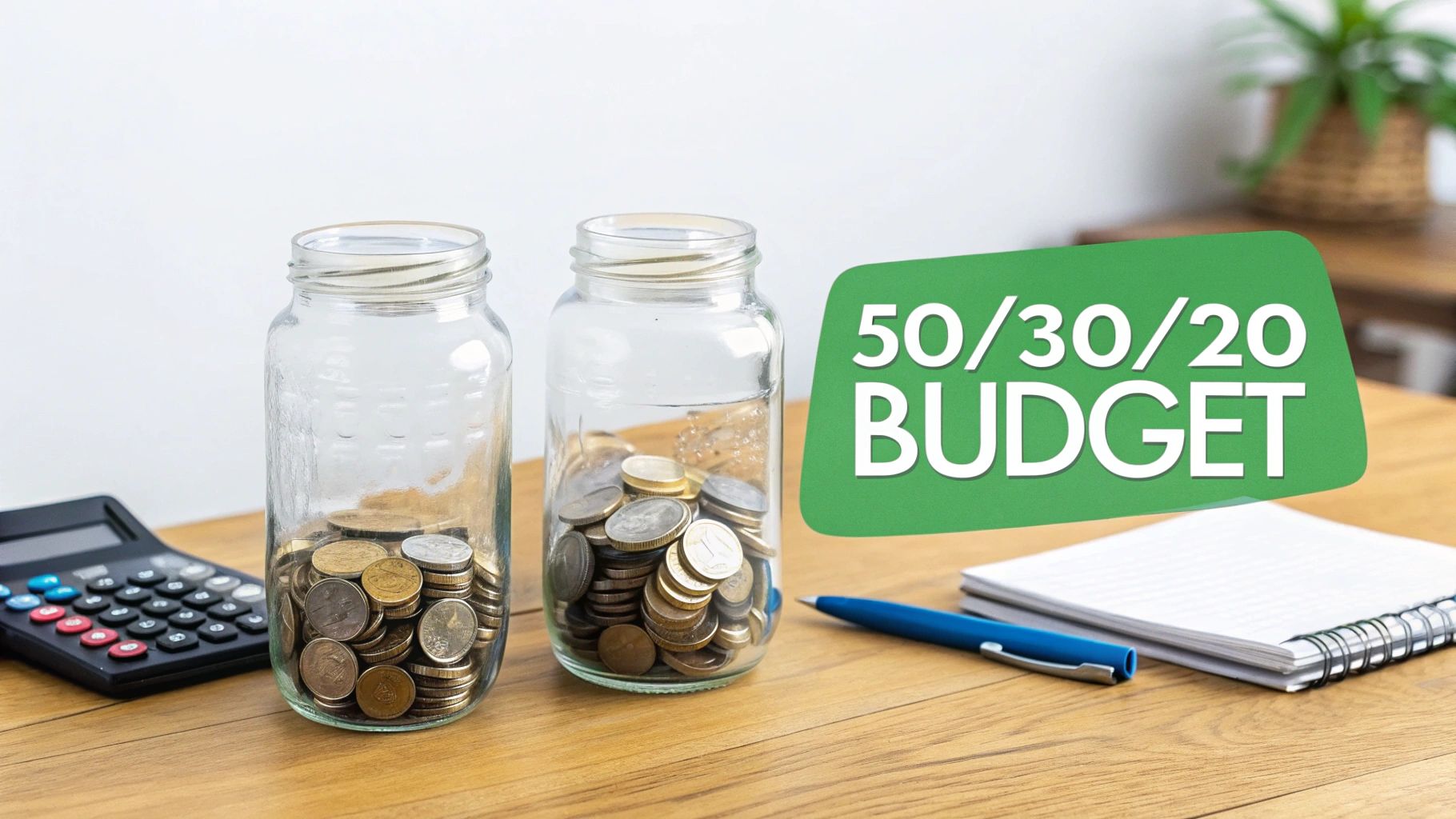
The 50/30/20 rule is a foundational budgeting framework designed to simplify money management. It provides a straightforward way to save money by allocating your after-tax income into three distinct categories. This method removes the complexity of detailed line-item budgeting, offering a clear path toward financial goals and escaping financial worries.
The aim of our blog is to provide valuable insights and practical tips to help readers manage their money more effectively. However, the information shared here is for general guidance and educational purposes only. It should not be regarded as professional financial advice. Any actions taken based on our content are entirely the responsibility of the reader, and we accept no liability for the outcomes of those actions. If you require financial advice tailored to your personal circumstances, we strongly recommend seeking assistance from a qualified financial adviser.
How It Works
This proportional approach organizes your finances to balance responsibilities with personal enjoyment and future planning. It creates clear spending boundaries, helping you avoid overspending while ensuring progress on savings and debt reduction.
- 50% for Needs: This slice covers essential living expenses. Think housing (rent/mortgage), utilities, groceries, transportation, and insurance.
- 30% for Wants: This is for discretionary spending that enhances your lifestyle, such as dining out, hobbies, entertainment, and travel.
- 20% for Savings & Debt: The final portion is dedicated to building your financial future. This includes contributions to emergency funds, retirement accounts (like pensions or investments in ETFs), and extra payments toward high-interest debt.
Quick Tip: If your “Needs” category exceeds 50%, it’s a clear signal to re-evaluate core expenses like housing or transportation to align with your financial goals.
Implementation Steps
- Calculate Your After-Tax Income: Start with the net amount you receive each month after taxes and other deductions.
- Track Current Spending: Use an app like Mint or YNAB for one month to see where your money is actually going.
- Allocate and Adjust: Apply the 50/30/20 percentages to your income and compare them to your current spending. Gradually adjust your habits to align with these targets.
- Review Quarterly: Life changes. Revisit your budget every few months to ensure it still reflects your income and priorities.
2. Automated Savings and Pay-Yourself-First Strategy
The “pay-yourself-first” strategy is a powerful approach to saving money that prioritizes your financial goals above all other expenses. Instead of saving what’s left after spending, you treat savings as a non-negotiable bill. By automating this process, you remove the need for daily discipline and ensure consistent progress toward wealth building, a critical step on the path to financial freedom.
The aim of our blog is to provide valuable insights and practical tips to help readers manage their money more effectively. However, the information shared here is for general guidance and educational purposes only. It should not be regarded as professional financial advice. Any actions taken based on our content are entirely the responsibility of the reader, and we accept no liability for the outcomes of those actions. If you require financial advice tailored to your personal circumstances, we strongly recommend seeking assistance from a qualified financial adviser.
How It Works
This method uses automatic transfers to move a predetermined amount of money from your checking account to your savings or investment accounts as soon as you get paid. This simple action transforms saving from an afterthought into a fixed expense, similar to your mortgage, effectively forcing you to live on the remaining amount.
- Priority Savings: Your savings goals are funded before you have a chance to spend the money elsewhere.
- Effortless Consistency: Automation eliminates the temptation to skip saving, ensuring you steadily build wealth over time.
- Goal-Oriented: It allows you to set up separate automated transfers for different objectives, such as an emergency fund, a down payment, or retirement investing.
Quick Tip: Open a high-yield savings account at a separate bank for your automated transfers. Making the money slightly harder to access reduces the temptation for impulse withdrawals.
Implementation Steps
- Determine Your Savings Amount: Decide on a realistic amount or percentage to save from each paycheck, even if it’s just a small sum to start.
- Set Up Automatic Transfers: Log in to your online banking portal and schedule recurring transfers from your checking to your savings account. Time these for the day after your payday.
- Explore Other Automation Tools: Use fintech apps for micro-savings, which round up purchases and save the change automatically.
- Increase Contributions Annually: Every time you get a pay raise, increase your automated savings amount. This helps you avoid lifestyle inflation and accelerate your financial goals.
3. Zero-Based Budgeting
Zero-based budgeting is a detailed method where every dollar of income is assigned a specific job before the month begins. This powerful technique forces intentional spending by ensuring your income minus your expenses equals zero, eliminating the “leftover” money that often gets spent without purpose. This approach provides one of the most effective ways to save money by maximizing control over your finances and accelerating your journey to financial freedom.
The aim of our blog is to provide valuable insights and practical tips to help readers manage their money more effectively. However, the information shared here is for general guidance and educational purposes only. It should not be regarded as professional financial advice. Any actions taken based on our content are entirely the responsibility of the reader, and we accept no liability for the outcomes of those actions. If you require financial advice tailored to your personal circumstances, we strongly recommend seeking assistance from a qualified financial adviser.
How It Works
This method requires you to create a fresh budget from scratch each month, giving every dollar a role in your financial plan. By allocating all your income to expenses, debt repayment, and savings, you gain a crystal-clear understanding of your cash flow and can aggressively pursue financial goals, from accelerating debt payoff to boosting investments.
- Assign Every Dollar: All income is allocated to a category. This includes fixed costs like rent, variable spending like groceries, and financial goals like savings or extra debt payments.
- Income – Expenses = Zero: The core principle is that there is no unassigned money. This complete allocation ensures every dollar is working toward a specific objective.
- Prioritize Spending: It forces you to make conscious decisions about your priorities. If you want to spend more on one category, you must reduce spending in another.
Quick Tip: Include a small “buffer” or “miscellaneous” category in your budget. This provides a safety net for unexpected small expenses without derailing your entire plan.
Implementation Steps
- List Your Monthly Income: Calculate your total net income from all sources for the upcoming month.
- List All Expenses: Review the past three months of spending. List your fixed expenses first (mortgage/rent, utilities), followed by variable expenses (food, fuel) and savings goals.
- Allocate and Balance: Assign your income to each category until the total equals your income. Use a spreadsheet or a specialized app like YNAB to track allocations.
- Track and Adjust: Monitor your spending throughout the month. If you overspend in one area, you must adjust another to stay on track. Review and create a new budget before the next month begins.
4. The 24-Hour Rule and Delayed Purchase Strategy
The 24-hour rule is a powerful behavioral strategy designed to curb impulse spending. It’s a simple yet effective way to save money by creating a mandatory waiting period before making any non-essential purchase over a set amount. This cooling-off period separates the emotional desire to buy from the rational decision-making process, often leading to a significant reduction in unnecessary spending.
The aim of our blog is to provide valuable insights and practical tips to help readers manage their money more effectively. However, the information shared here is for general guidance and educational purposes only. It should not be regarded as professional financial advice. Any actions taken based on our content are entirely the responsibility of the reader, and we accept no liability for the outcomes of those actions. If you require financial advice tailored to your personal circumstances, we strongly recommend seeking assistance from a qualified financial adviser.
How It Works
This method introduces a deliberate pause, forcing you to question a purchase’s true value and necessity. By stepping away from the “buy now” moment, you can assess whether the item aligns with your long-term financial goals or is just a fleeting want. This simple habit helps preserve capital for more important objectives like investing or debt reduction.
- Set a Threshold: Decide on a monetary limit, like $30 or $50. Any non-essential purchase above this amount automatically triggers the rule.
- Implement a Waiting Period: Commit to waiting at least 24 hours before completing the purchase.
- Re-evaluate: After the time has passed, ask yourself if you still truly need or want the item. You will often find the initial urge has faded.
Quick Tip: Instead of leaving items in your online shopping cart, move them to a “wishlist.” This removes the immediate temptation and makes the re-evaluation process more objective.
Implementation Steps
- Define Your Threshold: Choose a reasonable starting amount, such as $25, for all non-essential items.
- Identify Your Triggers: Recognize what causes impulse buys for you, whether it’s social media ads, stress, or marketing emails.
- Create a Wishlist: When you want to buy something over your threshold, add it to a dedicated list in a notebook or app.
- Celebrate Savings: Each time you decide against a purchase after the waiting period, transfer the amount you would have spent directly into your savings or investment account.
5. The Envelope or Sinking Fund Method
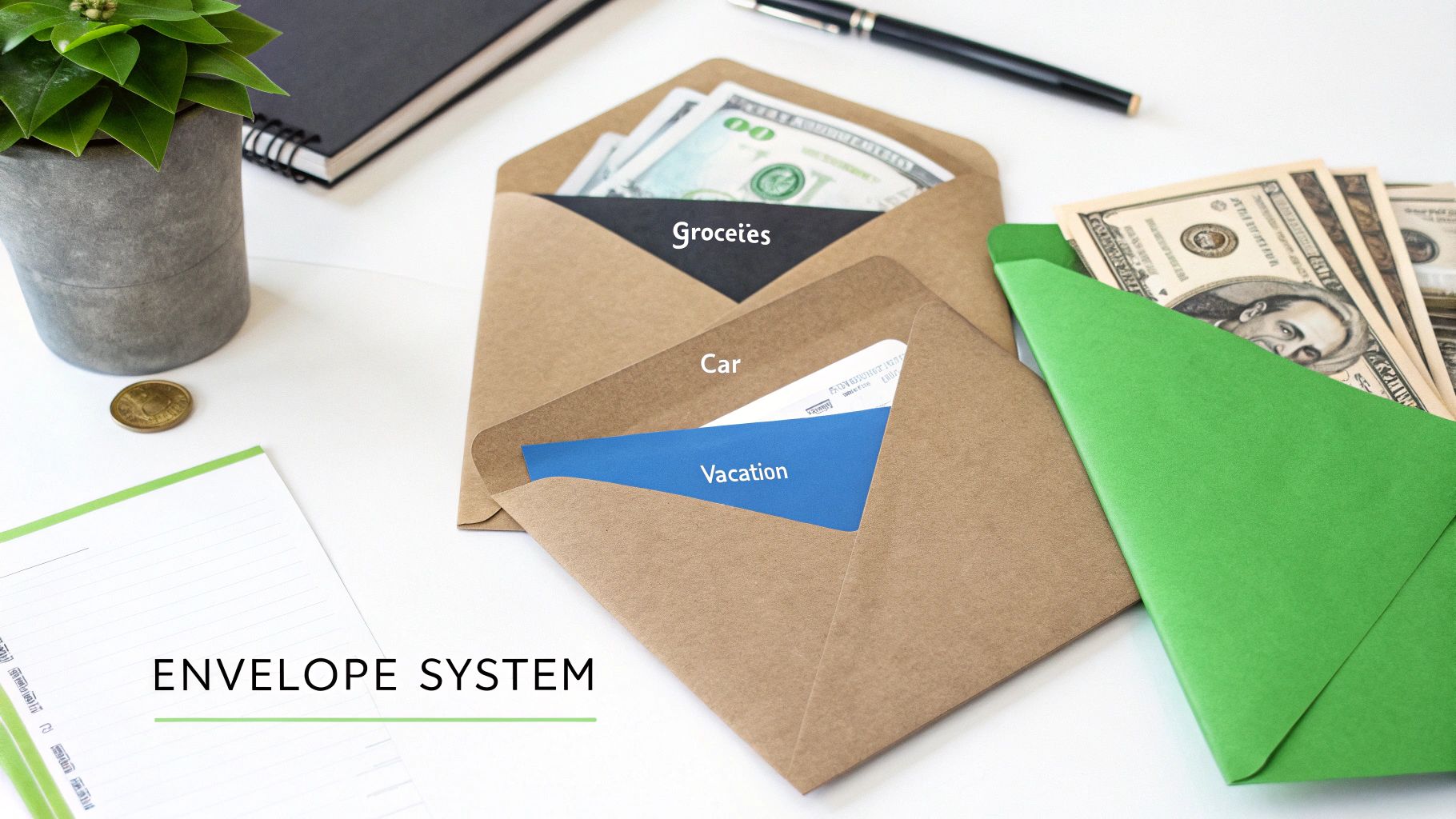
The envelope or sinking fund method is a tangible system for controlling spending and saving for specific goals. This technique involves allocating funds into labeled physical or digital envelopes for various expense categories. This visual approach enforces spending limits, as you can only use the money designated for that purpose, making it one of the most effective ways to save money for achieving financial freedom.
The aim of our blog is to provide valuable insights and practical tips to help readers manage their money more effectively. However, the information shared here is for general guidance and educational purposes only. It should not be regarded as professional financial advice. Any actions taken based on our content are entirely the responsibility of the reader, and we accept no liability for the outcomes of those actions. If you require financial advice tailored to your personal circumstances, we strongly recommend seeking assistance from a qualified financial adviser.
How It Works
This method creates intentional spending by forcing you to pre-plan where your money goes. By physically or digitally separating funds, it eliminates the guesswork and impulse purchases that derail budgets. Sinking funds are a key component, allowing you to save gradually for large, predictable expenses like car repairs or holidays.
- Physical Envelopes: After getting paid, you withdraw cash and divide it among envelopes labeled for categories like “Groceries,” “Dining Out,” and “Fuel.”
- Digital Envelopes: Modern banking apps and fintech tools offer “sub-accounts” or “buckets” that mimic this system digitally, allowing you to segregate funds without handling cash.
- Sinking Funds: For a future expense like a $1,200 annual car insurance premium, you would create a fund and contribute $100 each month, avoiding a large financial hit later.
Quick Tip: For those who prefer digital tools, apps like Qapital or certain challenger banks can automate the process by creating virtual “envelopes” and automatically transferring funds based on your rules.
Implementation Steps
- Identify Key Spending Categories: Start with 5-7 major variable expense categories like groceries, transportation, personal care, and entertainment.
- Set Your Budget: Determine how much to allocate to each envelope per pay period based on your income and financial goals.
- Fill Your Envelopes: Withdraw the necessary cash or transfer funds into your digital sub-accounts at the beginning of each pay cycle.
- Spend Only from the Envelopes: When you go grocery shopping, you can only use the money from the “Groceries” envelope. Once it’s empty, you stop spending in that category until the next pay period.
6. Review Mortgage and Loan Overpayments
Reviewing your mortgage and loans for overpayment opportunities is a highly effective way to save money and build equity faster. Making extra payments, even small ones, can drastically reduce the total interest you pay over the life of the loan and shorten your repayment term. This strategy directly accelerates your journey toward being debt-free and achieving financial freedom.
The aim of our blog is to provide valuable insights and practical tips to help readers manage their money more effectively. However, the information shared here is for general guidance and educational purposes only. It should not be regarded as professional financial advice. Any actions taken based on our content are entirely the responsibility of the reader, and we accept no liability for the outcomes of those actions. If you require financial advice tailored to your personal circumstances, we strongly recommend seeking assistance from a qualified financial adviser.

How It Works
Every extra pound you pay towards your loan principal reduces the balance on which future interest is calculated. This creates a compounding effect in your favor. For example, overpaying a £200,000 mortgage by just £100 per month could save you over £20,000 in interest and let you pay it off years earlier.
- Check for Penalties: Before starting, confirm with your lender that your loan allows for penalty-free overpayments (most do, up to a certain percentage).
- Use Calculators: Utilize online mortgage overpayment calculators to see the exact impact of different extra payment amounts on your loan term and total interest saved.
- Set Up Automatic Payments: The most effective way to be consistent is to set up a recurring extra payment each month alongside your standard payment.
Quick Tip: Even if you can’t commit to a monthly overpayment, consider making a lump-sum payment with any windfalls like a bonus or inheritance.
Implementation Steps
- Contact Your Lender: Verify your loan’s terms regarding overpayments, including any annual limits.
- Analyze Your Budget: Determine a realistic amount you can consistently overpay each month without straining your finances.
- Automate the Overpayment: Set up a standing order for the extra amount to be paid directly to your lender.
- Specify Principal Payment: When making extra payments, ensure the funds are allocated directly to the loan principal, not towards future interest.
- Review Annually: Re-evaluate your budget and overpayment amount each year or after any significant income change to maximize your savings.
7. Subscription Audit and Elimination
A subscription audit is a systematic review of all recurring monthly and annual charges to identify and cancel unused or redundant services. This is one of the most effective ways to save money quickly, as many people underestimate how much they spend on forgotten subscriptions. Eliminating this “subscription creep” can instantly free up significant cash flow with minimal impact on your daily life.
The aim of our blog is to provide valuable insights and practical tips to help readers manage their money more effectively. However, the information shared here is for general guidance and educational purposes only. It should not be regarded as professional financial advice. Any actions taken based on our content are entirely the responsibility of the reader, and we accept no liability for the outcomes of those actions. If you require financial advice tailored to your personal circumstances, we strongly recommend seeking assistance from a qualified financial adviser.
How It Works
This method tackles the “set it and forget it” nature of automated payments that quietly drain your bank account. By actively auditing these charges, you regain control over your discretionary spending and stop paying for value you no longer receive. The average person often has multiple forgotten subscriptions, and cutting just a few can result in substantial annual savings.
- Identify All Subscriptions: Comb through your bank and credit card statements from the last three to six months to list every recurring payment.
- Evaluate Usage: For each subscription, ask yourself if you have used it in the last month. Be honest about its value versus its cost.
- Cancel or Downgrade: Eliminate any service that is unused or no longer provides significant benefit. For services you want to keep, check for cheaper plans or family bundles.
Quick Tip: Use a dedicated app like Trim or Truebill to automatically scan your accounts and identify all recurring subscriptions, making the audit process much faster.
Implementation Steps
- Create a Master List: Open a spreadsheet and list each subscription with its name, monthly/annual cost, and renewal date.
- Analyze and Decide: Review your list and mark each item as “Keep,” “Cancel,” or “Review.” A good rule of thumb is to cancel anything you haven’t used at least twice in the past month.
- Take Action: Immediately cancel the unnecessary services. For those marked “Review,” set a calendar reminder to decide before the next renewal date.
- Audit Quarterly: Make subscription audits a regular part of your financial routine. Revisit your list every three months to catch any new subscriptions and re-evaluate existing ones.
8. Debt Snowball and Debt Avalanche Methods
Tackling high-interest debt is one of the most effective ways to save money, as it stops you from losing hundreds or thousands in interest payments. The Debt Snowball and Debt Avalanche methods are two structured strategies designed to accelerate debt repayment. By systematically eliminating balances, you free up significant cash flow that can be redirected toward savings and investments, paving the way to financial freedom.
The aim of our blog is to provide valuable insights and practical tips to help readers manage their money more effectively. However, the information shared here is for general guidance and educational purposes only. It should not be regarded as professional financial advice. Any actions taken based on our content are entirely the responsibility of the reader, and we accept no liability for the outcomes of those actions. If you require financial advice tailored to your personal circumstances, we strongly recommend seeking assistance from a qualified financial adviser.
How It Works
Both methods require you to make minimum payments on all debts but focus any extra funds on one target debt at a time. Once a debt is paid off, you “roll” its payment amount into the payment for the next target debt, creating momentum.
- Debt Snowball: This method focuses on paying off the smallest debts first, regardless of interest rates. It provides quick psychological wins that build motivation.
- Debt Avalanche: This method prioritizes paying off debts with the highest interest rates first. Mathematically, this approach saves you the most money on interest over time.
Quick Tip: The best method is the one you can stick with. The Snowball method’s motivational wins are powerful, but the Avalanche method typically saves more money in the long run.
Implementation Steps
- List All Debts: Create a list of all your debts, including their total balance and current interest rate (APR).
- Choose Your Strategy: Order your list. For the Snowball, sort from the smallest balance to the largest. For the Avalanche, sort from the highest APR to the lowest.
- Find Extra Funds: Scrutinize your budget to find an extra amount per month to apply to your target debt.
- Execute and Automate: Pay the minimum on all debts but aggressively pay down the one at the top of your list. Once it’s gone, apply its entire previous payment to the next debt. To compare both approaches, you can learn more about these debt reduction strategies.
9. Negotiation and Bill Reduction Strategy
The Negotiation and Bill Reduction Strategy is a proactive approach to lower fixed monthly expenses like energy tariffs, insurance, and broadband. Many recurring bills are not set in stone, and a simple phone call can unlock significant savings. This method is one of the most effective ways to save money because it reduces your baseline spending, freeing up cash flow every single month.
The aim of our blog is to provide valuable insights and practical tips to help readers manage their money more effectively. However, the information shared here is for general guidance and educational purposes only. It should not be regarded as professional financial advice. Any actions taken based on our content are entirely the responsibility of the reader, and we accept no liability for the outcomes of those actions. If you require financial advice tailored to your personal circumstances, we strongly recommend seeking assistance from a qualified financial adviser.
How It Works
This strategy relies on the principle that companies would rather offer a discount than lose a customer. By researching competitor rates and leveraging your loyalty, you can systematically contact service providers to request better pricing. Even a small reduction on multiple bills adds up to substantial annual savings.
- Insurance: Bundling home and auto policies or shopping around at renewal can save hundreds annually.
- Energy Tariffs: Regularly comparing and switching energy suppliers can yield significant savings, especially when introductory offers expire.
- Broadband/Mobile Phone Plans: Questioning your data needs and asking for loyalty discounts often reduces monthly costs.
Quick Tip: Before calling, use a comparison website to find competitive offers. Having specific data about what other companies are charging gives you powerful leverage in your negotiation.
Implementation Steps
- Gather Your Bills: Collect your most recent statements for insurance, energy, broadband, phone, and major subscriptions.
- Research Competitor Offers: Use comparison sites to find what new customers are being offered for similar services.
- Call Your Provider: Contact the customer service or retention department. State that you are considering switching due to better offers elsewhere and ask if they can match or beat the price.
- Document and Set Reminders: If successful, note the new rate and when the promotional period ends. Set a calendar reminder to renegotiate before it expires.
10. Side Hustle and Income Diversification
While cutting costs is effective, one of the most powerful ways to save money is to increase your income. Developing additional revenue streams beyond your primary job, often called a side hustle, can accelerate your financial goals significantly faster than expense reduction alone. This strategy involves monetizing your skills, time, or assets to build financial resilience and boost your savings rate on your journey to escape financial worries.
The aim of our blog is to provide valuable insights and practical tips to help readers manage their money more effectively. However, the information shared here is for general guidance and educational purposes only. It should not be regarded as professional financial advice. Any actions taken based on our content are entirely the responsibility of the reader, and we accept no liability for the outcomes of those actions. If you require financial advice tailored to your personal circumstances, we strongly recommend seeking assistance from a qualified financial adviser.
How It Works
A side hustle allows you to leverage your existing talents or develop new ones to earn extra cash outside of your 9-to-5. This additional income can be directed entirely toward savings, investments, or debt repayment, creating a powerful wealth-building engine. It diversifies your financial base, reducing reliance on a single employer.
- Freelancing: Offer skills like writing, graphic design, or web development on platforms like Upwork or Fiverr.
- Gig Economy: Participate in service-based work through apps like TaskRabbit for odd jobs or Rover for pet sitting.
- E-commerce: Start a small online business through dropshipping or selling handmade goods on Etsy.
- Passive Income: Develop digital products, affiliate marketing content, or rental income streams for long-term earnings.
Quick Tip: Start small by dedicating 3-5 hours per week. Consistency is more important than intensity when you begin, helping you build momentum without burning out.
Implementation Steps
- Identify Your Skills: List your marketable talents, from professional abilities like coding to hobbies like photography or crafting.
- Choose a Platform: Research and select a platform that aligns with your chosen side hustle. Upwork is great for professional services, while Etsy is ideal for creatives.
- Set Your Rates: Research what others with similar experience are charging to set a competitive but fair hourly rate or project price.
- Track Everything: Open a separate bank account to manage your side hustle income and expenses. This simplifies tracking for tax purposes and measures profitability. To explore more options, you can find a wealth of ideas for ways to make extra money from home.
11. Strategic Use of Technology for Savings
Leveraging financial technology is a modern and effective way to save money. Specialised apps and online tools can automate savings, find discounts, and provide clear insights into your spending habits, helping you make smarter financial decisions and accelerate progress toward financial freedom.
The aim of our blog is to provide valuable insights and practical tips to help readers manage their money more effectively. However, the information shared here is for general guidance and educational purposes only. It should not be regarded as professional financial advice. Any actions taken based on our content are entirely the responsibility of the reader, and we accept no liability for the outcomes of those actions. If you require financial advice tailored to your personal circumstances, we strongly recommend seeking assistance from a qualified financial adviser.
How It Works
This method focuses on using technology to streamline and optimize your financial life. Instead of manual tracking and guesswork, you can use powerful algorithms to manage your money more efficiently.
- Budgeting Apps: Services like YNAB or Mint automatically track and categorize your spending, giving you a real-time overview of your financial health.
- Automated Savings Apps: Apps like Digit or Acorns analyse your spending and automatically transfer small, manageable amounts into savings or investment accounts.
- Cashback and Rewards Extensions: Browser extensions like Rakuten or Honey automatically find and apply coupon codes at checkout and earn you cashback on online purchases. A deeper understanding of these programs can be gained from an Ultimate Guide to Cashback in Australia.
Quick Tip: The key is to choose one or two apps that align with your primary goal—whether it’s budgeting, saving, or investing—to avoid getting overwhelmed.
Implementation Steps
- Identify Your Biggest Challenge: Determine if your main struggle is tracking expenses, remembering to save, or finding the best deals.
- Select the Right Tool: Choose a highly-rated app that addresses your specific challenge. Read reviews and compare features before committing.
- Link Your Accounts Securely: Connect your bank and credit card accounts to the app to enable automatic tracking and analysis.
- Review and Act on Insights: Regularly check the app’s reports and recommendations. Use the data to adjust your budget and make informed financial decisions.
12. Expense Tracking and Budget Monitoring Systems
A disciplined expense tracking system is a powerful way to save money by making you aware of exactly where your income goes. By recording and categorizing every expense, you shift from guessing about your finances to making data-driven decisions. This process is foundational to achieving financial freedom, as it reveals opportunities for savings you might not have noticed.
The aim of our blog is to provide valuable insights and practical tips to help readers manage their money more effectively. However, the information shared here is for general guidance and educational purposes only. It should not be regarded as professional financial advice. Any actions taken based on our content are entirely the responsibility of the reader, and we accept no liability for the outcomes of those actions. If you require financial advice tailored to your personal circumstances, we strongly recommend seeking assistance from a qualified financial adviser.
How It Works
Expense tracking provides a clear, factual baseline of your spending habits, revealing patterns and areas of waste. Analysis often uncovers “hidden” costs, like miscellaneous monthly spending, that can be redirected toward your financial goals. It is the diagnostic tool you need before you can effectively implement a budget and begin building wealth.
- Awareness and Identification: You cannot manage what you do not measure. Tracking reveals the true cost of habits and discretionary spending.
- Data-Driven Adjustments: With real data, you can build an accurate budget and set realistic savings goals based on actual spending rather than estimates.
- Behavioural Change: Seeing the numbers provides a strong motivation to cut back on non-essential spending and align your habits with your financial goals.
Quick Tip: Don’t try to track everything manually at first. Use one of the best free budgeting apps to automatically sync with your bank accounts and categorize transactions, saving you significant time and effort.
Implementation Steps
- Choose Your Tool: Select a system that fits your lifestyle. Popular apps like YNAB or Mint automate most of the work, while a simple spreadsheet offers manual control.
- Track for 30 Days: Commit to recording every single expense for one full month to create a comprehensive financial snapshot.
- Categorize and Analyze: Group your spending into major categories like housing, food, transportation, and entertainment. Identify your top three spending areas.
- Compare and Adjust: Review your spending weekly. Compare your actuals against your budget or goals and make adjustments to curb overspending for the following week.
12 Savings Strategies Comparison
| Method | 🔄 Implementation Complexity | ⚡ Resource & Time (typical) | ⭐ Expected Outcomes / 📊 Typical Impact | Ideal Use Cases | 💡 Key Advantages / Tips |
|---|---|---|---|---|---|
| The 50/30/20 Budgeting Rule | 🔄 Low | Low time; basic tracking (app/spreadsheet). ⚡⚡ | ⭐⭐⭐⭐ — Clear proportional saving (≈20% target); improves discipline | Beginners, steady paycheck households | Simple to adopt; calculate after-tax income first |
| Automated Savings / Pay-Yourself-First | 🔄 Low | One-time setup; bank/apps. ⚡⚡⚡ | ⭐⭐⭐⭐⭐ — Consistent savings, accelerates emergency fund & compounding | People who forget to save or want passive growth | Automate transfers after payday; start small and increase with raises |
| Zero-Based Budgeting | 🔄🔄🔄 High | Monthly planning 1–3 hrs; spreadsheet/apps. ⚡ | ⭐⭐⭐⭐⭐ — Maximum control; strong debt reduction and alignment with priorities | Debt payers, irregular income, detail-oriented households | Budget every dollar; include small buffer and review weekly initially |
| 24‑Hour Rule / Delayed Purchases | 🔄 Low | Minimal time per purchase; behavioral. ⚡⚡⚡ | ⭐⭐⭐ — Rapid reduction in impulse buys (30–40% fewer non‑essentials) | Impulse shoppers, online buyers, those on tight discretionary budgets | Set a $ threshold and wishlist; unsubscribe from marketing emails |
| Envelope / Sinking Fund Method | 🔄🔄 Medium | Ongoing allocation; cash or digital sub-accounts. ⚡⚡ | ⭐⭐⭐⭐ — Prevents overspend; smooths irregular/periodic expenses (20–30% less overspend) | Households with multiple spenders; irregular bills | Use digital envelopes/sub-accounts for safety; divide annual costs monthly |
| Review Mortgage & Loan Overpayments | 🔄🔄 Medium | Initial research; ongoing automated payments. ⚡⚡ | ⭐⭐⭐⭐⭐ — Significant long-term interest savings; shortens loan term | Homeowners, individuals with long-term loans | Use an overpayment calculator; confirm penalty-free terms with lender |
| Subscription Audit & Elimination | 🔄🔄 Low-Medium | Initial audit 1–3 hrs; tools/apps. ⚡⚡⚡ | ⭐⭐⭐⭐ — Immediate savings ($100–3,600+/yr common) | Anyone with multiple recurring charges | Use tools (Trim/Truebill), audit quarterly, track renewal dates |
| Debt Snowball / Debt Avalanche | 🔄🔄 Medium | Ongoing extra payments; planning and discipline. ⚡ | ⭐⭐⭐⭐⭐ — Clear path to debt freedom; Avalanche minimizes interest | Borrowers with multiple debts seeking payoff plan | Choose method by motivation vs math; automate minimums and extra payments |
| Negotiation & Bill Reduction | 🔄🔄 Medium | Research + calls; occasional switching fees. ⚡⚡ | ⭐⭐⭐⭐ — $50–300+/mo typical savings; repeatable every few years | Homeowners, drivers, anyone with utilities/insurance | Gather competitor quotes, ask for retention offers, document agreements |
| Side Hustle & Income Diversification | 🔄🔄🔄 High | Significant time (10–20+ hrs/wk) and some capital; variable. ⚡⚡ | ⭐⭐⭐⭐ — Can multiply income 2–10x acceleration of goals (variable) | People with spare time/skills wanting extra income | Start small, track taxes, reinvest early earnings |
| Strategic Use of Technology | 🔄🔄 Medium | Time for research & setup; apps/extensions. ⚡⚡ | ⭐⭐⭐ — Automates savings & discounts; cashback $50–500/yr typical | Tech-savvy users, online shoppers, those wanting automation | Stack offers (sale + coupon + cashback); focus on 1-2 key apps |
| Expense Tracking & Budget Monitoring | 🔄🔄 Low-Medium | Initial setup; app integration; ongoing reviews. ⚡⚡⚡ | ⭐⭐⭐⭐ — Awareness reduces waste 5–15%; enables data-driven changes | Anyone wanting to understand and improve spending | Use bank-integrated apps, review weekly initially, focus on top 3 categories |
From Saving to Thriving: Your Next Financial Steps
You have now explored a comprehensive toolkit of powerful ways to save money, each designed to shift your financial trajectory from reactive to proactive. We have moved beyond generic advice, delving into structured methods like the 50/30/20 Rule for balanced allocation and Zero-Based Budgeting for total control. You have seen how behavioral tactics, such as the 24-Hour Rule, can curb impulsive spending, while strategic debt-reduction plans like the Debt Snowball and Debt Avalanche methods provide clear paths out of financial burdens.
The core principle connecting all these strategies is intentionality. Saving money effectively is not about deprivation; it’s about making conscious decisions that align your spending with your long-term goals. It’s about questioning every subscription, negotiating every bill, and automating your savings so that your future self is always the first priority. This is the foundation of building wealth and achieving the financial freedom you deserve.
Key Takeaways and Your Action Plan
The journey to financial mastery begins with a single, manageable step. Overwhelm is the enemy of progress, so instead of trying to implement all twelve strategies at once, focus on a targeted approach.
Here is a simple, three-step action plan to get you started today:
- Choose Your Foundation: Select one core budgeting method that resonates with your personality. Are you a meticulous planner? Zero-Based Budgeting might be perfect. Prefer a simpler, set-and-forget system? Start with the 50/30/20 Rule and the Pay-Yourself-First automation strategy.
- Identify a Quick Win: Pick one strategy you can implement in under an hour for an immediate impact. Conducting a Subscription Audit or using a bill negotiation script are excellent starting points that can yield tangible savings right away.
- Track and Review: Commit to tracking your expenses for the next 30 days. Use an app, a spreadsheet, or a simple notebook. This single habit provides the data you need to make informed decisions and see exactly where your money is going, empowering every other saving effort.
The Compounding Power of Consistency
Remember, the most impactful ways to save money are not necessarily the most drastic. They are the ones you stick with consistently over time. Automating a small, recurring transfer to your savings account may seem insignificant at first, but over years, the power of compounding transforms those modest contributions into a substantial nest egg. Each negotiated bill and avoided impulse purchase adds another brick to the foundation of your financial security.
Mastering these concepts is more than just a financial exercise; it’s a profound investment in your future. It reduces stress, creates opportunities, and provides the stability needed to pursue your passions without financial worry. You are not just saving dollars; you are buying freedom, security, and peace of mind. The small, deliberate actions you take today are the seeds of the prosperous future you will inhabit tomorrow. Your journey from simply saving to truly thriving starts now.
Ready to take control and make your budget work for you? The Collapsed Wallet app simplifies these strategies by automating expense tracking, helping you set and monitor savings goals, and providing clear insights into your spending habits. Stop guessing where your money goes and start directing it with purpose by visiting Collapsed Wallet today.
