
Table of Contents
This blog post may contain affiliate links. As an Amazon Associate I earn from qualifying purchases.
Let's be honest, "eating healthy on a budget" often sounds like a contradiction. We picture expensive organic aisles and specialty health foods that seem designed to drain our bank accounts. But the cheapest way to eat healthy has nothing to do with fancy superfoods. It’s about a simple, powerful mindset shift: treating your food budget like a financial strategy, not a diet.
The aim of our blog is to provide valuable insights and practical tips to help readers manage their money more effectively. However, the information shared here is for general guidance and educational purposes only. It should not be regarded as professional financial advice. Any actions taken based on our content are entirely the responsibility of the reader, and we accept no liability for the outcomes of those actions. If you require financial advice tailored to your personal circumstances, we strongly recommend seeking assistance from a qualified financial adviser.
Healthy Eating as a Financial Strategy, Not a Diet
Most of us see healthy food as an expense—a line item on the budget we try to shrink whenever money gets tight. That’s a trap. It misses the bigger picture entirely. A nutritious diet isn't a luxury; it's one of the smartest long-term investments you can possibly make.
We're not talking about dieting in the traditional sense. This is about rewiring how you think about your money. When you start seeing nourishing food as a high-return investment in your future, everything changes. Every pound you spend on wholesome ingredients is a direct deposit into your most valuable asset: your health.
The True Cost of an Unhealthy Diet
The real price tag of a poor diet shows up long after you've left the grocery store. A diet heavy on processed foods is a well-known path to chronic health issues, and those issues don't just affect your well-being—they come with a steep and ever-growing financial cost.
A healthier diet isn't just about avoiding future medical bills. It's about protecting your ability to earn, save, and invest. Good health is the bedrock on which financial freedom is built.
These costs creep up on you in a few key ways:
- Skyrocketing Healthcare Expenses: Think higher insurance premiums, endless co-pays, and pricey prescription drugs that can easily tack on thousands to your annual spending.
- Lost Income and Productivity: Feeling unwell means more sick days, less energy, and lower focus at work. This directly hits your earning potential and can slow down your career.
- Higher Insurance Costs: It's not just health insurance. Diet-related conditions can also jack up your life and disability insurance premiums, creating yet another financial drain for years to come.
Shifting from Expense to Investment
Once you start viewing nutritious food as an investment, your entire approach to grocery shopping changes. The goal is no longer just to scrape by for another week. It's about building a sustainable food plan that fuels your journey toward financial independence.
This means you start allocating money to your food budget with the same care you'd give an investment portfolio. The money you put into wholesome food pays you back over and over again in the form of fewer medical bills, more energy, and a greater capacity to chase your financial goals.
You're essentially freeing up future cash that would have been eaten up by health problems. That's money you can now funnel into savings, investments, or wiping out debt. Making smart food choices isn't a sacrifice; it's an act of financial self-preservation.
Building Your Healthy Food Financial Plan
First things first: thinking differently about your food and money is a great start, but a real plan is what turns those thoughts into results. Eating healthy without breaking the bank isn't about wishing for it; it's about making a deliberate, actionable plan for your money. Don't worry, this isn't about complicated spreadsheets or eating nothing but beans. It's about getting a clear picture of your spending so you can finally take control.
The aim of our blog is to provide valuable insights and practical tips to help readers manage their money more effectively. However, the information shared here is for general guidance and educational purposes only. It should not be regarded as professional financial advice. Any actions taken based on our content are entirely the responsibility of the reader, and we accept no liability for the outcomes of those actions. If you require financial advice tailored to your personal circumstances, we strongly recommend seeking assistance from a qualified financial adviser.
Now, let's get to it. The journey begins by figuring out exactly where your money is going. Most of us are on autopilot—swiping for a morning coffee here, ordering takeout there—without realizing how it all adds up. These small, impulsive buys are usually the biggest leaks in a food budget.
Getting an Honest Look at Your Spending
To plug the leaks, you have to find them first. This is where a little tech can be a huge help. Budgeting apps like YNAB (You Need A Budget) or Mint are fantastic for this; you just connect your bank accounts, and they automatically sort your transactions.
For one month, just track. Don't change a thing. The goal is to get a completely honest, unfiltered look at your spending habits. You might be shocked to discover that a $5 daily coffee habit is costing you over $100 a month, or that a couple of takeaway nights are eating up more cash than a week's worth of groceries.
This isn't about guilt. It's about empowerment. Once you see the cold, hard numbers, you can start making conscious choices. That $100 for coffee? That could be a huge haul of high-quality, nutrient-dense staples that will feed you for weeks. This is the foundation of a smart financial plan.
Setting Weekly Goals You Can Actually Hit
With a clear picture of where your money has been going, you can set an achievable weekly food budget. The key word here is achievable. If you're currently spending $200 a week on food, trying to slash it to $100 overnight is just setting yourself up for failure. A much smarter approach is to aim for $180, then trim it down a little more as you get the hang of it.
Your weekly budget should account for everything food-related:
- Groceries: This is your core spend, where you'll focus on healthy staples.
- Eating Out: It’s okay to have a social life! Just plan for it.
- Miscellaneous: That coffee, an afternoon snack, or any other small purchase.
This shift in thinking is crucial. You're moving from just "spending" on food to actively "investing" in your long-term health and financial well-being.
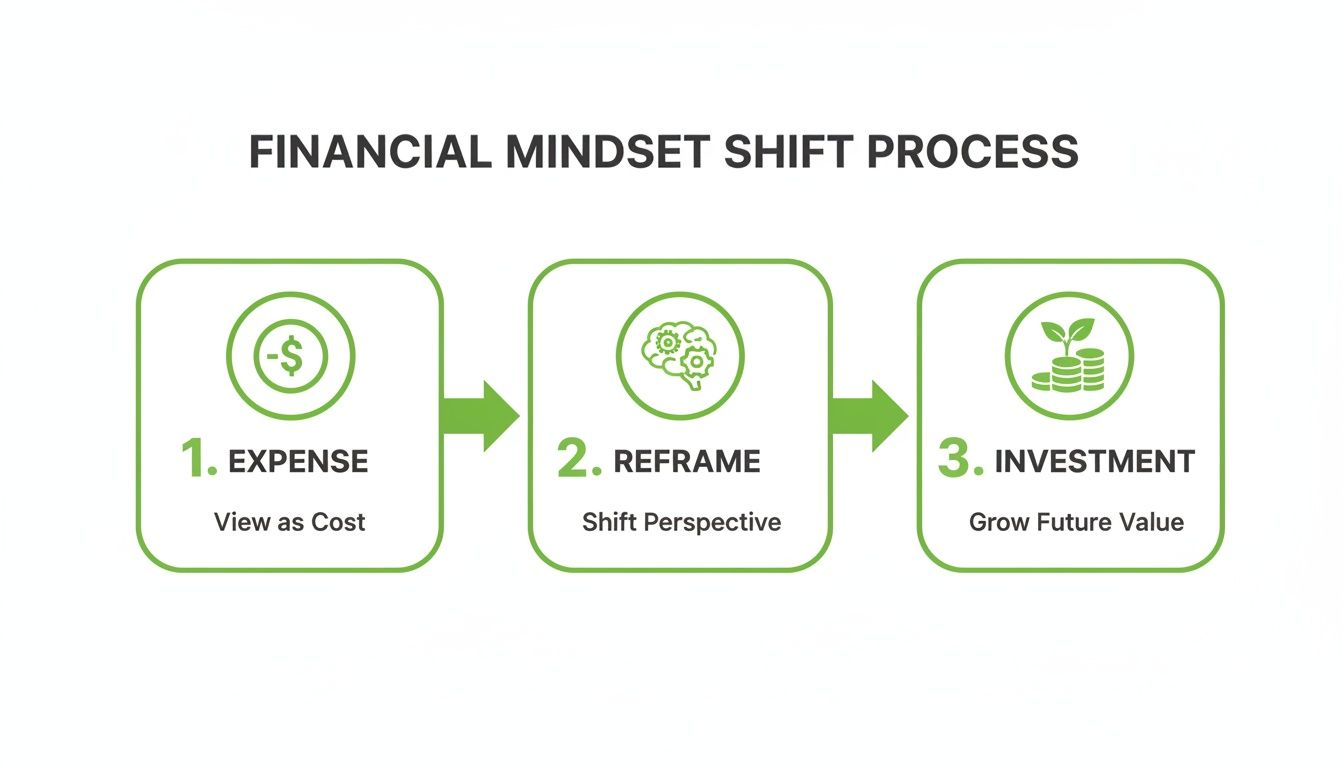
The best food budgets aren't about restriction; they’re about intention. When you assign every dollar a job, you stop reacting to your spending and start proactively investing in your future.
To get really granular with your planning, you can even use a cost of recipe calculator. These tools help you break down the cost per meal, which gives you incredible precision and helps you stay on track.
The Secret Weapon: A Sinking Fund for Bulk Buys
Here’s a pro tip: create a "sinking fund." It sounds technical, but it’s a simple and powerful concept. You just set aside a little money each month for a bigger, planned purchase down the road. This strategy is absolutely perfect for nabbing amazing deals on healthy staples like brown rice, oats, lentils, and frozen veggies.
Instead of scrambling when a great deal pops up, you'll have the cash waiting. Just set up a separate savings category in your budget app and add a small, regular amount—even $10 or $20 a month makes a difference.
When that 10-pound bag of quinoa goes on sale, you can snap it up without wrecking your weekly budget. This proactive approach makes your financial plan both resilient and opportunistic, setting you up for major savings in the long run.
Smart Shopping to Make Every Pound Count
This is where the rubber meets the road. All the budgeting and meal planning in the world won’t matter if you don't have a game plan for the grocery store. Walking into the supermarket unprepared is one of the fastest ways to blow your budget. But if you approach it strategically, your weekly shop can become a masterclass in saving money.
The aim of our blog is to provide valuable insights and practical tips to help readers manage their money more effectively. However, the information shared here is for general guidance and educational purposes only. It should not be regarded as professional financial advice. Any actions taken based on our content are entirely the responsibility of the reader, and we accept no liability for the outcomes of those actions. If you require financial advice tailored to your personal circumstances, we strongly recommend seeking assistance from a qualified financial adviser.
The biggest enemies of a healthy food budget? Impulse buys and aimless wandering. Your shopping list—the one you made during your meal planning—is your single best tool. Stick to it. It’s your shield against the marketing tricks designed to make you overspend.
Get Obsessed With Unit Pricing
One of the most powerful money-saving tools in the entire supermarket is hidden in plain sight on the shelf tag: the unit price. This little number tells you the cost per 100g, per kilo, or per litre, and ignoring it is a classic rookie mistake.
It's easy to assume the bigger package is always cheaper, but that's not a given. Special offers can sometimes make a smaller size the better deal. The only way to know for sure is to compare the unit price. Making this a reflex action will save you a surprising amount of cash over time.
A 15-minute shopping plan can cut your weekly grocery bill by up to 20%. That's time invested, not spent, with a significant financial return.
Looking past the big price sticker and focusing on the true cost is what smart shopping is all about.
Don't Sleep on Frozen Produce
The fresh produce section can feel like a trap, with its high prices and the constant threat of your beautiful veg wilting before you can eat it. This is where the freezer aisle becomes your best friend.
- Zero Waste: Frozen produce lasts for months, which means you're not throwing your money in the bin when that bag of fresh spinach turns to slime in three days.
- Peak Nutrition: Fruits and veggies are usually flash-frozen the moment they're picked, locking in all their vitamins and minerals. They're often just as nutritious—sometimes more so—than fresh stuff that’s been sitting on a truck for days.
- Serious Savings: Frozen is almost always cheaper than fresh, especially for anything that's out of season. You can enjoy berries in winter without paying a fortune for them.
Relying on frozen staples protects your budget from price swings and eliminates food waste. It’s a simple switch that guarantees you get the most value for your money.
Use Your Phone to Find Savings
Your smartphone is more than just a distraction—it can be a serious money-saving device. A few key apps can help you claw back some of your grocery spend.
Cashback apps like CheckoutSmart or Shopmium are a no-brainer. You browse the offers, buy the items on your list, and snap a picture of your receipt to get money back. It’s a simple way to lower the real cost of your groceries. Don't forget to sign up for your supermarket's loyalty program, too. Those points and exclusive member-only prices really do add up.
For a deeper dive, check out our full guide on other ways to save money grocery shopping. It’s all about making the money you’re already spending work a little bit harder for you.
Turn Smart Prep Into a Financial Asset
Bringing home a good grocery haul is only half the battle. What you do with that food once it's in your kitchen is what truly protects your budget. This is where we stop talking theory and start talking execution. Think of meal prep less as a chore and more as a powerful way to manage your money, eliminating waste and keeping your food costs low.
Every meal you cook yourself is a direct defense against the high price of convenience—the little splurges that can quietly drain your bank account.
Why Batch Cooking Is Your Financial Secret Weapon
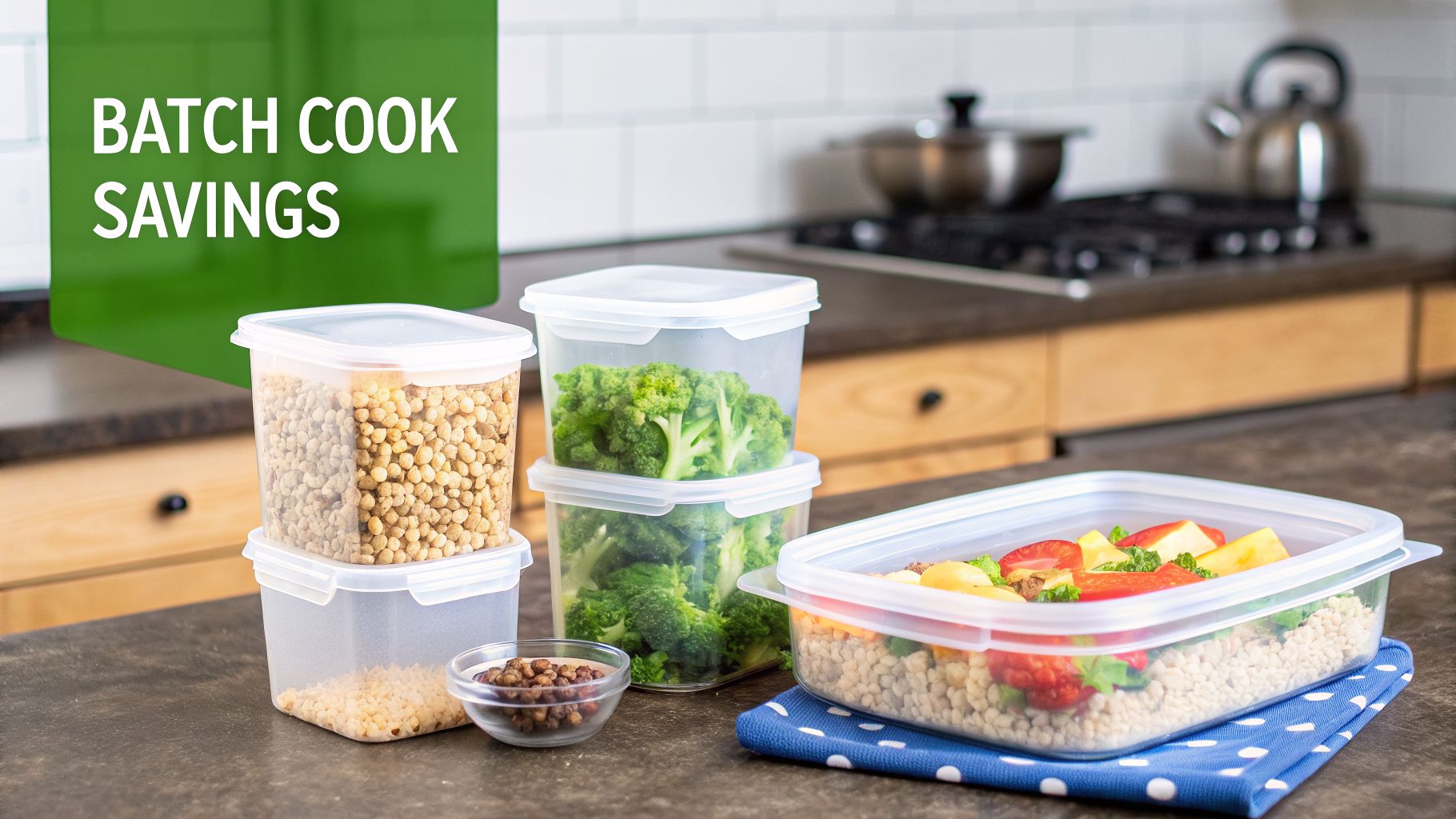
We’ve all been there. It’s the end of a long day, you're exhausted, and the last thing you want to do is cook. That’s when the temptation to open a takeaway app becomes overwhelming, easily costing you £10-£20 for a single meal. Batch cooking is your best defense against these budget-busting moments.
By setting aside a few hours over the weekend, you can prepare a fantastic lineup of versatile ingredients. This isn't about eating the same boring meal for five days straight. It's about having ready-to-go components you can mix and match.
Here are some of my go-to prep staples:
- Grains: I'll cook a big pot of brown rice or quinoa. Stored in the fridge, it's ready to be the base for a quick lunch bowl, a filling for burritos, or a simple side dish.
- Proteins: Roasting a whole chicken gives you meat for several meals. Boiling a dozen eggs or simmering a large batch of lentils or chickpeas means you always have a protein source on hand, which is often the most expensive and time-consuming part of a meal.
- Vegetables: A big sheet pan of roasted broccoli, carrots, and bell peppers can be added to salads, stir-fries, and pasta all week long.
Suddenly, you have your own "convenience food" waiting in the fridge, but at a tiny fraction of the cost.
Make Your Investment Last with Proper Storage
Buying food is an investment. Letting it spoil is like throwing money directly into the bin. Good storage isn't an extra cost—it's how you protect that investment.
Your freezer is one of the most powerful financial tools in your kitchen. It’s like a time machine for your food, pausing its decline and preserving its value until you’re ready to use it.
Airtight glass containers are a fantastic one-time purchase. They keep food fresh much longer than flimsy plastic, and since you can see what's inside, you're less likely to forget about leftovers tucked away in the back of the fridge.
Your freezer is your best friend for long-term storage. When you batch cook a big chili or a curry, divide it into individual portions and freeze them. You’re essentially creating a stash of healthy, home-cooked ready meals that are practically free when you need them most. For more tips on building this into your weekly habits, our guide on budget-friendly meal planning has some great ideas.
Below is a simple breakdown of how much you can save by making this shift.
Financial Impact of Home Preparation vs Convenience Meals
The difference in cost between cooking at home and buying pre-made meals is staggering when you add it up over a week.
| Meal Type | Cost per Meal (Home Prepared) | Cost per Meal (Convenience/Takeaway) | Weekly Savings (5 Meals) |
|---|---|---|---|
| Chicken & Veg Bowl | £2.50 | £9.50 | £35.00 |
| Lentil Soup | £1.20 | £6.00 | £24.00 |
| Pasta with Veg Sauce | £2.00 | £12.00 | £50.00 |
Even swapping just one type of meal per week makes a significant dent in your spending. The more you prepare at home, the faster the savings multiply.
The 'Use-It-Up' Meal: Your Zero-Waste Strategy
Before your next grocery trip, take a quick inventory of your fridge. What needs to be used up? The "use-it-up" meal is a brilliant little strategy to make sure 100% of the food you bought gets eaten.
This is your chance to get creative with any leftover vegetables, the last bit of that roasted chicken, or other odds and ends. It could be a stir-fry, a frittata, a hearty soup, or a quick pasta sauce. The exact dish doesn't matter—the principle does. You're actively turning potential waste back into a delicious meal.
This one habit can save a surprising amount of money over the course of a year. It reinforces the mindset that every item you buy has value that shouldn't be thrown away.
Your High-Value Nutrient Portfolio
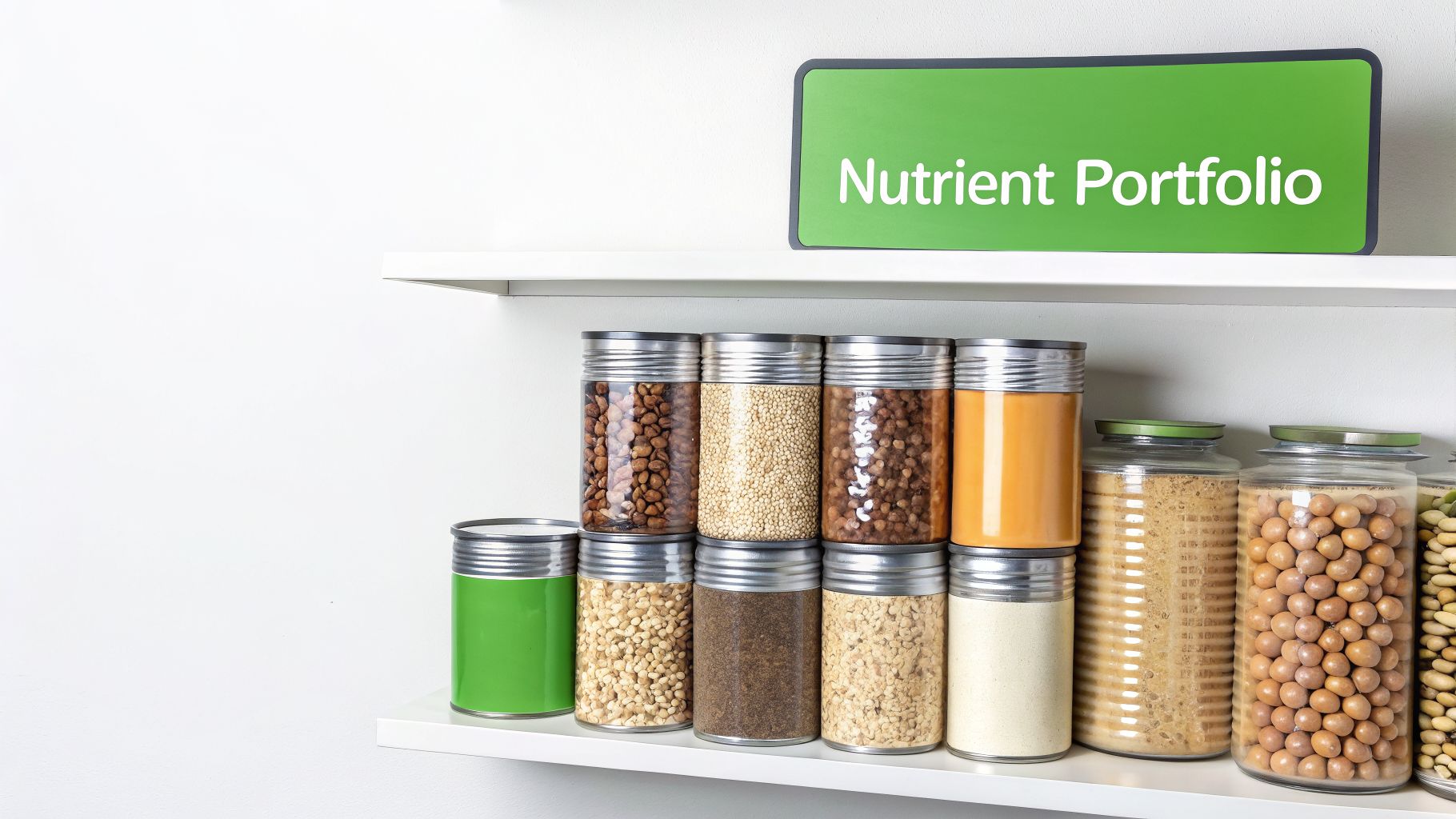
Ever thought about your pantry the way an investor thinks about their portfolio? It’s a game-changer. Forget just seeing boxes and cans; start seeing your kitchen shelves as a collection of high-value assets. Each item you buy should be a smart investment, chosen to give you the biggest nutritional bang for your buck.
This is all about building a pantry that works for your health and your wallet. Let's look at how to stock your "nutrient portfolio" with the smartest, most cost-effective foods out there.
The Foundation: Inexpensive Proteins
Every solid food strategy starts with protein, but that doesn't have to mean expensive meat and fish. The real MVPs of a budget-friendly kitchen are plant-based proteins. They offer incredible nutritional value for pennies on the dollar.
Think of lentils and beans as the bedrock of your pantry. They're dirt cheap, loaded with protein and fiber, and last forever, which makes them a fantastic hedge against rising food prices. A single one-pound bag of dried lentils can be the base for countless meals, from hearty soups to filling salads.
A well-stocked pantry of diverse, affordable staples is your best insurance policy against budget-breaking impulse buys and expensive convenience foods. It's the ultimate defensive play in your financial strategy.
Seeing how these pieces fit together is key. A good way to start is by looking at what goes into a balanced meal plan to understand how you can get all the nutrients you need without overspending.
The Long Game: Whole Grains
Next up are your reliable, long-term assets: whole grains. When you buy them strategically, things like oats, brown rice, and quinoa are absolute financial powerhouses. The secret is buying in bulk, which slashes the cost-per-serving and gives you a great return on your initial investment.
For instance, a large bag of oats can fuel dozens of breakfasts for what you'd spend on a single pastry from a coffee shop. Brown rice is another workhorse, serving as a cheap and filling base that helps stretch more expensive ingredients, like a small portion of meat or extra vegetables. It's a long-term play that pays off every week.
The Smart Money: Seasonal and Frozen Produce
The fresh produce aisle can feel like a rollercoaster, with prices constantly changing. A savvy shopper knows how to play this market by focusing on seasonal fruits and vegetables. When produce is in season, it's everywhere, and that abundance drives the price way down.
But here’s how you get even more efficient: combine seasonal shopping with a smart frozen food strategy.
- Stable Costs: Frozen produce isn’t affected by seasonal price hikes, giving you predictable costs all year long.
- Peak Nutrition: Fruits and veggies are often flash-frozen right after being picked, which locks in vitamins and minerals that fresh produce can lose in transit.
- Zero Waste: Food waste is like throwing money away. With frozen, you use exactly what you need and save the rest, ensuring 100% of what you paid for gets eaten.
This two-pronged approach gives you access to a huge variety of produce without being a victim of fluctuating prices. Learning to shop this way is a fundamental skill. For more ideas on what to grab, our guide on building an inexpensive healthy grocery list is a great place to start. By focusing on these high-value assets, you build a resilient food plan that benefits your health and your bank account.
Your Top Money Questions About Healthy Eating, Answered
Let's be honest—the strategy is one thing, but making it work when you're staring at your bank account is another. It's completely normal to have a few financial "what ifs" when you decide to overhaul your eating habits. I've been there, and I've heard these same questions from countless others.
The aim of our blog is to provide valuable insights and practical tips to help readers manage their money more effectively. However, the information shared here is for general guidance and educational purposes only. It should not be regarded as professional financial advice. Any actions taken based on our content are entirely the responsibility of the reader, and we accept no liability for the outcomes of those actions. If you require financial advice tailored to your personal circumstances, we strongly recommend seeking assistance from a qualified financial adviser.
Now, let's tackle those nagging money questions head-on.
But Is It Actually Cheaper to Eat Healthy?
This is the big one, isn't it? We've all walked down the "organic" aisle, seen the prices, and thought, "Nope, not for me." But that's where the misconception lies. The cheapest way to eat healthy has nothing to do with expensive, specialty health brands.
The real savings come from shifting your focus to incredibly cheap, nutrient-dense staples. This is the core of your new grocery game plan. Think about it:
- Lentils and Beans: A bag of dried lentils can cost you pocket change and form the base for a dozen meals. Compare that to the price of chicken or beef. There's no contest.
- Oats and Brown Rice: When you buy these in bulk, you're paying pennies per serving. They're the workhorses of a budget-friendly pantry.
- Seasonal and Frozen Produce: Sticking to what's in season or grabbing a bag of frozen berries insulates your budget from the shock of buying fresh asparagus in December.
When you start comparing a shopping cart filled with these items to one loaded with ready-meals, takeaways, and pricey cuts of meat, the financial win becomes crystal clear. A healthy diet only feels expensive when you confuse it with a gourmet, high-end one. Stick to the basics, and your wallet will absolutely thank you.
What Are the Best Apps for Tracking My Grocery Budget?
Using a bit of tech can be a game-changer for getting a handle on your food spending. The best app for you really just depends on how hands-on you want to be.
If you're like me and love being in the driver's seat, YNAB (You Need A Budget) is fantastic. It’s built on the idea of giving every single pound a specific job. You can set up categories for "Groceries," "Lunches Out," or even a "Stock-Up Fund" for when you see a great deal. It’s proactive and puts you in total control.
For a more hands-off approach, apps like Mint or Emma are great choices. You just link your bank accounts, and they automatically sort your spending into categories. It gives you a clear picture of where your money actually went last month, which is often the eye-opening first step you need to make a change.
A recent analysis showed that the average global cost of a healthy diet was around $4.46 (or about £3.60) per person per day in 2024. By focusing on smart, low-cost staples, you can easily beat this average and make your budget go even further.
How Can I Stick to My Budget Without Ditching My Social Life?
This is a huge one. A food budget shouldn't turn you into a hermit. The secret here is to plan for social events, not pretend they won't happen.
Instead of feeling guilty when you go out, just build it right into your financial plan. Here are a few things that have worked for me:
- Give "Fun Money" a Name: Create a specific line item in your monthly budget called "Restaurants" or "Social Stuff." Assign a realistic amount to it. Once that money is spent, it’s spent. This turns an impulse into a planned and guilt-free expense.
- Have a Pre-Game Meal: Heading to a pricey restaurant with friends? Have a small, protein-packed snack at home first. You’ll show up ready to socialize, not starving and tempted to order everything on the menu.
- Suggest the Alternative: Don't be afraid to be the one who suggests a potluck, a picnic in the park, or a casual get-together at someone’s house. Chances are, your friends who are also watching their spending will be relieved you brought it up.
Ultimately, making healthy eating and smart finances work together is all about conscious choices. If you plan for these common hurdles, you can easily stay on track with both your health and money goals without feeling like you're missing out.
At Collapsed Wallet, we're all about giving you clear, no-fluff advice to help you master your money. To keep building your financial confidence, check out more of our guides and resources at https://collapsedwallet.com.
