

Table of Contents
- 1. Create and Use a Shopping List
- 2. Buy Generic and Store Brands
- 3. Shop Sales and Use Coupons Strategically
- 4. Shop Seasonal and Local Produce
- 5. Buy in Bulk and Join Warehouse Clubs
- 6. Plan Your Spending Around Sales and Pantry Inventory
- 7. Shop Reduced/Clearance Sections and Day-Old Items
- 8. Reduce Meat Consumption and Buy Proteins Strategically
- 9. Avoid Shopping While Hungry and Control Impulse Purchases
- 10. Use Store Apps, Price Comparison Tools, and Price Matching
- 10 Grocery Savings Strategies Compared
- Putting It All Together: Your Path to Financial Freedom Starts in the Grocery Aisle
This blog post may contain affiliate links. As an Amazon Associate I earn from qualifying purchases.
In the quest for financial freedom, controlling your grocery spending is one of the most powerful levers you can pull. It’s a recurring, significant expense where small, strategic changes can compound into thousands of pounds saved annually. This guide moves beyond generic advice, offering a comprehensive roundup of actionable grocery savings tips designed to reduce waste, optimize your spending, and free up cash for your long-term financial goals, whether that’s paying down debt, investing for the future, or simply escaping financial worries. We’ll explore everything from mastering your shopping list and leveraging technology to making smart choices in every aisle, providing you with the tools to take definitive control of your food budget.
The aim of our blog is to provide valuable insights and practical tips to help readers manage their money more effectively. However, the information shared here is for general guidance and educational purposes only. It should not be regarded as professional financial advice. Any actions taken based on our content are entirely the responsibility of the reader, and we accept no liability for the outcomes of those actions. If you require financial advice tailored to your personal circumstances, we strongly recommend seeking assistance from a qualified financial adviser.
This article provides a detailed framework for anyone looking to make a meaningful impact on their household budget. We will cover ten proven strategies, from the foundational importance of creating a shopping list to the tactical advantages of using store apps and price comparison tools. You will learn how to shop sales strategically, buy generic brands without sacrificing quality, and plan your spending around your existing inventory to minimize food waste and maximize value. By implementing these grocery savings tips, you can transform a routine chore into a powerful wealth-building habit. Let’s dive into the strategies that will put more money back into your wallet.
1. Create and Use a Shopping List
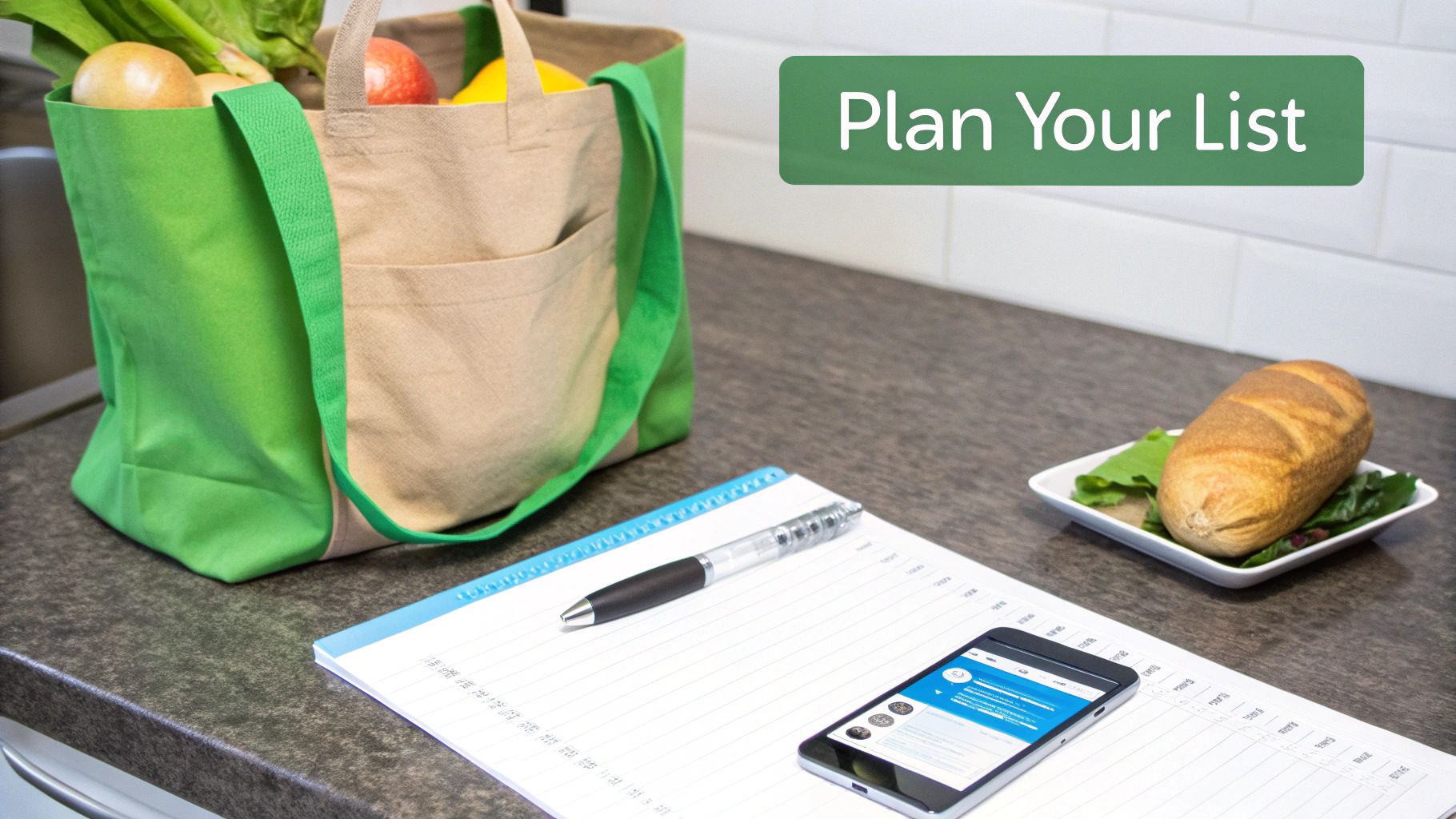
Entering a grocery store without a plan is one of the fastest ways to overspend. Creating a detailed shopping list is a foundational grocery savings tip that prevents impulse buys and ensures you purchase only what you need. This simple habit imposes discipline on your shopping trip, turning it from a browsing session into a targeted mission. Studies show that shoppers who stick to a list can reduce their spending by 15-30% and significantly cut down on food waste, directly impacting their financial well-being.
How to Implement This Strategy
Successfully using a shopping list is about more than just jotting down items. It involves a systematic approach that connects your kitchen inventory to your purchasing decisions, a key step toward achieving your financial goals.
- Audit Your Pantry First: Before making your list, take a quick inventory of your refrigerator, freezer, and pantry. This prevents you from buying duplicate items and helps you plan your spending around ingredients you already have.
- Organize by Store Layout: Group items on your list by store section (e.g., produce, dairy, frozen foods, dry goods). This creates an efficient shopping path, saving you time and reducing the temptation to wander down unnecessary aisles.
- Embrace Technology: Use digital list-making apps like AnyList, Cozi, or Microsoft To Do. These apps allow you to create, share, and edit lists with family members, ensuring everyone is on the same page.
- Plan Around Sales: Build your weekly shopping list based on what’s on sale in your local grocery flyer. This strategic approach ensures your list is packed with cost-effective items from the start. For more ideas on structuring your purchases, learn more about how to create an inexpensive healthy grocery list.
2. Buy Generic and Store Brands
Opting for store-brand or generic products over their name-brand counterparts is a powerful grocery savings tip that can slash your bill by 20-40%. Many shoppers remain loyal to familiar brands, but the reality is that store brands often offer comparable, if not identical, quality. These products are frequently produced in the same manufacturing facilities as national brands, with the primary difference being simpler packaging and a lack of advertising costs, a saving passed directly to the consumer. Making this switch is a direct step toward optimizing your household budget and achieving your financial goals.
How to Implement This Strategy
Successfully integrating store brands into your shopping routine involves more than just picking the cheapest option. It requires a mindful approach to evaluate quality and value, ensuring you maximize savings without sacrificing satisfaction on your path to financial well-being.
- Start with the Basics: Begin by swapping out pantry staples where brand makes little difference. Items like sugar, flour, salt, canned vegetables, and basic spices are excellent starting points, as their quality is highly standardized.
- Compare Ingredient Lists: Before purchasing, take a moment to compare the ingredient list of a store brand with its name-brand competitor. You will often find they are nearly identical, confirming that you are paying less for a very similar product.
- Trust Reputable Store Brands: Certain retailers have built a strong reputation on their private-label products. Brands like Kirkland Signature (Costco), Great Value (Walmart), and Trader Joe’s own brand are known for their high quality and significant cost savings.
- Focus on Unit Price: Always compare the unit price (price per ounce, pound, or liter) on the shelf tag. This gives you a true apples-to-apples cost comparison, revealing the genuine savings offered by the store brand.
3. Shop Sales and Use Coupons Strategically
Timing your purchases to align with sales cycles and pairing them with coupons is a powerful grocery savings tip that can dramatically reduce your spending. Instead of buying items when you run out, this strategy involves proactively purchasing what you need when the price is lowest. By combining store loyalty programs, digital coupons, and manufacturer offers with weekly sales, dedicated shoppers can achieve savings of 30-50% or even more, transforming their approach to household budgeting and accelerating their financial goals.

How to Implement This Strategy
Strategic couponing is a skill that blends planning with technology to maximize savings and build a well-stocked pantry without paying full price. This method is a cornerstone for anyone looking to make significant cuts to their grocery expenses.
- Sign Up for Loyalty Programs: Before you even start shopping, join your grocery store’s free loyalty program. This is often a prerequisite for accessing digital coupons and special sale prices, providing an instant layer of savings.
- Leverage Couponing Apps: Use powerful apps to find deals and earn cash back. Platforms like Ibotta and Checkout 51 offer rebates on items you purchase, while apps like Krazy Coupon Lady aggregate deals from multiple stores, making it easy to find the best bargains.
- Stack Your Savings: Check your store’s policy on “stacking,” which involves using both a store coupon and a manufacturer coupon on a single item. This powerful technique, often highlighted by “extreme couponing” communities, can lead to substantial discounts.
- Focus on What You Use: The most effective grocery savings tips involve buying items you already use. Avoid the temptation to purchase something just because it’s on sale. Stick to your list and focus on stocking up on household staples when they hit their lowest price. For a comprehensive overview, explore different ways regarding how to reduce grocery bills.
4. Shop Seasonal and Local Produce
Aligning your grocery shopping with nature’s calendar is a powerful strategy for reducing costs while improving food quality. When you purchase produce that is in season, you are buying it at its peak supply, which significantly lowers the price. This approach can slash your produce bill by 30-50% compared to buying out-of-season items that require long-distance shipping and specialized storage. Opting for seasonal and local produce is not just a financial win; it also means enjoying fruits and vegetables that are fresher and more nutritious.
How to Implement This Strategy
Adopting a seasonal shopping habit connects your financial planning directly to agricultural cycles, providing a sustainable way to achieve your financial goals. It’s about being flexible and knowledgeable about what’s available in your region.
- Learn Your Seasonal Calendar: Familiarize yourself with which fruits and vegetables are in season in your specific region. A quick search for a “local seasonal produce guide” or checking resources like the USDA’s Seasonal Produce Guide will provide a monthly breakdown.
- Explore Farmers Markets and CSAs: Local farmers markets often offer lower prices than supermarkets because they cut out the middleman. For even deeper savings, consider joining a Community Supported Agriculture (CSA) program, where you pay a farm upfront for a “share” of the upcoming harvest, often saving 20-40% over the season.
- Time Your Market Visits: For the best deals at farmers markets, try shopping near closing time. Vendors are often eager to sell their remaining inventory at a discount rather than transport it back to the farm.
- Preserve the Harvest: One of the most effective grocery savings tips is to buy seasonal produce in bulk when prices are lowest and preserve it. Freezing, canning, or dehydrating berries, tomatoes, and greens allows you to enjoy them year-round at a fraction of the out-of-season cost.
5. Buy in Bulk and Join Warehouse Clubs
Purchasing items in bulk through warehouse clubs like Costco or Sam’s Club is a powerful strategy for reducing your grocery bill. These stores offer significantly lower per-unit prices, often 10-40% cheaper than traditional supermarkets, by selling products in larger quantities. While membership fees can range from $50-120 annually, the substantial savings on pantry staples, paper goods, and proteins mean most households recover this cost within just a few months, making it one of the most effective grocery savings tips for long-term financial management.
How to Implement This Strategy
Maximizing the benefits of bulk buying requires more than just a membership card; it demands a strategic approach to purchasing and storage to ensure savings aren’t lost to waste. This method is especially beneficial for larger households or those with ample storage, directly contributing to your financial goals.
- Calculate Your Break-Even Point: Before committing to a membership, estimate your potential savings. If the annual fee is $60, you need to save just $5 per month to make it worthwhile. Track your spending on items like toilet paper, which can be 40% cheaper per roll, to see how quickly you’ll achieve this.
- Focus on Non-Perishables and Freezable Items: Prioritize items with a long shelf life, such as canned goods, pasta, rice, and paper products. For perishables like meat and cheese, buy large packages and divide them into smaller, meal-sized portions to freeze for later use.
- Partner Up: If you have a small household, consider splitting a membership and the bulk purchases with a friend or family member. This allows you to access the savings without being overwhelmed by large quantities or food waste.
- Track Expiration Dates: Keep a running inventory of your bulk purchases and their expiration dates. Use the “first in, first out” method to ensure older items are used before they spoil, protecting your investment and your budget.
6. Plan Your Spending Around Sales and Pantry Inventory
A common mistake in household budgeting is creating a spending plan and then shopping for the ingredients, regardless of their price. A more financially savvy approach is to reverse this process. By planning your purchases around weekly sales, seasonal produce, and what you already have in your pantry, you align your spending with the lowest available prices. This strategy is one of the most effective grocery savings tips, empowering you to cut your food budget by 25-35% and drastically reduce food waste, directly improving your financial outlook.
How to Implement This Strategy
Adopting this “reverse planning” method shifts your mindset from reactive buying to proactive saving. It transforms shopping prep into a strategic exercise in resource management, a crucial skill for achieving long-term financial freedom.
- Consult Flyers First: Before you even think about what to buy, review your local grocery store’s weekly circulars or digital app. Identify the best deals on proteins, produce, and pantry staples, and let those sale items become the foundation of your spending plan.
- Shop Your Kitchen: After checking sales, take a thorough inventory of your pantry, freezer, and refrigerator. Look for items nearing their expiration date or ingredients you have in abundance. This step ensures you use what you own, preventing waste and unnecessary purchases.
- Embrace Flexibility: Learn to substitute ingredients based on what’s on sale or in your pantry. If a recipe calls for expensive asparagus but green beans are on sale, make the swap. This creative approach keeps your budget in check without sacrificing variety.
- Use Existing Inventory: Once a month, challenge yourself to build a shopping list using only ingredients you need to supplement what you already have on hand. This is an excellent way to clear out your pantry and freezer while saving a significant amount on a week’s groceries. For more ideas on structuring these kinds of purchases, explore how to create meals on a budget for 4.
7. Shop Reduced/Clearance Sections and Day-Old Items
One of the most effective grocery savings tips involves exploring the often-overlooked clearance sections of your local store. These areas are dedicated to items nearing their “sell-by” or “best-by” dates, discontinued products, or those with slightly damaged packaging. Regularly checking these markdowns can yield savings of 30-70% on everything from meat and produce to bakery and pantry staples, offering a direct route to lowering your food bill without compromising on quality for items you plan to use quickly.

How to Implement This Strategy
Successfully navigating clearance sections requires a bit of strategy and timing, but mastering it can significantly impact your financial goals by slashing your grocery spending. This approach turns routine shopping into a treasure hunt for deep discounts.
- Learn the Markdown Schedule: Many stores discount items at specific times of the day or on certain days of the week. Politely ask staff in the bakery, deli, and meat departments about their markdown schedules to time your trips for the best selection.
- Focus on Freezable Items: The best clearance finds are often items you can preserve. Look for meat marked down 30-50% that you can freeze immediately for later use. Day-old bread from the bakery, often priced at just $1-$2, is perfect for freezing for toast.
- Build Your List Around Your Finds: Adopt a flexible shopping approach. If you find a great deal on clearance chicken or vegetables, build your shopping list around those ingredients rather than sticking rigidly to a pre-set plan.
- Inspect Before You Buy: Always check the quality of reduced items. For produce, look for slight blemishes you can cut away. For packaged goods, ensure the packaging is intact and the “use-by” date is still reasonable for your intended use.
8. Reduce Meat Consumption and Buy Proteins Strategically
For most households, meat is one of the single most expensive categories on the grocery bill. By strategically managing your protein purchases, you can achieve significant savings, potentially cutting your spending in this category by 30-50%. This approach involves reducing meat frequency, choosing less expensive cuts, and incorporating more cost-effective protein sources, which directly contributes to your financial goals by lowering your weekly food budget.
How to Implement This Strategy
Optimizing your protein spending isn’t about eliminating meat entirely but rather about making smarter, more intentional choices. This method of grocery savings tips allows you to maintain a balanced intake without letting protein costs dominate your food expenses, freeing up funds for other financial priorities.
- Incorporate Plant-Based Proteins: Dedicate one or two shopping lists per month to plant-based proteins. Dried beans and lentils can cost as little as $0.50 per pound, compared to ground beef at $3-5 per pound, offering a substantial and immediate saving.
- Choose Cheaper Cuts: Embrace less expensive cuts of meat. Chicken thighs or drumsticks are often less than half the price of boneless, skinless breasts, and cuts like beef chuck or pork shoulder are ideal for cost-effective financial planning.
- Buy in Bulk and on Sale: When you see a good sale on meat, such as whole chickens for under $1.50 per pound, buy extra. Portion it out and freeze it for future use, locking in the lower price.
- Stretch Your Portions: Use meat as a component rather than the main event. By mixing smaller amounts of shredded chicken or ground beef with vegetables, beans, and grains, you make each portion go further. This tactic helps you build a more robust savings fund over time.
9. Avoid Shopping While Hungry and Control Impulse Purchases
Shopping for groceries on an empty stomach is a common mistake that sabotages even the most carefully planned budget. When you’re hungry, your brain’s decision-making processes are compromised, making you highly susceptible to impulse purchases, especially for high-calorie, expensive convenience foods. Behavioral economics studies reveal that hungry shoppers can increase their unplanned spending by 17-40%. This grocery savings tip focuses on the psychological aspect of shopping, helping you maintain control and stick to your financial goals.
How to Implement This Strategy
Controlling impulse purchases requires proactive strategies that address the psychological triggers of overspending. By implementing a few simple rules, you can protect your wallet from the powerful influence of hunger and marketing tactics.
- Eat Before You Shop: This is the most critical step. Having a meal or a healthy snack before heading to the store stabilizes your blood sugar and allows you to make rational purchasing decisions. Neuroscience shows a 40% higher rate of impulse buys when hungry.
- Use the Cash Envelope System: Popularized by personal finance experts like Dave Ramsey, this method involves allocating a specific amount of cash for groceries and leaving credit cards at home. Physically seeing the money dwindle creates powerful psychological accountability and makes it impossible to overspend.
- Set a Shopping Timer: Challenge yourself to complete your shopping trip within a set time, such as 30 minutes. This creates a sense of urgency, forcing you to focus solely on your list and preventing leisurely browsing down aisles filled with tempting, non-essential items.
- Stick to Your Planned Route: Avoid wandering through the entire store. Follow your organized list and only visit the aisles you need. Deliberately skipping the snack, soda, and bulk candy aisles can save you $20-50 per trip in impulse buys alone.
- Use Self-Checkout: The main checkout lanes are strategically designed with “impulse zones” filled with candy, magazines, and sodas. Using self-checkout can help you bypass this final gauntlet of temptation and stick to your budget.
10. Use Store Apps, Price Comparison Tools, and Price Matching
In the digital age, your smartphone is one of the most powerful grocery savings tips at your disposal. Leveraging technology through store apps, comparison tools, and price-matching policies transforms how you shop, unlocking significant discounts with minimal effort. This tech-savvy approach combines digital coupons from retailer apps like Kroger or Target Circle with cash-back opportunities from platforms like Ibotta. By integrating these tools, shoppers can consistently save 10-20% on their grocery bills, turning a routine task into a strategic financial win.
How to Implement This Strategy
Effectively using technology to save on groceries involves a multi-layered approach that combines proactive planning with in-the-moment action. This method ensures you get the best possible price on every item, directly contributing to your financial goals.
- Download and Prep Before You Go: Install your primary grocery store’s app a few days before your shopping trip. Browse and “clip” digital coupons for items on your list. Set up notifications for special deals or price drops on your favorite products.
- Leverage Price Comparison Tools: Use apps like ShopSavvy or Google Lens to quickly compare prices on higher-cost items while you are in the store. This confirms you’re getting the best deal available in your area.
- Understand Price-Matching Policies: Ask customer service about your store’s price-matching policy. Retailers like Walmart will often match a competitor’s advertised price, but you must know the specific rules, such as needing the physical or digital ad.
- Stack Your Savings: The real power comes from combining offers. Use a store app’s digital coupon on an item, pay for it, and then scan your receipt into a cash-back app like Fetch Rewards or Ibotta to earn rewards on the same purchase. This “stacking” maximizes your return.
10 Grocery Savings Strategies Compared
| Strategy | 🔄 Implementation Complexity | ⚡ Resource Requirements / Effort | 📊 Expected Outcomes (Savings / Impact) | ⭐ Ideal Use Cases | 💡 Key Advantages / Tips |
|---|---|---|---|---|---|
| Create and Use a Shopping List | Low — simple planning step | Minimal — paper or list app, 10–20 min/week | 15–30% savings; reduced impulse buys and waste | Weekly shoppers, budget planners | Check pantry first; organize by store section |
| Buy Generic and Store Brands | Low — easy to adopt | Minimal — price/unit comparison effort | 20–40% savings on comparable items | Cost-sensitive buyers, staple purchases | Start with non-perishables; compare ingredient lists |
| Shop Sales and Use Coupons Strategically | Medium — requires tracking & timing | Moderate — apps, coupon clipping, loyalty cards | 30–50% on targeted items; can stack deals | Deal-seekers, flexible planners | Stack manufacturer + store coupons; focus on needed items |
| Shop Seasonal and Local Produce | Medium — requires seasonal knowledge | Moderate — farmers markets, CSA or local sourcing | 30–50% cheaper in-season; improved nutrition | Health-focused buyers, local-food supporters | Learn seasonal calendar; freeze/can excess |
| Buy in Bulk and Join Warehouse Clubs | Medium — upfront planning & storage | Higher — membership fee, storage/freezer space | 10–40% lower per-unit; membership payback 2–3 months | Large households, small businesses | Calculate ROI; share bulk with friends; freeze perishables |
| Plan Spending Around Sales & Pantry Inventory | Medium — flexible spending plans | Moderate — time to review sales and inventory | 25–35% savings; reduced waste | Flexible shoppers, frugal planners | Use store circulars; keep versatile pantry staples |
| Shop Reduced/Clearance Sections & Day‑Old Items | Medium — frequent store checks | Low–Moderate — time visits, freezer for storage | 30–70% markdowns; good for immediate use/freezing | Flexible planners, zero‑waste advocates | Visit late-afternoon; freeze discounted meat immediately |
| Reduce Meat Consumption & Buy Proteins Strategically | Medium — lifestyle adjustments | Moderate — alternative proteins, financial discipline | 30–50% savings on protein category; health benefits | Health- or budget-focused households | Substitute beans/eggs, buy cheaper cuts, freeze portions |
| Avoid Shopping While Hungry & Control Impulse Purchases | Low — behavioral change | Minimal — timing, budgets, possible cash system | Reduces impulse buys 17–40%; saves ~$100–300/month | Anyone overspending or impulse-prone | Eat before shopping; set a time limit and stick to list |
| Use Store Apps, Price Comparison & Price Matching | Medium — app management | Moderate — multiple apps/accounts, receipt scanning | 10–20% savings; cashback and deal alerts | Tech‑savvy shoppers, time-conscious bargain hunters | Download apps before shopping; enable deal notifications |
Putting It All Together: Your Path to Financial Freedom Starts in the Grocery Aisle
Mastering your grocery budget is more than just clipping coupons or finding a bargain; it is a foundational skill in the pursuit of long-term financial stability. The strategies we have explored, from meticulously planning your shopping list to strategically buying generic brands and timing your protein purchases, are not merely about saving a few pounds here and there. They represent a fundamental shift in your relationship with money, transforming a mundane chore into a powerful tool for wealth creation. By implementing these grocery savings tips, you are actively choosing to take control of your spending, developing a discipline and awareness that will benefit every aspect of your financial life.
From Small Habits to Big Financial Wins
The journey to financial freedom can seem daunting, but it begins with small, consistent actions. The beauty of these grocery savings tips is their accessibility. You do not need a degree in finance or a large initial investment to start seeing results. You can begin today, on your very next shopping trip.
Here’s how to translate this knowledge into tangible results:
- Start Small, Win Big: Do not try to implement all ten tips at once. This can lead to overwhelm and burnout. Instead, select just two or three strategies that feel most manageable for your lifestyle. Perhaps that’s committing to creating a detailed shopping list based on your pantry inventory and weekly sales flyers, or maybe it’s downloading a store app and a price comparison tool to ensure you never overpay.
- Track Your Progress: The most motivating factor is seeing real results. For one month, track the difference between your old grocery spending and your new, optimised spending. Seeing that you have freed up an extra £50, £100, or even more will provide the encouragement you need to continue.
- Redirect Your Savings: This is the most critical step. The money you save should not just disappear into your current account. Give it a specific job. Transfer those savings directly into a high-yield savings account for your emergency fund, use it to make an extra payment on a high-interest credit card, or allocate it to an investment account like a stocks and shares ISA. This transforms your grocery savings from a simple cost-cutting exercise into a direct investment in your future.
Your Grocery Bill: A Reflection of Your Financial Goals
Ultimately, every pound you save at the supermarket is a pound you can put to work achieving your most important life goals. It is the down payment on your first home, the seed money for a side business, or the fuel for your retirement fund. By viewing your grocery budget through this lens, you are no longer just buying food; you are building a more secure and prosperous future.
The principles of planning, avoiding impulse buys, seeking value, and leveraging technology are universal. The skills you hone in the grocery aisle, mastering these grocery savings tips, will make you a smarter consumer and a more effective money manager across the board. Take these actionable strategies, adapt them to your unique circumstances, and begin your journey. The path to escaping financial worries and building lasting wealth can truly begin with a single, well-planned trip to the supermarket.
Ready to take your financial management to the next level? The Collapsed Wallet app is designed to help you track your spending, set budgets, and see exactly where your money is going, making it easier than ever to implement these grocery savings tips and achieve your financial goals. Take control of your finances today by visiting Collapsed Wallet and start building your path to financial freedom.

4 thoughts on “10 Smart Grocery Savings Tips for 2025”