
Table of Contents
- 1. Create and Stick to a Shopping List
- 2. Use Coupons and Digital Deals Strategically
- 3. Buy Store Brands and Generic Products
- 4. Shop Sales and Stock Up on Non-Perishables
- 5. Shop Seasonally and Buy Local Produce
- 6. Shop the Perimeter and Avoid Processed Foods
- 7. Compare Unit Prices and Buy in Bulk
- 8. Reduce Meat Consumption and Use Alternatives
- 9. Avoid Shopping When Hungry and Manage Impulse Buying
- 10. Grow Your Own Produce and Preserve Food at Home
- 10-Point Grocery Savings Comparison
- Putting It All Together: Your Blueprint for Lasting Grocery Savings
This blog post may contain affiliate links. As an Amazon Associate I earn from qualifying purchases.
Groceries represent a significant and recurring expense for every household, making it one of the most powerful areas to implement smart financial strategies. Mastering how to save at the supermarket isn't just about cutting costs; it's a direct step towards achieving your larger financial goals, whether that's building an emergency fund, paying down debt, or investing for the future. In an economy where every dollar counts, optimizing your grocery budget is a crucial skill for financial wellness. This comprehensive guide provides actionable grocery shopping tips to save money, helping you transform a routine chore into a strategic advantage in your journey to financial security.
The aim of our blog is to provide valuable insights and practical tips to help readers manage their money more effectively. However, the information shared here is for general guidance and educational purposes only. It should not be regarded as professional financial advice. Any actions taken based on our content are entirely the responsibility of the reader, and we accept no liability for the outcomes of those actions. If you require financial advice tailored to your personal circumstances, we strongly recommend seeking assistance from a qualified financial adviser.
This article moves beyond generic advice and offers a detailed roadmap to slash your spending. We will explore everything from strategic list-making and mastering unit pricing to leveraging digital coupons and understanding the power of seasonal shopping. You will learn how to identify true bargains, avoid common psychological traps that lead to impulse buys, and stock your pantry intelligently to minimize waste and maximize value. By implementing these practical techniques, you can unlock significant savings, redirecting that money toward what truly matters for your financial freedom. Prepare to take control of your grocery budget and turn your weekly shop into a wealth-building activity.
1. Create and Stick to a Shopping List
Entering a grocery store without a plan is one of the fastest ways to overspend. Creating a detailed shopping list is a foundational strategy among grocery shopping tips to save money. This simple act of preparation transforms you from a browser, susceptible to impulse buys and clever marketing, into a focused shopper with a clear mission. By knowing exactly what you need, you avoid buying items that will go unused and prevent purchasing duplicates of things you already have at home, which directly supports your path to financial freedom.

How to Implement This Strategy
To make your list a powerful budgeting tool, it needs to be more than just a random collection of items. Start by planning your budget for the week, which will dictate the ingredients you need. This proactive approach ensures every purchase has a purpose, directly contributing to your financial goals. For guidance on building a budget-friendly foundation, you can learn more about crafting an inexpensive healthy grocery list on collapsedwallet.com.
Actionable Tips for Success
- Organize by Store Layout: Group items on your list by department (e.g., produce, dairy, frozen foods, pantry). This saves time and helps you avoid backtracking, which can lead to temptation.
- Use Technology: Leverage grocery list apps like AnyList or Bring!. Many of these apps allow you to create shared lists with family members, track prices, and organize items automatically, streamlining your path to financial freedom.
- Conduct a Pre-Shop Audit: Before you leave the house, quickly check your refrigerator, freezer, and pantry. Cross off anything you already have to prevent unnecessary spending.
- Stay Disciplined: The list is your primary defense against impulse buys. Commit to buying only what is on your list. If you see an unlisted item on sale, evaluate if it's a genuine need or a marketing tactic designed to derail your budget.
2. Use Coupons and Digital Deals Strategically
In the digital age, coupons have evolved far beyond the Sunday paper clippings. Strategically leveraging a mix of manufacturer coupons, store loyalty programs, and digital apps can dramatically reduce your grocery bill. This approach is a cornerstone of modern grocery shopping tips to save money, transforming a routine chore into a rewarding financial activity. By combining various discounts, you can often save significantly on items you were already planning to buy, directly boosting your budget and accelerating your journey toward financial freedom.

How to Implement This Strategy
The key to successful couponing is organization and timing. Instead of buying something just because you have a coupon, align your coupons with your pre-planned shopping list and store sales. For example, if a brand of pasta you use is on a buy-one-get-one-free sale and you also have a manufacturer coupon for that brand, you can "stack" these deals for maximum savings. This methodical approach ensures your coupon use is intentional and effective, preventing you from buying unnecessary items that ultimately waste money.
Actionable Tips for Success
- Load Digital Coupons First: Before your shopping trip, browse your store’s app (like Kroger or Harris Teeter) and load all relevant digital coupons directly to your loyalty card. This makes saving effortless at checkout.
- Stack Savings: Combine store sales with manufacturer coupons whenever possible. A store might discount an item by 20%, and a manufacturer coupon could take another $1 off, creating a powerful layered discount.
- Embrace Cashback Apps: After your trip, scan your receipt using apps like Ibotta, Fetch Rewards, and Checkout 51. These services provide cashback on specific items, adding another layer of savings after the initial purchase.
- Subscribe for Exclusive Deals: Sign up for your favorite grocery store’s email newsletter. They often send out exclusive digital coupons and early notifications about upcoming sales to subscribers, giving you a competitive edge.
3. Buy Store Brands and Generic Products
One of the most effective grocery shopping tips to save money involves looking past the familiar logos and opting for store-brand or generic products. Many consumers mistakenly believe name brands offer superior quality, but private-label goods are often produced in the same facilities, using nearly identical ingredients. The significant price difference, which can be 20-40% lower, comes from eliminating expensive marketing and advertising campaigns, passing those savings directly to you.
How to Implement This Strategy
Making the switch from name brands to store brands is a direct path to reducing your grocery bill without sacrificing quality. Start by identifying pantry staples like flour, sugar, canned vegetables, pasta, and cleaning supplies. These items have simple ingredient lists and offer a low-risk opportunity to test the quality of your store’s private label. For example, brands like Walmart's Great Value, Target’s Good & Gather, and Costco's Kirkland Signature have built reputations for providing excellent value, making them a reliable starting point for your journey toward financial freedom.
Actionable Tips for Success
- Compare the Ingredients: Before purchasing, take a moment to compare the ingredient list on the store-brand product with its name-brand counterpart. You will often find they are virtually identical.
- Start Small: If you're hesitant, begin by swapping one or two items per shopping trip. Test them in budget-friendly recipes where they aren't the star ingredient, such as using store-brand flour or generic canned tomatoes.
- Look for Premium Tiers: Many grocery chains now offer premium store brands (like Kroger's Private Selection) that rival the quality of high-end national brands but at a more budget-friendly price point.
- Trust the Guarantees: Most stores offer a satisfaction guarantee on their private-label products. If you are genuinely unhappy with the quality, you can typically return the item for a full refund, making the switch risk-free.
4. Shop Sales and Stock Up on Non-Perishables
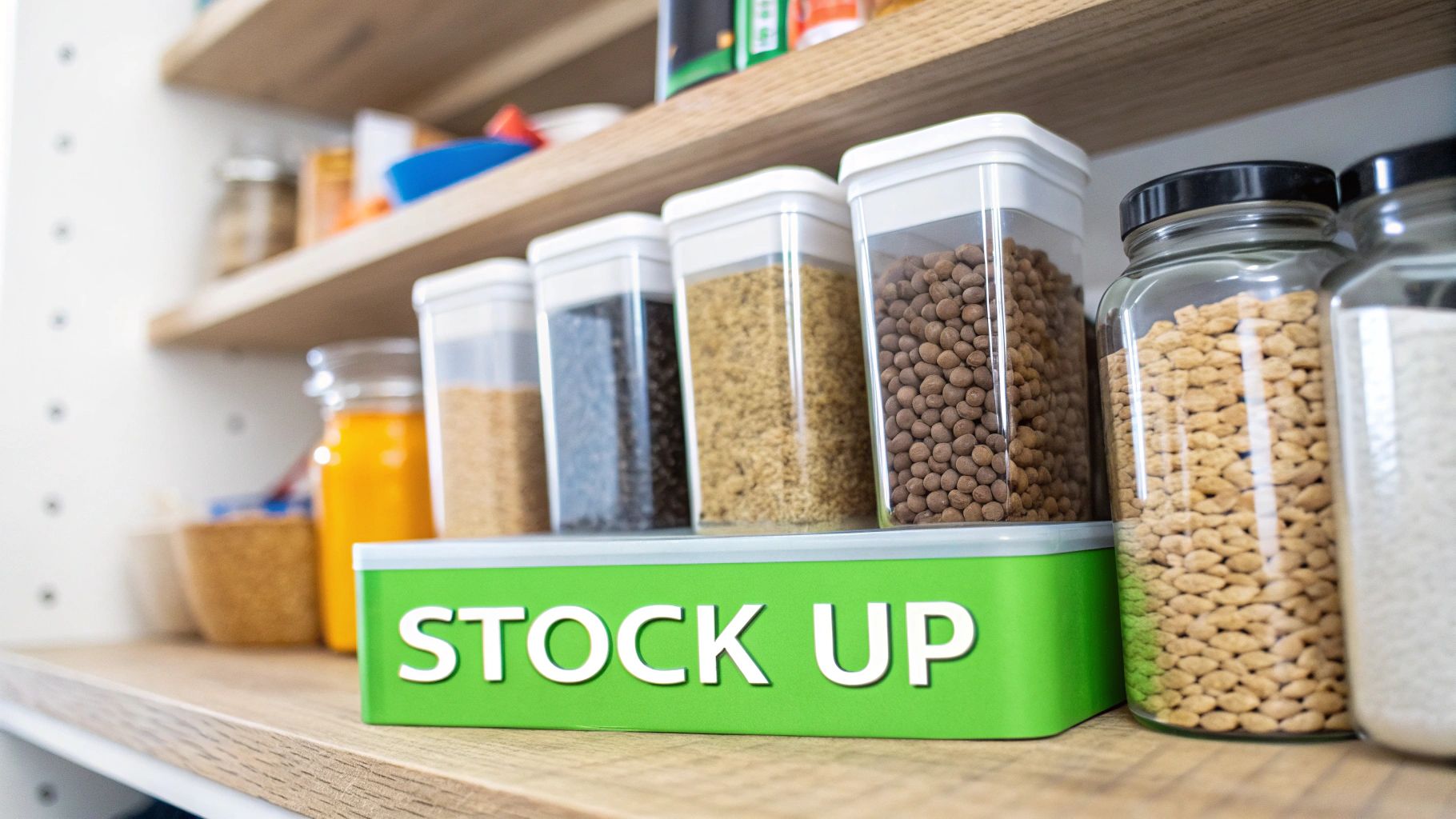
A proactive approach to grocery shopping involves more than just weekly planning; it requires strategic purchasing. Shopping sales and stocking up on non-perishable items is a cornerstone of advanced grocery shopping tips to save money. This method allows you to build a well-stocked pantry and freezer with items purchased at their lowest prices, insulating your budget from price fluctuations and reducing the need to buy essentials at full cost. It transforms your pantry from a simple storage space into a powerful financial asset.
How to Implement This Strategy
The core of this strategy is buying more when the price is right. Instead of purchasing one can of beans for this week's budget, you buy five when they are on a "buy one, get one free" offer. This requires a small initial investment and adequate storage space, but the long-term savings significantly contribute to your financial goals. For example, buying meat when it's marked down 40-50% and freezing it immediately means you have protein for future use at a fraction of the usual price.
Actionable Tips for Success
- Monitor Weekly Flyers: Check your local grocery store's weekly ads, which are typically released online 1-2 days before the sale starts. Plan your shopping trips around the best deals on items you regularly use.
- Track Price Cycles: Keep a simple price book or use an app to note the regular and sale prices of your most-purchased items. This helps you recognize a truly great deal versus a minor discount.
- Focus on Shelf-Stable Items: Prioritize items with long shelf lives like canned goods, pasta, rice, grains, and frozen foods. This minimizes the risk of waste while maximizing your savings.
- Practice FIFO Rotation: When you bring new items home, place them at the back of your pantry or freezer. Move older items to the front to ensure you use them first. This "First In, First Out" method prevents items from expiring.
5. Shop Seasonally and Buy Local Produce
Aligning your produce purchases with nature's calendar is a powerful yet often overlooked strategy among grocery shopping tips to save money. When fruits and vegetables are in season, they are abundant, leading to significantly lower prices, often 40-60% less than their out-of-season counterparts. This approach not only slashes your grocery bill but also provides fresher, more valuable produce, as it hasn't been shipped from halfway across the world. Embracing seasonal purchasing is a direct path to reducing costs and maximizing the value of your food budget.
How to Implement This Strategy
Making this strategy work involves shifting your mindset from buying what you want, whenever you want, to buying what is currently at its peak. This means your grocery list will change with the seasons. For example, you would focus on root vegetables and citrus in the winter when they are most affordable, and purchase berries and tomatoes in the summer when their prices can drop by more than 50% compared to winter. This tactical purchasing directly supports your financial goals by maximizing value for every dollar spent on fresh food.
Actionable Tips for Success
- Learn Your Region's Calendar: Familiarize yourself with the seasonal produce calendar for your specific area. A quick online search for "seasonal produce calendar [your state/region]" will yield helpful charts.
- Visit Farmers' Markets Strategically: Head to local farmers' markets about 30 minutes before they close. Vendors are often willing to offer discounts on remaining produce to avoid taking it home.
- Buy and Preserve in Bulk: When a favorite fruit or vegetable is at its seasonal peak and lowest price, buy it in larger quantities. Preserve the excess by freezing or canning it for use in the off-season.
- Follow Local Farms: Many local farms use social media to announce bulk deals or "u-pick" events. Following them can alert you to opportunities to get fresh produce at a fraction of the supermarket price.
6. Shop the Perimeter and Avoid Processed Foods
A simple yet highly effective strategy among grocery shopping tips to save money is to focus your efforts on the outer edges of the store. Most supermarkets are designed to place fresh, whole foods like produce, meat, and dairy along the perimeter, while the center aisles are packed with more expensive and often less nutritious processed items. By sticking to this outer track, you naturally fill your cart with foundational ingredients that offer better value, steering clear of costly convenience foods.
How to Implement This Strategy
This approach requires a conscious shift in your shopping path and mindset. Instead of weaving through every aisle, make a deliberate plan to navigate the perimeter first. Fill the bulk of your cart with fresh fruits, vegetables, lean proteins, and dairy before venturing into the center for essential pantry staples like rice, beans, or oats. This method directly combats the high cost of convenience, where you pay a premium for pre-packaged, pre-cut, or single-serving items. For example, a whole chicken at approximately $1.50 per pound is far more economical than processed chicken pieces that can cost over $3.50 per pound.
Actionable Tips for Success
- Prioritize Whole Ingredients: Opt for whole proteins like a full chicken or a large cut of meat that you can portion at home. Purchase raw vegetables instead of pre-cut varieties or frozen prepared items, which can be four to five times more expensive.
- Buy Bulk Staples: When you do enter the center aisles, head for the bulk bins. Dried goods like beans, rice, and oats are significantly cheaper per pound compared to their branded, boxed counterparts found elsewhere in the store.
- Allocate Time for Preparation: Dedicate time on the weekend to wash, chop, and portion your fresh purchases. This makes accessing ingredients just as convenient as reaching for a processed option and helps you stick to your financial goals.
- Read the Ingredients: When you do buy a packaged item, look at the ingredient list. The fewer ingredients, the less processed it generally is. This simple check helps you make more mindful, budget-friendly choices.
7. Compare Unit Prices and Buy in Bulk
Mastering the art of unit pricing is one of the most effective grocery shopping tips to save money, transforming you from a casual buyer into a savvy consumer. The package price can be misleading; the true value lies in the price per unit, such as per ounce, pound, or serving. By focusing on this metric, you can accurately identify the best deal, ensuring your money goes further on items you regularly use. This strategic approach, especially when combined with buying in bulk, can significantly lower your long-term grocery expenses.
How to Implement This Strategy
To put this into practice, train yourself to look for the unit price on the shelf label, which is usually in a smaller font next to the retail price. For example, a 12-ounce box of cereal at $5.04 costs $0.42 per ounce, while a 24-ounce box for $6.72 costs only $0.28 per ounce. The larger box costs more upfront but provides substantial savings per serving. Similarly, buying pantry staples like rice or pasta in bulk can reduce the cost from over $2.50 per pound for small branded boxes to as little as $0.75 per pound.
Actionable Tips for Success
- Always Check the Shelf Tag: Make it a habit to locate and compare the unit price for every item you consider. This small action is a powerful tool for achieving your financial goals.
- Evaluate Warehouse Memberships: For families of four or more, a membership to a warehouse club like Costco or Sam's Club can yield significant savings, often offsetting the annual fee within a few trips.
- Stick to Non-Perishables: Prioritize buying bulk quantities of items with a long shelf life, such as paper products, canned goods, pasta, rice, and cleaning supplies.
- Buy Bulk with a Purpose: Avoid purchasing an item in bulk just because it's on sale. Only commit to larger quantities if it's a product your household consumes regularly and you have adequate storage space.
8. Reduce Meat Consumption and Use Alternatives
For many households, the meat and poultry section represents the single most expensive category on the grocery receipt. Tackling this cost head-on is one of the most impactful grocery shopping tips to save money. By consciously reducing meat consumption and embracing high-quality, low-cost alternatives, you can significantly lower your weekly food bill, directly accelerating your journey toward your financial goals.
How to Implement This Strategy
The key is to shift your perspective on budgeting, moving protein from the centrepiece to a component. This doesn't mean you have to become a vegetarian. Instead, focus on incorporating more plant-based proteins or using smaller quantities of more flavourful, less expensive meat cuts. For instance, swapping just one family meal from ground beef to lentils can save you over $10, which compounds into significant annual savings. This strategy is a cornerstone for anyone looking to make their budget work harder, and you can explore more ways to create meals on a budget for 4 on collapsedwallet.com.
Actionable Tips for Success
- Embrace Meatless Mondays: Start by dedicating one day a week to meat-free meals. This simple commitment can save a family of four $20 to $30 weekly, freeing up capital for savings or debt repayment.
- Swap Expensive Cuts for Cheaper Ones: Opt for chicken thighs or legs instead of breasts, and choose ground turkey or pork shoulder over leaner, pricier cuts. These options are often more flavourful and significantly cheaper per pound.
- Use Beans and Lentils to Stretch Meat: When preparing recipes with ground meat, replace half the meat with cooked lentils or black beans. This boosts the fibre content while cutting the cost in half without a major change in taste.
- Make Eggs a Primary Protein: At just a few dollars per dozen, eggs are a nutritional powerhouse. Incorporate them as the main protein for two or three meals a week to drive down expenses.
9. Avoid Shopping When Hungry and Manage Impulse Buying
Shopping on an empty stomach is a well-known budget trap, transforming a planned trip into an expensive, impulse-driven expedition. Research indicates that hunger can increase unplanned purchases by 40-50%, as your physical state directly influences your decision-making, making high-calorie, non-essential items seem irresistible. This is one of the most psychologically impactful grocery shopping tips to save money, as it focuses on managing your internal triggers to prevent overspending.
How to Implement This Strategy
The core of this strategy is to ensure your physical and emotional state supports your financial goals, not sabotages them. By shopping after eating, you approach the task with a clear, focused mind, less susceptible to the allure of checkout candy displays and junk food. This proactive self-management is a powerful technique for anyone looking to gain control over their spending habits. For a broader look at reducing daily expenditures, you can explore detailed strategies on how to cut expenses on collapsedwallet.com.
Actionable Tips for Success
- Eat Before You Go: Have a balanced meal or a filling snack about 30-60 minutes before you head to the store. This stabilizes your blood sugar and curbs cravings.
- Shop in a Calm State: Avoid grocery shopping when you are stressed, bored, or tired. Emotional states can trigger comfort-buying, leading to a cart full of unplanned items that derail your path to financial freedom.
- Set a Time Limit: Challenge yourself to complete your shopping trip in a set timeframe, like 25 minutes. This encourages efficiency and minimizes time spent browsing aisles that aren't on your list.
- Follow a Direct Path: Use your organized list to navigate the store purposefully. Go only to the aisles you need and actively avoid areas known for impulse buys, like the endcaps and checkout lanes.
10. Grow Your Own Produce and Preserve Food at Home
Taking control of your food source is one of the most powerful grocery shopping tips to save money, directly reducing your reliance on retail stores. Home gardening and food preservation provide high-quality produce at a fraction of the cost, while techniques like freezing or canning extend the bounty of a harvest, minimizing food waste and lowering your annual grocery bill. Even a small-scale effort can yield significant financial returns and superior freshness.
How to Implement This Strategy
The financial impact of growing your own food is substantial. For example, a single tomato plant that costs around $3 can produce between $30 and $50 worth of fruit over a season. A small herb garden can easily save you $100 to $200 per year compared to buying expensive fresh herbs from the store. By preserving this harvest, you lock in those savings, creating a pantry that supports your financial goals year-round.
Actionable Tips for Success
- Start Small and Simple: Begin with easy-to-grow crops like tomatoes, lettuce, peppers, and herbs. These provide high yields with minimal effort, offering a quick return on your initial investment.
- Use Container Gardening: If you lack yard space, you can still achieve great results. Many vegetables and herbs thrive in pots on a balcony, patio, or even a sunny windowsill.
- Learn Basic Preservation: Freezing is the easiest method to start with. Simply wash, prepare, and freeze homegrown berries, chopped peppers, or blanched green beans to use throughout the winter.
- Join a Community Garden: If you don't have land, a community garden provides access to growing space and a supportive network for a small fee, reducing barriers to entry.
- Start Seeds Indoors: Purchasing seeds is significantly cheaper than buying starter plants. Starting them indoors before the last frost gives you a head start on the growing season and maximizes savings.
10-Point Grocery Savings Comparison
| Strategy | 🔄 Implementation Complexity | ⚡ Resource Requirements | ⭐ Expected Outcomes | 📊 Ideal Use Cases | 💡 Quick Tips |
|---|---|---|---|---|---|
| Create and Stick to a Shopping List | Low — requires upfront planning time | Minimal — phone/app or paper; time to plan | High — reduces impulse buys 20–40%; spending down 5–15% | Weekly shoppers, budget-focused households | Organize by store layout; check pantry; keep list visible |
| Use Coupons and Digital Deals Strategically | Moderate — ongoing app/expiry management | Moderate — smartphone/apps, time to clip and track | Medium–High — saves ~10–30% on target items | Brand shoppers, deal-stackers, frequent shoppers | Load coupons to card; stack with sales; watch expirations |
| Buy Store Brands and Generic Products | Low — simple substitution habit | Minimal — willingness to try alternatives | High — typically 20–40% savings per item | Budget-conscious families, staple buyers | Start with non-perishables; compare ingredients |
| Shop Sales and Stock Up on Non-Perishables | Moderate — requires sale tracking and planning | Moderate — storage space and larger upfront spend | High — bulk/unit savings 30–50% on eligible items | Those with storage space; bulk purchasers | Check weekly ads; use FIFO; freeze sale meats |
| Shop Seasonally and Buy Local Produce | Low–Moderate — learn seasonal cycles | Minimal–Moderate — access to farmers/markets, time | High — seasonal savings 40–60% plus better freshness | Anyone buying produce, local-market shoppers | Learn local season calendar; preserve excess |
| Shop the Perimeter and Avoid Processed Foods | Moderate — needs prep time/skills | Moderate — time for prep and basic equipment | High — better value and often lower cost per serving | Health-focused households, families | Buy whole proteins; prep ingredients on weekends |
| Compare Unit Prices and Buy in Bulk | Moderate — requires calculations and judgment | Moderate — storage, possible club membership fees | High — saves 20–50% per unit on regular items | Large households, frequent consumers | Always compare unit price; calculate break-even |
| Reduce Meat Consumption and Use Alternatives | Moderate — budget planning and recipe changes | Minimal–Moderate — pantry staples (beans, lentils, eggs) | High — major cost savings; ~$2k+ yearly with sustained reduction | Budgeters, health/environmentally minded | Start with one meatless meal/week; stretch meat with beans |
| Avoid Shopping When Hungry and Manage Impulse Buying | Low — behavioral discipline | Minimal — eat beforehand; follow a plan | High — cuts impulse buys 40–50%; spending down 10–20% | Anyone prone to impulse purchases | Eat 30–60 min before shopping; stick to list; set time limits |
| Grow Your Own Produce and Preserve Food at Home | High — setup, learning curve | Moderate–High — space, tools, initial $50–$500 investment | High — garden produce ~90% cheaper; $300–1,000+ annual savings | Homeowners, gardeners, long-term savers | Start small (containers); learn simple freezing/canning methods |
Putting It All Together: Your Blueprint for Lasting Grocery Savings
Navigating the grocery store aisles can feel like a financial battleground, but armed with the right strategies, you can consistently emerge victorious. We've explored a comprehensive arsenal of grocery shopping tips to save money, from the foundational discipline of creating and sticking to a shopping list to the strategic foresight of stocking up during sales. We've delved into the power of comparing unit prices, the simple yet profound impact of choosing store brands, and the long-term benefits of reducing meat consumption or even growing some of your own produce. Each of these tactics represents a powerful lever you can pull to lower your expenses and take control of your household budget.
The true key to unlocking substantial savings isn't about perfectly executing every single tip on this list from day one. Instead, it's about building a personalized, sustainable system that fits seamlessly into your life. The journey toward financial freedom is a marathon, not a sprint, and your grocery habits are a crucial part of that long-term race.
From Tips to Transformation: Your Action Plan
Transforming abstract advice into tangible results requires a deliberate approach. The goal is to move from simply knowing these tips to making them automatic habits.
Here's a practical, step-by-step blueprint to get started:
- Start Small, Win Early: Don't try to implement all ten strategies at once. Choose just one or two that seem most achievable for you. Perhaps it's committing to always shopping with a list for the next month or switching five of your regular name-brand items to their generic counterparts. Secure these small wins to build momentum and confidence.
- Track and Acknowledge Progress: The most powerful motivator is seeing results. At the end of the month, compare your grocery spending to the previous month. Seeing that you saved $50, $75, or even more by making a few simple changes provides the encouragement needed to continue.
- Layer and Expand: Once your initial changes become second nature, introduce another strategy. After mastering the shopping list, start integrating digital coupons and cashback apps. Once you're comfortable with seasonal shopping, perhaps you can explore buying certain staples in bulk. This layering approach prevents overwhelm and ensures each new habit is built on a solid foundation.
The Bigger Financial Picture
Mastering your grocery budget is about much more than just having extra cash at the end of the month. It's a foundational skill in the pursuit of financial independence. The discipline you build by planning your budget, resisting impulse buys, and seeking out value translates directly to other areas of your financial life.
Key Insight: Every dollar saved at the grocery store is a dollar that can be redirected to accelerate your most important financial goals. This is not just about cutting costs; it's about reallocating capital to build wealth.
Think about what those reclaimed dollars could do. An extra $100 saved each month is $1,200 a year. That's a significant payment toward high-interest debt, a meaningful contribution to an emergency fund, or a solid start for an investment account. By implementing these grocery shopping tips to save money, you are actively manufacturing capital to fast-track your journey toward escaping financial worries and building a secure future. Your intentional choices in the supermarket aisle today are direct investments in the financial freedom of your tomorrow.
Ready to take your savings to the next level? The Collapsed Wallet app is designed to help you track your spending, set budgets, and see exactly where your money is going, making it the perfect companion for your new and improved grocery strategy. Download Collapsed Wallet today at Collapsed Wallet and turn your grocery savings into a powerful engine for achieving your financial goals.
