

Table of Contents
This blog post may contain affiliate links. As an Amazon Associate I earn from qualifying purchases.
Wondering “How do I ask for a pay rise”? Well it isn’t just about walking into your boss’s office and asking for more money. It’s a strategic process. The real work starts months before that conversation ever happens, turning a hopeful wish into a solid business case they can’t ignore.
The aim of our blog is to provide valuable insights and practical tips to help readers manage their money more effectively. However, the information shared here is for general guidance and educational purposes only. It should not be regarded as professional financial advice. Any actions taken based on our content are entirely the responsibility of the reader, and we accept no liability for the outcomes of those actions. If you require financial advice tailored to your personal circumstances, we strongly recommend seeking assistance from a qualified financial adviser.
Laying the Groundwork for a Successful Pay Rise Conversation
The secret to a successful negotiation isn’t a single, dramatic moment. It’s the result of groundwork you lay over time. You need to build a compelling story that proves your value has outgrown your current salary. This means shifting your mindset from “I feel like I deserve more” to “I can prove my contributions are worth more.”

Timing Is Everything
Picking the right moment is half the battle. A perfectly timed request can feel like a natural next step, while a poorly timed one can get shut down before you’ve even made your case. The key is to read the room—and the company’s financial reports.
Pay attention to what’s happening around you. Is the company celebrating a massive new contract? Are executives talking about expansion in company-wide meetings? These are good signs. On the flip side, if you’re hearing whispers of budget freezes, layoffs, or lost clients, it’s probably best to hold off.
The table below breaks down some of the key signals to watch for, helping you spot the perfect window of opportunity.
Key Indicators for Timing Your Pay Rise Request
| Indicator | Green Light (Good Time to Ask) | Red Flag (Consider Waiting) |
|---|---|---|
| Company Performance | Strong quarterly earnings, new client wins, successful product launches. | Missed revenue targets, recent layoffs, budget cuts announced. |
| Team Dynamics | Your team just hit a major milestone or your department is expanding. | Your manager is brand new or key team members have recently left. |
| Personal Achievements | You just completed a high-profile project or received public praise. | You recently received constructive feedback or missed a key deadline. |
| Business Cycles | Just before annual budget planning begins or during formal review periods. | Right after a major company expense or during a hiring freeze. |
Beyond the company’s performance, think about your own career rhythm. The best time to ask is when your value is most visible.
- After a Major Win: Did you just land a huge client, save the company a boatload of money, or launch a project everyone’s raving about? Ask while that success is still fresh in everyone’s mind.
- During Performance Reviews: Your manager is already in the headspace of evaluating your work and future. It’s a natural, built-in opportunity to discuss compensation.
- When Taking on More Responsibility: If you’ve been quietly absorbing the duties of a departed colleague or your role has officially expanded, your compensation should reflect that.
Build Your Reputation Proactively
Long before you ask, your reputation should be doing the talking for you. Managers are far more willing to go to bat for someone they see as reliable, proactive, and indispensable.
This isn’t about being the loudest person in the room. It’s about quiet, consistent excellence. Become the go-to expert for a specific skill. Volunteer for the challenging projects that others shy away from. When you consistently deliver quality work with a positive, can-do attitude, you build up political capital. That capital is what you cash in during a negotiation.
Understand the Numbers Game
You have to ground your request in reality. Companies run on budgets, so knowing the typical salary increase figures helps frame your ask.
Here’s the inside scoop: for 2026, US companies are planning for a median merit increase of 3.5%. For employees rated as ‘meets expectations,’ 88% receive a raise right around that median. But if you’re rated ‘exceeds expectations,’ that number jumps to 89% getting a raise, with the median climbing to 5%. The biggest bumps come from promotions, where 100% of employees get a raise averaging 9.7%.
This data makes it crystal clear: being seen as a top performer or tying your request to a promotion gives you the strongest possible case. To get a better handle on your own finances and plan for the future, check out our guide on how to create a budget you will stick to. This kind of preparation ensures your request is both ambitious and anchored in reality.
Building Your Case with Hard Data and Achievements
Let’s be blunt: when you ask for a raise, feelings don’t pay the bills. Your manager isn’t operating on emotion; they’re working with budgets, KPIs, and ROI. To get what you want, you have to stop talking about how you feel and start demonstrating what you’re worth.
This means you need to build a business case for yourself. And like any good business case, yours needs to be built on a foundation of cold, hard data.

This is where you need to get organized. I always tell people to start a “brag file”—it sounds a bit silly, but it’s a game-changer. It’s just a simple document or folder where you consistently track your wins as they happen. Don’t wait until your annual review to try and recall what you did six months ago. The details that matter will be long gone.
Put a Number on Your Contributions
The most persuasive evidence you can present is quantifiable. Numbers cut through subjective arguments and speak a language everyone in business understands. Your job is to translate your day-to-day work into measurable outcomes that tie directly to the company’s goals.
Try to frame your accomplishments around these key areas:
- Revenue Generation: Did you play a key role in landing a new client worth $50,000 in annual revenue?
- Cost Savings: Did you find a way to streamline a process that saves the team 10 hours a week? (That’s real money back in the company’s pocket.)
- Efficiency Gains: Did you introduce a new tool or workflow that cut project delivery times by 15%?
Metrics like these shift the conversation entirely. You’re no longer just saying, “I work hard.” You’re proving, “My work generated X amount of tangible value.”
Figure Out Your Market Value
Once you know your value inside the company, it’s time to find out what you’re worth on the outside. What would it cost to hire someone to replace you? What could you be making somewhere else with your skills and experience? This research is what grounds your request in reality.
Knowing your market rate is non-negotiable. It anchors your request in fact, not feeling. Without it, you’re just picking a number out of thin air. With it, you’re negotiating from a position of informed strength.
There are plenty of great online resources for this. Platforms like Glassdoor, Payscale, and LinkedIn Salary are your best friends here. You can plug in your job title, experience level, and location to get a pretty accurate salary range.
My advice? Don’t rely on just one source. Pull data from two or three to find a consistent average. You’re looking for a realistic range, not just a single number. For example, if your research shows the market rate is between $65,000 and $75,000, you now have a clear, justifiable target zone.
Craft Your Story
Okay, you’ve got your list of quantified achievements and your market research. Now it’s time to weave it all into a compelling story. This isn’t just about dumping a list of facts on your manager’s desk. It’s about telling the story of your growth and impact.
Here’s a simple way to structure your pitch:
- Lead with your biggest wins. Kick things off by highlighting your top 3-5 accomplishments since your last salary review.
- Tie it back to the big picture. Show that you understand what matters to the business and how your work directly supports its goals.
- Introduce your market research. Present the salary data calmly and confidently. Frame it as ensuring your pay is fair and competitive, not as an ultimatum.
Putting it all together, your pitch might sound something like this:
“Based on my contributions over the last year, especially the process overhaul that cut our project costs by 12%, and my research showing the market rate for this role is in the $70,000-$78,000 range, I’d like to formally request my salary be increased to $76,000.”
See the difference? This approach turns a potentially awkward conversation into a straightforward business discussion. You’re no longer just an employee asking for more money; you’re a strategic asset making a well-reasoned case for a mutually beneficial investment.
From Notes to Negotiation: Nailing the Pay-Rise Conversation
Confidence comes from being prepared, not from winging it. You’ve done the homework, gathered your achievements, and benchmarked your salary. Now, it’s time to turn all that prep work into a conversation that gets you paid what you’re worth.
Don’t underestimate this step. Walking in cold is a recipe for disaster. In fact, research shows that only about 50% of salary raise requests actually succeed. A huge reason they fail is a lack of preparation—no hard numbers, no market data, just a vague feeling of being underpaid. Practicing a clear, data-driven script can completely change the odds in your favor. You can find more insights on what separates a successful ask from a failed one over on Nasdaq.com.
Reading the Room: How to Talk to Your Manager
Your boss isn’t a robot, and your pitch shouldn’t be either. You know their personality best, so a little customization goes a long way.
- For the Data-Driven Manager: This is the manager who lives in spreadsheets. Lead with your strongest metrics and ROI. They want to see the numbers, so give them the numbers.
- For the Relationship-Focused Manager: This boss cares about the team, loyalty, and the story. Frame your request around your journey with the company, your commitment, and how you’ve helped the team grow.
- For the Direct, No-Nonsense Manager: Don’t beat around the bush. Get straight to it. They appreciate efficiency, so make your case clearly and concisely.
No matter who you’re talking to, the core message is the same: your value has grown, and your pay should reflect that. You’re just tweaking the delivery.
How to Structure the Conversation
Think of this as a strategic business meeting, not a confrontation. Having a simple roadmap in your head will keep you from getting flustered or forgetting your most important points.
Your conversation should have a clear beginning, middle, and end.
First, the opening. Kick things off on a positive note. Thank them for their time and clearly state why you’re there. No need to be cryptic, just be direct and professional.
Next, present your case. This is where you shine. Walk them through your biggest wins, tying them directly to team and company goals. Then, bring in your market research to show that your request is grounded in reality, not just wishful thinking.
Finally, make the ask. State the number or range you’re asking for. And then… pause. This is critical. Let the silence hang for a moment and give them space to respond first.
My best advice? Practice this out loud. Seriously. Grab a friend, your partner, or even your dog, and role-play the entire conversation. It feels awkward at first, but it helps smooth out clunky phrases and builds the muscle memory you need to stay cool under pressure.
Sample Scripts to Get You Started
These aren’t meant to be read word-for-word, but they’re a great starting point. Make them sound like you.
A Great Way to Open the Meeting
“Thanks for making the time. I’m really enjoying the work I’m doing, especially the challenges on the [Project Name] initiative. I wanted to set up this chat to talk about my role, the contributions I’ve made over the past year, and my future with the company.”
This sets a positive, forward-looking tone right from the start.
Laying Out Your Value
“Since my last performance review, I’ve taken the lead on a few key projects. For example, I built out that new workflow that cut our team’s admin time by 15%. I also played a big part in landing the [Client Name] account, which brought in $X in new revenue. My plan is to keep delivering that kind of impact.”
See how that’s packed with specific, quantifiable results? It’s tough to argue with hard data.
Making the Specific Ask
“Based on these results and the market research I’ve done for similar roles, which shows a range of $X to $Y, I’d like to request an adjustment to my salary to $[Your Target Number]. I feel this would better align my compensation with my performance and the current market value for my skill set.”
The language here is key. “Request an adjustment” and “align my compensation” are professional, confident, and backed by your evidence. Honing this skill is invaluable, and for a deeper dive into tactics, check out our complete guide on how to negotiate a salary increase.
Navigating Objections and Negotiation Tactics
So you’ve made your case, laid out your achievements, and presented your number. But instead of an immediate “yes,” you get a bit of pushback. Don’t panic. This is completely normal. An objection isn’t a brick wall; it’s usually the starting point for the real negotiation.
The most important thing you can do in this moment is to stay calm, listen, and not get defensive. Is your manager talking about budget constraints? The timing? Your performance? Each of these requires a different kind of conversation. Your ability to handle this moment professionally can make all the difference.
How to Respond to Common Pushback
Hearing a “no” or a “not right now” can sting, but walking in with a few responses in your back pocket will keep you in control of the conversation. Let’s break down the most common objections and how you can navigate them.
“It’s just not in the budget right now.”
This is the classic, go-to objection. Instead of just accepting it and walking away, use it as a chance to talk about the future.
- Your Move: “I understand that budgets can be tight. Could we put a date on the calendar to revisit this in, say, three to six months? And in the meantime, are there any specific goals I can focus on hitting that would make this an easy yes for you then?”
This does two things brilliantly: it shows you’re a team player who gets the financial picture, but it also locks in a concrete follow-up. You’re not letting the conversation die.
“We need to see more consistency from you.”
Okay, this one can feel a little personal, but it’s actually a gift. Your manager is literally giving you the roadmap to your raise.
- Your Move: “Thank you for the candid feedback; I really appreciate it. I’m committed to excelling in this role. Could you help me understand which specific areas you’d like to see that consistency in? I’d love to work with you to set some clear, measurable goals so I can focus on exceeding your expectations.”
See what you did there? You just turned a vague critique into a tangible action plan. You sound coachable and proactive, not defensive.
The kind of pushback you get often depends on your manager’s style. Are they all about the numbers, or do they focus more on team dynamics? Understanding their perspective is key.
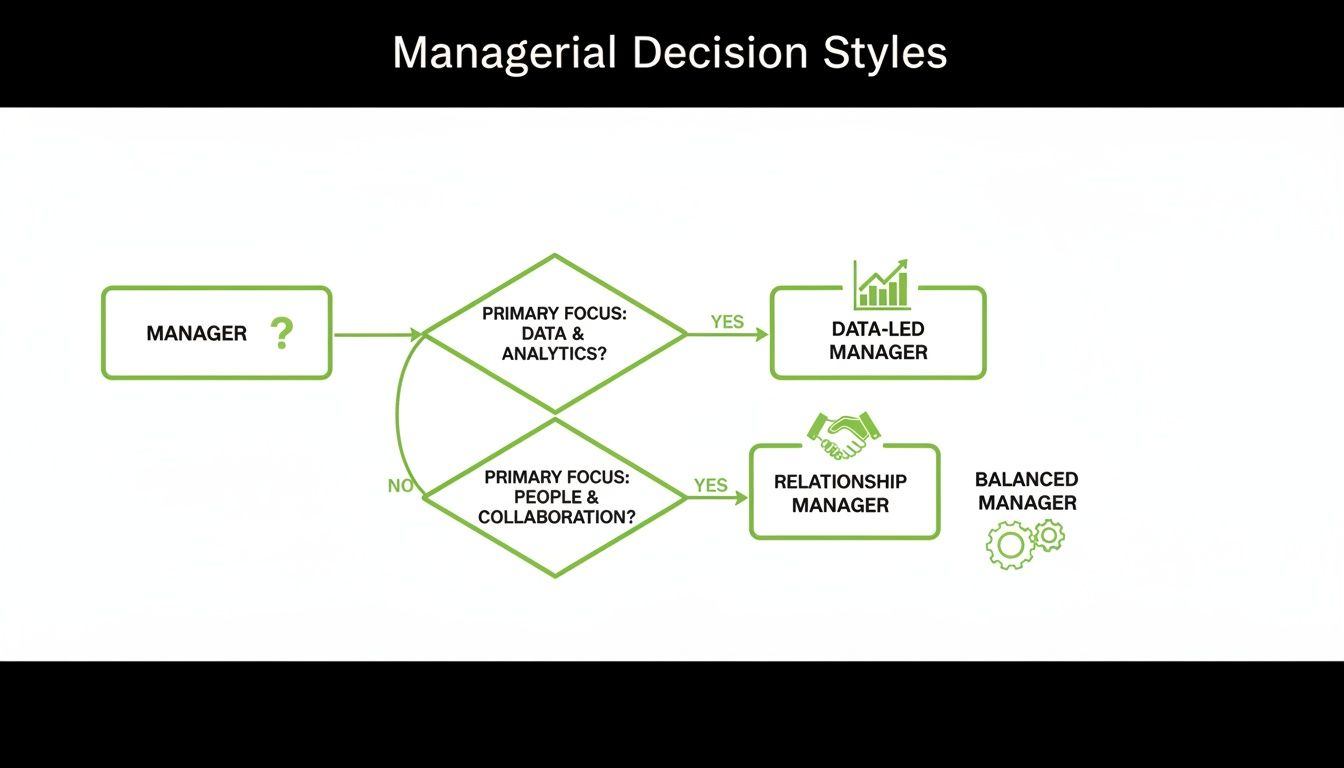
As this shows, a data-led boss will want to see hard metrics, while a relationship-focused one might be thinking about team morale. Frame your follow-up accordingly.
Expanding the Negotiation Beyond Salary
What if a pay bump is truly off the table right now? Don’t just pack up and leave. This is where you can get creative. Your value can be recognized in plenty of ways that don’t involve a change to your base salary.
Broadening the conversation shows that you’re flexible and solution-oriented. Think about what else would genuinely improve your professional life or financial well-being.
A successful negotiation isn’t just about hitting one specific number. It’s about making sure your hard work and growing contributions are recognized in a way that feels fair and keeps you motivated.
Here are some powerful alternatives to a straight salary increase you could propose:
- A one-time performance bonus: This rewards your recent wins without touching the company’s long-term salary budget.
- More paid time off (PTO): An extra week of vacation can be worth thousands and is a huge boost for work-life balance.
- Professional development budget: Ask the company to fund a certification, course, or industry conference that will build your skills (and make you even more valuable).
- A better title: A title change that accurately reflects your responsibilities can be a massive win for your resume and future career prospects.
- Stock options or equity: If your company offers it, this can be an incredibly valuable long-term perk.
- A more flexible schedule: Having more control over your hours or getting more work-from-home days can save you a fortune in commuting costs and time.
When you shift the discussion from a single number to your total compensation and benefits package, you open up so many more doors for a positive outcome. It proves you’re committed to finding a solution that works for everyone.
Following Up Professionally to Secure Your Result
You’ve had the big talk. But don’t close the file just yet. What you do in the hours and days after the meeting is just as critical as the conversation itself. A thoughtful, strategic follow-up keeps the momentum going and shows you’re on top of your game, no matter what your manager said.

Whatever the initial response was, get a brief thank-you email into their inbox within 24 hours. It’s a simple act of professionalism that keeps the lines of communication open. Keep it short, express your appreciation, and briefly touch on the key points you discussed.
When the Answer Is Yes
Excellent news! This is exactly what you were hoping for. Your first move is to express your genuine thanks, but your second, more crucial move is to get the agreement in writing. A verbal “yes” feels great, but a formal, written confirmation is non-negotiable. It prevents any confusion down the road.
Your follow-up email should do three simple things:
- Thank your manager for their time and for approving the raise.
- Clearly state the new salary and the date it takes effect.
- Politely ask for formal documentation from HR to make it official.
This isn’t about being distrustful; it’s about being professional and thorough. A clear paper trail protects everyone involved.
When the Decision Is Delayed
It’s common to hear something like, “Let me look into this,” or “I need to run this by HR.” Don’t mistake this for a ‘no.’ It’s simply a holding pattern, and you have a chance to manage it. If your manager doesn’t give you a clear timeline, it’s up to you to gently establish one.
Never leave a meeting with a vague promise. A firm date for a follow-up is your most important takeaway. It transforms an indefinite delay into a defined next step and keeps you in control of the timeline.
In your thank-you email, acknowledge their consideration and mention the timeline you both agreed on. For example: “Thanks again for the discussion today. I really appreciate you taking this to the leadership team, and I look forward to reconnecting next Tuesday as we discussed.”
When the Answer Is No
Hearing “no” is tough. It’s okay to feel disappointed, but how you react in that moment speaks volumes about your professional maturity. The goal is to avoid showing frustration and immediately pivot the conversation toward the future.
This is your opportunity to ask for clear, actionable feedback. Try asking questions like:
- “I understand. Could you share what I would need to accomplish over the next six months to put me in a strong position for a raise then?”
- “What specific skills or metrics should I be focused on to increase my value to the team?”
This response shows you’re resilient and committed to your growth. It also makes your manager responsible for giving you a clear roadmap.
Keep in mind that the company’s financial health is a massive factor. A business that’s growing and retaining clients is in a much better position to approve salary bumps, often in the 3-5% range. You can learn more about timing your ask with company performance in this helpful career guide from Indeed.
If the feedback is fuzzy or the path forward feels blocked, a “no” can be a valuable signal. It might be telling you that your growth potential at this company has hit a ceiling. If that’s the case, it’s smart to start exploring other income streams. You might want to check out our guide on ways to make extra money from home while you weigh your next career move. A solid follow-up, no matter the outcome, reinforces your reputation and gives you the clarity to decide what comes next.
Your Pay Rise Questions, Answered
Alright, you’ve done the prep work, but those nagging “what if” questions are still bouncing around in your head. That’s completely normal. Even the most confident professional can feel a bit shaky when it comes to talking money.
Let’s tackle some of the trickiest scenarios you might encounter. Think of this as your personal FAQ for navigating the nuances of the pay rise conversation.
How Often Can I Actually Ask for a Raise?
This is a big one. Nobody wants to be seen as pushy or ungrateful. The general rule of thumb, and the one that aligns with most corporate calendars, is to ask for a raise no more than once a year.
Most companies operate on an annual budget and performance review cycle, so this timing just makes sense. Asking every six months can come across as impatient, unless something has fundamentally changed about your job.
So, what are those exceptions? You might have a case for an off-cycle ask if:
- Your Role Has Dramatically Expanded: You’ve officially absorbed the responsibilities of a more senior colleague who left, or your job description has been formally rewritten to include much more.
- You Scored a Massive, Unexpected Win: Maybe you single-handedly salvaged a seven-figure client account or developed a process that saved the company a fortune. A truly game-changing contribution can justify an earlier conversation.
For the most part, though, playing the long game pays off. Sticking to an annual rhythm shows you’re professional and in sync with the business’s operations.
What if I Find Out a Colleague Makes More Than Me?
Discovering you’re paid less than a coworker for similar work stings. It’s frustrating and, frankly, feels unfair. But how you handle this information is everything.
Whatever you do, don’t storm into your manager’s office with, “I know Sarah makes more than me, so you need to pay me more.” This immediately puts them on the defensive and makes the conversation about office drama, not your value. It’s a fast track to creating a toxic environment.
Instead, use this knowledge as your private motivation. The real issue isn’t what Sarah earns; it’s that your pay might not reflect your value to the company or the current market rate.
The Bottom Line: Your colleague’s salary isn’t the evidence you need. Your market value and your documented achievements are. Let the pay gap light a fire under you to build an airtight case based on objective data.
Shift the focus back to you. Use salary benchmarking data to see what the market says you’re worth. Gather your accomplishments, quantify your impact, and build a business case around your performance. The discovery about your colleague is a signal to do your homework, not a weapon to use in your negotiation.
Is It a Good Idea to Mention a Competing Job Offer?
Using another job offer as leverage is the nuclear option. It can be incredibly effective, but it’s also packed with risk. Before you even think about playing this card, you must be 100% ready to walk away and take that other job if your boss calls your bluff.
This move can sometimes fracture the trust with your manager. They might agree to match the offer, but now they see you as a flight risk and may start quietly looking for your replacement. Your loyalty will be in question.
That said, sometimes it’s the only way to get a reluctant company to see your true market value. If you genuinely love your job but are being significantly underpaid, a firm offer from another company is undeniable proof.
If you decide to go this route, the delivery is crucial. Frame it with professionalism, not as a threat:
“I really love working here and wasn’t looking to leave, but another company reached out with an offer that’s made me re-evaluate my compensation. My first choice is absolutely to stay and continue growing with this team. Is there any way we can get closer to this offer of $[Amount]?”
This phrasing makes it about a shared desire to find a solution, not an ultimatum.
At Collapsed Wallet, our goal is to give you the clear, straightforward financial guidance you need to build a better future. For more smart strategies on growing your income and mastering your money, check out all our resources at https://collapsedwallet.com.
