

Table of Contents
This blog post may contain affiliate links. As an Amazon Associate I earn from qualifying purchases.
Figuring out how to save money as a student really boils down to one simple idea: spend less than you bring in and be intentional with every pound. It’s about getting a handle on your budget, finding clever ways to cut costs without killing your social life, and maybe even boosting your income while you study. This guide will provide actionable strategies to help you manage your finances, reduce financial worries, and start building a foundation for financial freedom.
The aim of our blog is to provide valuable insights and practical tips to help readers manage their money more effectively. However, the information shared here is for general guidance and educational purposes only. It should not be regarded as professional financial advice. Any actions taken based on our content are entirely the responsibility of the reader, and we accept no liability for the outcomes of those actions. If you require financial advice tailored to your personal circumstances, we strongly recommend seeking assistance from a qualified financial adviser.
Building Your Financial Foundation as a Student

Starting uni is the perfect moment to build money habits that will stick with you for life. Getting this right now saves you a ton of stress down the line and puts you on the fast track to whatever you want to achieve—whether that’s a gap year trip, a deposit for a flat, or just a life without constant money worries.
Think of managing your money as another core subject. The difference is, this one will pay you back for the rest of your life, helping you achieve lasting financial freedom.
Why Getting Good with Money Matters Early On
Financial literacy isn’t just a buzzword. It’s the real-world skill of making smart, effective decisions with your cash. For students, that means knowing how to map out a budget, see where your money actually goes, and spot chances to save—even when you’re just living off a student loan and a weekend job.
Gaining control over your money means gaining control over your life. Financial confidence isn’t about being rich; it’s about knowing how to manage what you have.
Learning these skills early makes a huge difference. A 2022 study by the Programme for International Student Assessment (PISA) found that about 18% of 15-year-olds didn’t have even basic financial skills. More importantly, the students who did know their stuff were 72% more likely to save money and 50% more likely to shop around for a better price. It’s clear proof that a little knowledge builds powerful habits.
Set Clear Financial Goals
You can’t save effectively if you don’t know what you’re saving for. A vague goal like “save more” is easy to ignore. The trick is to get specific by setting SMART goals—that’s Specific, Measurable, Achievable, Relevant, and Time-bound.
What could that look like?
- Your “Oh Crap” Fund: An emergency fund is non-negotiable. Aim for enough to cover three months of essential expenses, but start smaller. Getting your first £500 saved is a massive win.
- Short-Term Wins: This is for building momentum. Think a new laptop that doesn’t crash mid-lecture, or funding a personal development course.
- The Big Picture: Dream a little. This could be saving for a deposit on a property post-graduation or even dipping your toes into investing through ETFs.
When you have a clear target, your savings suddenly have a purpose. It’s so much easier to skip an impulse purchase when you can see it getting you closer to something you really want. This is the first real step to mastering your money and building a solid future.
Crafting a Realistic Student Budget That Works
Think of a budget as your financial roadmap. Without one, you’re essentially driving blind, just guessing where your money is disappearing each month. It’s nearly impossible to save and hit your goals when you don’t know what’s happening with your cash.
Our goal here is to share practical tips and real-world insights to help you get a handle on your money. Just a heads-up, though: this is for educational purposes and isn’t professional financial advice. Any decisions you make are your own, so if you need advice specific to your situation, it’s always best to chat with a qualified financial adviser.
Alright, let’s get into the different ways you can budget. The trick is to find a system that actually fits your student lifestyle—something flexible enough for a fluctuating part-time job income or those unexpected costs.
Choosing Your Method to Save Money As a Student
Not all budgets are created equal. What works for your parents or a friend with a full-time job probably won’t be the perfect fit for you. The point here is to find clarity, not to build a complicated system you’ll give up on in a week.
Here are a couple of popular methods that are brilliant for student life:
- The 50/30/20 Rule: This one is super simple. You split your after-tax income into three pots: 50% for your absolute needs (rent, bills, essentials), 30% for your wants (subscriptions, socialising), and 20% for savings and paying off debt. It’s a great starting point because it doesn’t require you to track every single penny.
- Zero-Based Budgeting: This method is for those who like to be more hands-on. The idea is to give every single pound a job to do. At the end of the month, your income minus all your spending and saving should equal zero. It forces you to be intentional with your money and gives you complete control.
A budget isn’t about restriction; it’s about empowerment. It gives you permission to spend money on what you truly value while still building a solid financial future.
If you want to go a bit deeper on this, our complete guide on budgeting for young adults has even more strategies to help you build a plan that sticks.
Track Everything Coming In and Going Out
Before any budget can work, you need a crystal-clear picture of your cash flow.
First, tally up all your income. This includes your student loan payments, any wages from a part-time job, and help from family. Get a real number for what you have to work with each term or month.
Next comes the part that can be a real eye-opener: tracking your spending. For one full month, jot down every single purchase. Seriously, everything. That morning coffee, the online subscription you forgot about, the late-night takeaway. You’ll quickly discover where your money is actually going, which is often a surprise.
The good news is you don’t have to do this with a pen and paper. Modern budgeting apps can link to your bank account and do all the heavy lifting for you, automatically categorizing your spending. This data is the bedrock of a budget that will actually work for you.
Spending Less Without Missing Out
Once you’ve got a budget mapped out, the real work begins: figuring out where your money is actually going. This isn’t about becoming a hermit to save a few quid. It’s about spending with purpose and making smart cuts to your biggest expenses. This is where you’ll see the biggest wins for your savings goals.
Let’s be real, being a student is more expensive than ever. The average student’s monthly spending has shot up to £1,104, with things like rent and travel eating up most of the budget. Since those costs tend to rise faster than any student loan or part-time job income, learning to spend smarter isn’t just a good idea—it’s essential. The full National Student Money Survey breaks down these trends in more detail.
Bringing Down Housing and Utility Costs
Rent is almost always the monster expense in any student budget. You might be locked into your current contract, but you can be much more strategic when it’s time to find next year’s place. Teaming up with more housemates almost always lowers the rent for everyone, and looking at places a little further from campus can save you a surprising amount of cash.
And don’t forget about bills! You have more control over your utilities than you think. It’s the small, daily habits that really add up.
- Be smart with energy: Unplug chargers and gadgets when you’re not using them. Switch to energy-efficient appliances and LED bulbs. Be the person who actually turns the thermostat down a degree or two. Simple things like a draught excluder under your door can make a real difference to your heating bill.
- Watch your water usage: Taking slightly shorter showers and only running the washing machine when it’s completely full will chip away at your water bill over the year.
This mind map really simplifies the whole budgeting process.
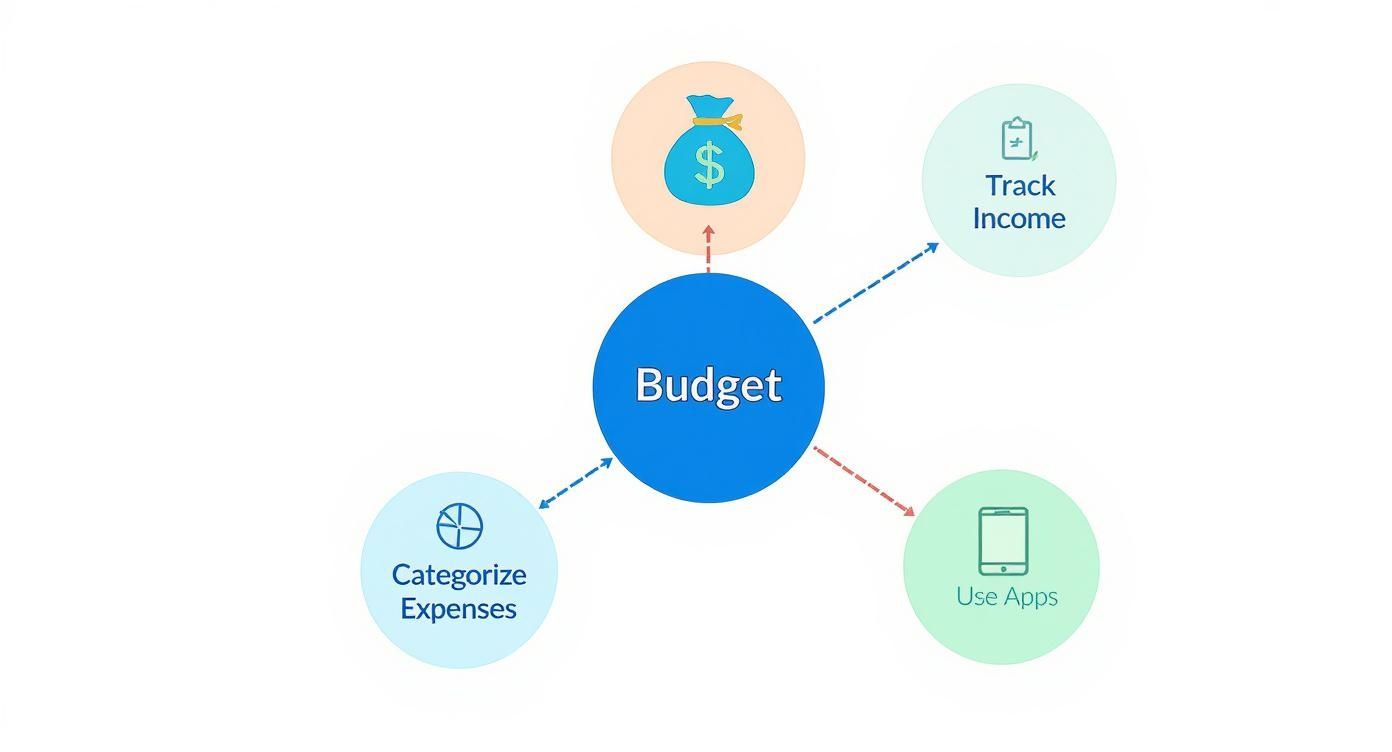
As you can see, it boils down to three things: knowing what’s coming in, knowing what’s going out, and using a little tech to help you keep it all straight. These are the core ideas that empower you to make those strategic spending cuts.
Slashing Your Textbook and Transport Bill
The cost of course materials can be a real shock at the start of term. Before you rush to buy a brand-new textbook you’ll probably only use for one semester, stop and look at your other options.
- Start with the university library—they often have physical and digital copies you can use for free.
- Check online marketplaces or campus notice boards to buy them second-hand from students who took the course last year.
- Look into renting textbooks online for the duration of your module.
Getting around is another area where you can find easy savings. If you live close enough to campus, walking or cycling is your best bet—it’s free and good for you. For anything further, student railcards and bus passes are no-brainers. The upfront cost is usually paid back in savings after just a few journeys. And try to cut back on taxis and ride-sharing apps; those fares add up incredibly fast.
Making small, intelligent changes to your spending habits can free up a lot of cash without making you feel like you’re missing out. Here’s a quick look at some common spending traps and how to sidestep them.
Smart Spending Swaps for Students
| Common Expense | High-Cost Habit | Smart Savings Alternative |
|---|---|---|
| Morning Coffee | Buying a latte from a cafe every day | Brew coffee at home in a travel mug |
| Subscriptions | Paying for multiple streaming services | Share accounts with housemates or rotate subscriptions |
| Textbooks | Purchasing brand-new from the university bookshop | Renting, buying second-hand, or using the library |
| Socialising | Buying multiple rounds of drinks at a bar or club | Set a cash limit before you go out |
| Transport | Relying on taxis or ride-sharing apps | Walking, cycling, or buying a student bus/rail pass |
| Groceries | Shopping when you’re hungry without a list | Plan meals, write a shopping list, and look for deals |
These swaps aren’t about stopping you from having fun or enjoying yourself. They’re about being more intentional with your money so you have more of it for the things that truly matter to you.
Saving money isn’t about depriving yourself. It’s about shifting your spending from things that don’t add much value to your life toward the things that do. Every pound you save is a step toward a bigger financial goal.
Even small adjustments in areas like your weekly food shop can make a huge impact. For more ideas, we’ve put together a full list of grocery savings tips that will help you eat well for less. By making these conscious choices, you’ll start to build positive momentum and see real progress toward financial freedom.
Boosting Your Income and Savings Potential
While smart spending is half the battle, the quickest way to really get ahead is to bring in more cash. Finding ways to earn a little extra money can be a game-changer, dramatically reducing financial stress and helping you build a solid savings cushion before you even graduate.
The trick is to find work that fits around your studies, not the other way around. This is about working smarter, not just harder, to accelerate your journey to financial independence.
Finding Flexible Work That Fits Your Timetable
You can forget the rigid 9-to-5 grind for now. Student life is all about flexibility, and thankfully, there are plenty of jobs that understand the chaos of lectures, labs, and last-minute study sessions. Your goal should be finding roles with adaptable hours or remote options.
Here are a few places to start looking:
- On-Campus Jobs: Think library assistant, student union staff, or campus tour guide. The best part? Your boss completely gets that exams are your top priority.
- The Gig Economy: Apps for food delivery, ride-sharing, or running local errands let you work exactly when you want. You can hustle during quiet weeks and hit the brakes when deadlines are looming.
- Retail and Hospitality: Shops, cafes, and restaurants near campus are almost always looking for student staff and know how to build a schedule around your classes.
Even if it feels like a small amount, this extra income provides some much-needed breathing room in your budget.
Monetize Your Skills with Freelancing
That subject you’re studying? It’s not just a path to a degree—it’s a set of valuable skills you can cash in on right now. Freelancing is a fantastic way to earn money on your own terms while building a killer CV.
For example, a graphic design student can design logos for local businesses. If you’re a writing major, you could offer proofreading services online. Computer science students can find small coding projects to tackle. Platforms like Upwork and Fiverr are great starting points for landing your first clients.
Automate Your Savings with the ‘Pay Yourself First’ Method
By far, the most powerful way to save is to make it automatic. This is where the ‘pay yourself first’ strategy comes into play. It’s simple: before you pay for rent, groceries, or anything else, a portion of your income goes straight into savings.
The easiest way to make this happen is to set up an automatic transfer. Arrange for a set amount to move from your main account to a separate high-yield savings account the day your student loan or paycheck lands.
This one habit changes everything. It turns saving from an afterthought into a priority. By putting it on autopilot, you remove the temptation to spend that money first and guarantee you’re always making progress.
And it works. One survey found that about 64% of students already have a separate savings account, showing it’s a strategy many are already using successfully. The same data showed the median bank balance for those with some college experience is around $5,200—proof that earning and saving consistently builds real security. You can dig into more of these student saving trends to see how you stack up.
When saving becomes a reflex, not a choice, you start building a financial foundation that will last a lifetime.
Use Your Phone to Supercharge Your Savings

That phone in your pocket? It’s more than just a social media machine—it’s one of the best financial tools you have. The right apps can put your budget on autopilot, sniff out savings, and even get you started with investing. They can turn what feels like a complicated financial chore into a simple part of your daily routine.
Bringing these tools into your life gives you a crystal-clear picture of where your money actually goes, which is the first step to making it work for you. It’s all about gaining control and seeing real progress toward your goals.
Let an App Handle Your Budgeting
Forget about wrestling with spreadsheets or trying to remember every single purchase. Modern budgeting apps link directly to your bank account, automatically sorting your spending into categories and showing you exactly what’s happening with your money in real time.
These apps give you instant feedback. You can see precisely how much you spent on non-essentials versus transport last month. Want to cap your social spending? Just set a limit for that category, and the app will nudge you when you’re getting close. It takes all the guesswork out of budgeting and makes sticking to the plan feel almost effortless.
Using tech to manage your money isn’t about adding one more thing to your to-do list. It’s about making your life easier and getting clear, simple data that helps you make better decisions.
When you can see a visual pie chart of your spending habits, it’s so much easier to spot where you can cut back without feeling like you’re missing out. It’s the simplest way I know to hold yourself accountable.
Get Automatic Savings with Cashback and Discounts
Beyond just tracking your money, your phone can actively save you cash on stuff you’re already buying. If you’re a student, cashback apps and browser extensions should be your best friends.
Here’s a quick rundown of what to look for:
- Cashback Apps: These apps give you a small percentage of your purchase back in cash whenever you shop with their retail partners. You just link your card once or shop through their app, and the rewards start adding up on things you needed anyway.
- Browser Extensions: This is a must for online shopping. These little tools run in the background and automatically hunt for voucher codes when you get to the checkout. They apply the best one for you, so you never miss a discount again.
- Student Discount Platforms: Make sure you’re signed up for services like UNiDAYS and Student Beans. They are built for students and offer exclusive deals on everything from new tech and clothes to food and travel.
These tools work away quietly, collecting small savings here and there. It might not feel like much at first, but it can easily add up to a significant amount by the end of the year.
Dip Your Toes Into Investing
Investing probably sounds like something for suits on Wall Street, not students. But modern apps have completely changed the game, making it easy for anyone to get started, even if you only have a few pounds to spare. Many platforms let you open an account with as little as £1.
These apps are designed for beginners and often steer you toward simple options like ETFs (Exchange-Traded Funds). Think of an ETF as a basket filled with lots of different stocks or bonds. This instantly diversifies your investment, which is much less risky than trying to pick individual winning companies.
The goal here isn’t to get rich quick. It’s about getting familiar with the power of compound growth—where the money your investments earn starts earning its own money. Starting early, even with tiny amounts, builds an incredibly powerful financial habit that will serve you for the rest of your life.
Building Long-Term Financial Resilience
Saving money as a student isn’t just about having enough for necessities at the end of the term. It’s about setting yourself up for a future where you’re in control, graduating with a sense of security instead of a cloud of financial anxiety hanging over your head.
Think of it as laying the foundation for your future financial house. Right now, you’re pouring the concrete, making sure everything is solid for whatever comes next.
Start Your Emergency Savings Now
Life happens. Laptops die right before finals, you might need an unexpected trip home, or you could face a sudden medical bill. This is where an emergency fund comes in. It’s not your “fun money” stash; it’s a dedicated safety net to catch you when these things happen.
Without one, a simple surprise can quickly spiral into credit card debt.
A great starting goal is just £500. It sounds manageable because it is. The trick is to be consistent. Open a separate savings account—one that’s easy to get to but not too easy—and set up an automatic transfer. Even a tenner a week adds up faster than you think.
Once you hit that £500 mark, don’t stop. Your next goal should be building that up to cover three to six months of essential living expenses. This is the fund that lets you sleep at night, knowing a minor setback won’t become a major crisis.
An emergency fund is your buffer between a problem and a panic. It gives you options and control when you need them most, preventing you from having to rely on credit cards or loans for urgent needs.
Use Dedicated Accounts for Your Goals
As you get better at saving, you’ll find it helps to give your money a specific job. If all your savings are lumped into one account, it’s way too tempting to “borrow” from your emergency fund for a weekend trip.
Try splitting your savings into different pots. Most digital banks make this incredibly easy. You could set up something like this:
- The “Do Not Touch” Emergency Fund: For true, unexpected emergencies only.
- The “Post-Grad Life” Fund: Saving for a deposit on a flat, a car, or that fancy laptop for your first job.
- The “Investment” Fund: A dedicated pot for putting money into your long-term investment goals, like an ETF.
This approach lets you see exactly how close you are to each goal, which is a huge motivator to keep going.
Understand Borrowing and Build Good Credit
For most of us, being a student means taking on some debt, usually in the form of a student loan. The single most important thing you can do right now is understand how it works. What’s the interest rate? When do you have to start paying it back? Knowing the answers now saves a lot of headaches later. If you want to get ahead, looking into different student loan repayment strategies can give you a clear picture of what to expect after you graduate.
Finally, start thinking about your credit score. It’s basically your financial report card, and a good score makes everything from getting a phone contract to securing a mortgage easier and cheaper down the road.
A simple way to start building a positive credit history is with a student credit card. Use it for one small, regular purchase each month—like a streaming subscription—and always pay the balance in full. This simple habit proves you’re a reliable borrower and is one of the best things you can do for your long-term financial health.
Answering Your Top Questions About Student Savings
Figuring out your finances in college can feel like a pop quiz you didn’t study for. It’s completely normal to have a ton of questions, and honestly, knowing what to ask is the first step.
Let’s clear up some of the most common money questions we hear from students.
How Much Money Should I Actually Be Saving Each Month?
This is the big one, right? But there’s no one-size-fits-all answer. While you might hear about the 50/30/20 rule—where 20% of your income goes to savings—that’s often a huge stretch when you’re a student.
Forget the pressure of a “perfect” percentage. The best approach is to start with what’s realistic for you. Once you’ve built your budget and have a handle on where your money goes, pick a small, achievable number. Seriously, even if it’s just £20 a month, what matters most is getting into the habit of saving consistently.
What’s the Best Way to Save Money on a Really Tight Budget?
When you’re working with a low income, making smart choices with your biggest expenses is where you’ll see the most impact. For nearly every student, that means two things: housing and utilities.
Start thinking now about finding a cheaper place to live next year or splitting utility bills with more flatmates. Then, get strategic with your everyday spending. Make it a rule to never buy anything without checking for a discount first on platforms like UNiDAYS. Use cashback apps for your online shopping. Every little bit adds up.
Should I Pay Off My Debt or Focus on Saving?
Ah, the classic dilemma. It’s a balancing act, but here’s a good rule of thumb: attack high-interest debt first. Things like credit card balances or store cards can grow incredibly fast, and the interest you’re paying is almost certainly more than you’d earn on your savings.
But—and this is important—don’t stop saving completely. Your first priority should be building a small emergency fund of around £500. This is your safety net for unexpected car trouble or a broken laptop. Once that’s tucked away, you can throw most of your extra cash at the expensive debt while still putting a little aside for your other goals.
Student loans are usually a different story. They tend to have lower interest rates, so they’re not as urgent to pay off as credit card debt.
Here at Collapsed Wallet, our goal is to give you the straightforward, practical advice you need to feel in control of your money. For more tips on building a solid financial foundation, check out all our resources over at https://collapsedwallet.com.

1 thought on “How to Save Money as a Student: Practical Steps to Succeed”