

Table of Contents
- 1. Make a Shopping List and Meal Plan
- 2. Buy Generic and Store Brands
- 3. Use Coupons and Digital Deals
- 4. Shop Sales and Stock Up on Non-Perishables
- 5. Buy Seasonal and Local Produce
- 6. Buy in Bulk Using Warehouse Clubs
- 7. Shop the Perimeter and Avoid Processed Foods
- 8. Use Price Comparison and Cashback Apps
- 9. Compare Unit Prices and Buy Smartly
- 10. Reduce Meat Consumption and Buy Strategic Cuts
- 10 Grocery-Saving Tips Comparison
- Transform Your Finances One Grocery Trip at a Time
This blog post may contain affiliate links. As an Amazon Associate I earn from qualifying purchases.
In the quest for financial freedom, mastering your household budget is a non-negotiable first step. Groceries often represent one of the largest and most flexible spending categories, making it a prime area for significant savings. By implementing strategic changes to how you plan, shop, and manage your food resources, you can unlock hundreds, or even thousands, of pounds per year. These aren’t just minor tweaks; they are foundational habits that reduce financial stress and redirect your hard-earned money towards more impactful goals, like paying off debt, investing for the future, or building an emergency fund. This guide provides a comprehensive roundup of actionable, high-impact save money on groceries tips designed to cut your spending without sacrificing quality.
The aim of our blog is to provide valuable insights and practical tips to help readers manage their money more effectively. However, the information shared here is for general guidance and educational purposes only. It should not be regarded as professional financial advice. Any actions taken based on our content are entirely the responsibility of the reader, and we accept no liability for the outcomes of those actions. If you require financial advice tailored to your personal circumstances, we strongly recommend seeking assistance from a qualified financial adviser.
From leveraging technology with price comparison apps to understanding the power of unit pricing and strategic meal planning, each tip in this article is a tool for your financial arsenal. We will break down ten proven methods, providing clear, step-by-step instructions and practical examples you can implement immediately. By adopting these habits, you transform a routine chore into a powerful opportunity to improve your financial health. Let’s explore these methods to take control of your grocery bill and make meaningful progress on your path to financial well-being.
1. Make a Shopping List and Meal Plan
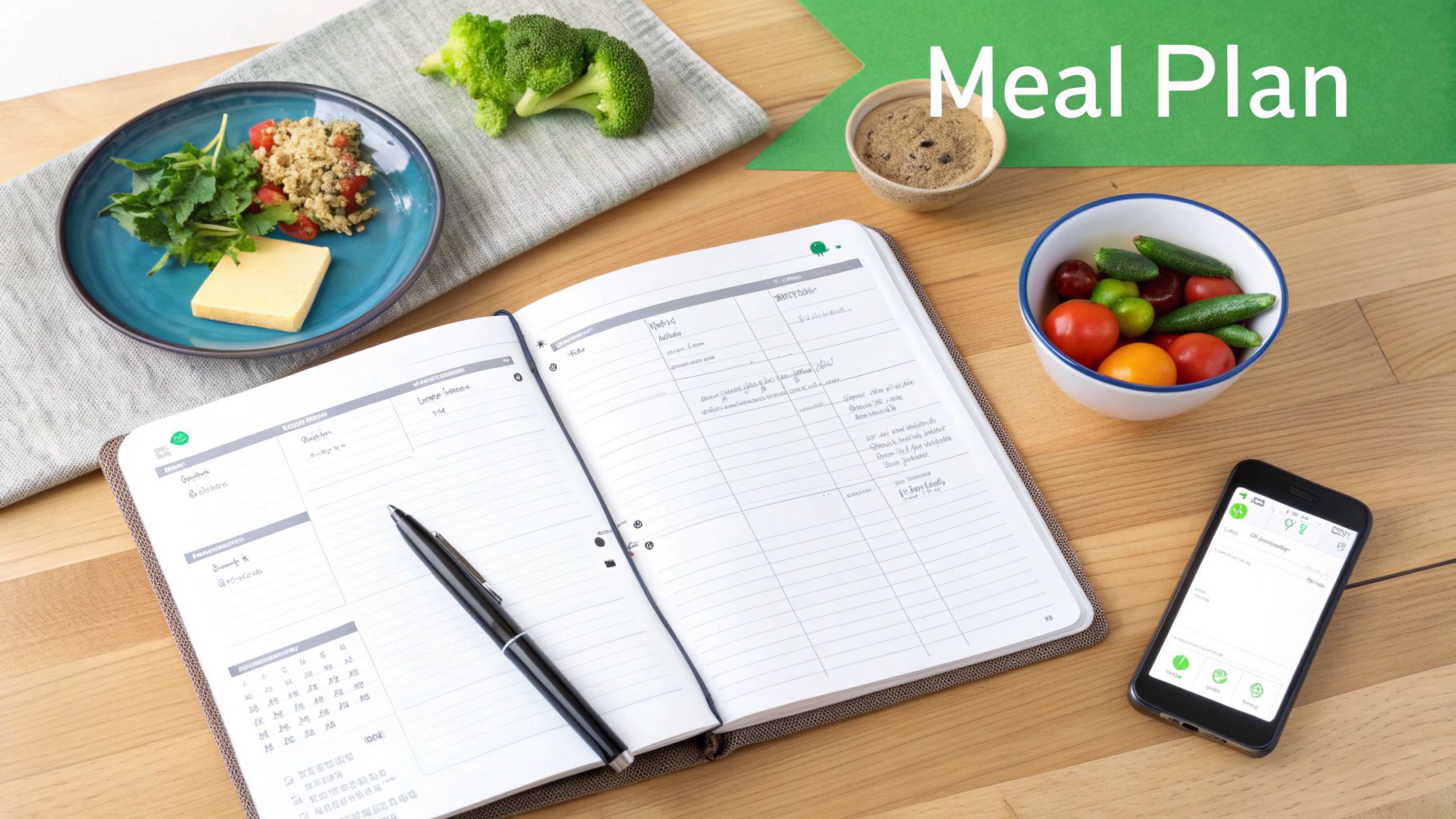
Walking into a grocery store without a plan is one of the fastest ways to overspend. Creating a strategic meal plan and a detailed shopping list is the single most effective tip to save money on groceries. This approach shifts you from a reactive shopper, susceptible to impulse buys and marketing tactics, to a proactive one who is in complete control of their budget. It ensures every dollar is allocated purposefully, preventing the purchase of unnecessary items and reducing food waste.
How to Implement This Strategy
Successful meal planning is about creating a system that works for you. Start by taking a quick inventory of your pantry, fridge, and freezer to see what you already have on hand.
- Check Store Flyers: Before you plan a single meal, look at the weekly ads for your local grocery stores. Plan your meals around what’s on sale, especially proteins and fresh produce.
- Build Your Menu: Dedicate 30 minutes each week to outline your meals. You don’t need gourmet recipes; simple, repeatable meal structures are often the most budget-friendly.
- Create a Detailed List: As you plan your meals, write down every single ingredient you need to buy. Organize your list by store section (e.g., Produce, Dairy, Meats, Canned Goods) to make your shopping trip faster and more efficient, helping you avoid aisles with tempting, non-essential items.
By using apps or a simple spreadsheet, you can streamline this process. Many families find they can save over £150 a month just by consistently sticking to a planned list. For more in-depth strategies, discover how to start with budget-friendly meal planning on collapsedwallet.com. This foundational habit is a cornerstone of achieving financial freedom.
2. Buy Generic and Store Brands
Overlooking store brands in favor of familiar name brands is a costly habit that can inflate your grocery bill by hundreds of pounds per year. Opting for generic or private-label products is one of the simplest yet most powerful save money on groceries tips you can implement. These items often offer comparable quality to their brand-name counterparts for a fraction of the price, typically costing 20-40% less. The secret is that many store brands are manufactured in the same facilities as national brands, differing only in packaging and marketing costs.

How to Implement This Strategy
Making the switch to store brands doesn’t have to be an all-or-nothing leap. By gradually incorporating these products into your shopping routine, you can test their quality without disrupting your pantry, leading to significant long-term savings and contributing to your journey toward financial freedom.
- Start with Staples: Begin by swapping out non-perishable pantry items like pasta, canned goods, flour, and sugar. These products have simple ingredients and are often indistinguishable from more expensive brands.
- Compare Nutrition Labels: Don’t just look at the price. Compare the nutrition facts and ingredient lists of the store brand with the name brand. You’ll often find they are nearly identical, confirming you’re not sacrificing quality.
- Try One New Item Each Week: Gradually introduce store-brand versions of items you buy frequently, such as cereal, yogurt, or cheese. This allows you to identify reliable alternatives without a major commitment.
- Look for Premium Tiers: Many stores offer premium private-label lines (like Kroger’s “Private Selection” or Safeway’s “Signature SELECT”) that provide gourmet quality at a lower price than specialty brands.
Retailers like Trader Joe’s and Costco have built their entire business models around high-quality store brands, with Costco’s Kirkland Signature brand being a prime example of excellence. Embracing store brands is a direct path to reducing your grocery spending and reallocating those funds toward your financial goals.
3. Use Coupons and Digital Deals
In the digital age, clipping paper coupons has evolved into a streamlined, powerful strategy for cutting grocery costs. Leveraging coupons and digital deals offers direct, instant savings at the checkout. By strategically combining manufacturer offers, store-specific discounts, and cash-back apps, you can significantly lower your grocery bill on the items you already plan to buy. This method is one of the most effective save money on groceries tips because it provides a clear, measurable reduction in your spending.
How to Implement This Strategy
The key to successful couponing is organization and leveraging technology to do the heavy lifting. Instead of spending hours searching, use dedicated apps and store programs to find the best deals quickly.
- Download Store and Rebate Apps: Start by downloading your primary grocery store’s app (like Target Circle or the Kroger app) to access exclusive digital coupons. Supplement this with cash-back rebate apps like Ibotta or Checkout 51, which give you money back after your purchase by scanning your receipt.
- Stack Your Savings: The most impactful approach is “stacking.” This involves combining a manufacturer’s coupon with a store sale and a cash-back rebate on a single item. For example, if a brand-name product is on sale, you could use a digital coupon and then submit your receipt to Ibotta for an additional rebate.
- Organize and Track Deals: Create a system to keep track of your clipped digital deals. Set reminders on your phone for expiration dates to ensure you use them in time. Many store apps allow you to “clip” coupons directly to your loyalty card, applying them automatically when you scan your card at checkout.
By dedicating a small amount of time each week to browse and clip digital offers, many households report saving an average of £30 to £50 per month. This consistent saving habit contributes directly to your financial goals and helps you achieve financial freedom faster.
4. Shop Sales and Stock Up on Non-Perishables
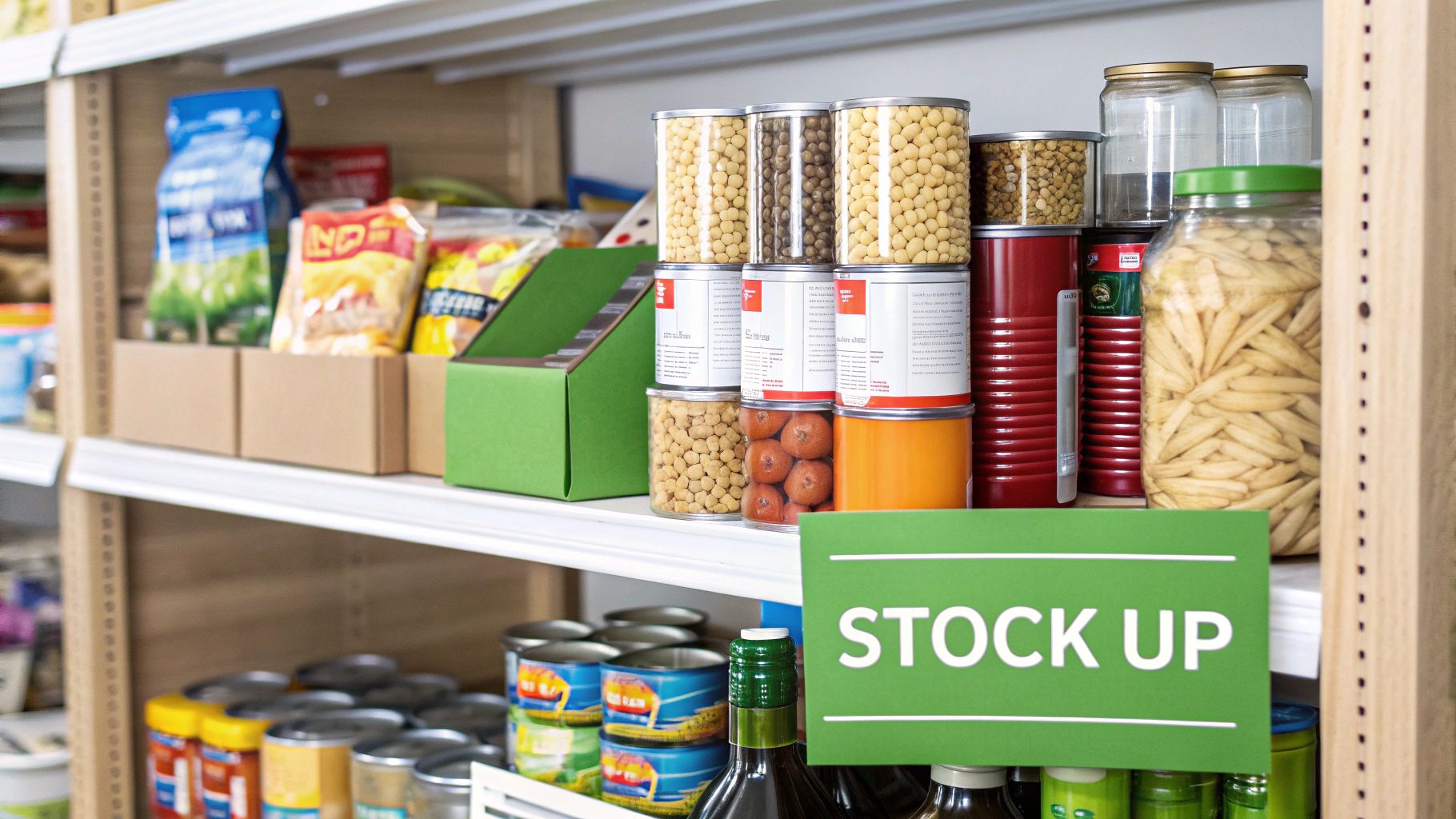
Shopping the weekly sales is a smart tactic, but the real financial leverage comes from strategically stocking up on non-perishable items when they hit rock-bottom prices. This approach transforms your pantry into a personal grocery store, insulating you from price fluctuations and eliminating last-minute, full-price purchases. By purchasing items you regularly use in larger quantities during a sale, you lower your average cost per item, leading to substantial long-term savings and contributing to your journey toward financial freedom.
How to Implement This Strategy
Effective stocking requires knowing what a good deal looks like and focusing only on items your household will actually consume. The goal is to build a reserve of staples like pasta, canned goods, rice, frozen vegetables, and cleaning supplies bought at their lowest price points.
- Know Your Prices: Keep a mental or physical note of the regular prices for your most-purchased items. This knowledge is crucial to identify a genuine sale versus a minor discount. A “sale” price might only be a few cents off, but a true stock-up price is often 40-50% lower than normal.
- Monitor Sale Cycles: Most grocery items go on sale in predictable cycles, typically every 6 to 8 weeks. By observing these patterns in weekly flyers or using apps, you can anticipate when to buy enough to last until the next major sale.
- Focus on High-Usage Items: Only buy items in bulk that you consistently use. Purchasing a case of canned artichokes because they are 50% off is not a good deal if your family dislikes them. Stick to your core list of pantry essentials to avoid waste and ensure your investment pays off.
Families who master this strategy often report saving £200-£300 a year or more. This is one of the most powerful save money on groceries tips because it directly reduces the unit cost of the food you consume most often, freeing up funds for other financial goals.
5. Buy Seasonal and Local Produce
Aligning your produce purchases with the natural growing seasons is a powerful strategy to significantly cut your grocery bill. Seasonal produce is more abundant, meaning it costs less for farmers to grow and harvest, and those savings are passed directly to you. It’s also fresher and more nutritious because it hasn’t traveled thousands of miles or been stored for months, making this one of the most effective save money on groceries tips for both your wallet and your financial goals.
How to Implement This Strategy
Adopting a seasonal approach involves a slight shift in how you plan your budget, focusing on what is currently at its peak. This not only saves you money but also introduces variety into your diet throughout the year.
- Learn Your Seasons: Familiarize yourself with what grows in your region during each season. A quick online search for a “seasonal produce guide [your state/region]” will yield helpful charts. For example, take advantage of abundant, cheap strawberries in the spring and deeply discounted squash in the fall.
- Visit Farmers Markets: Local farmers’ markets often offer prices that are 20-30% lower than supermarkets for in-season items because you are buying directly from the source. Pro tip: Visit near the end of the day when vendors may offer discounts to clear their remaining stock.
- Buy and Preserve: When you find a great deal on seasonal produce, buy in bulk. You can freeze, can, or dehydrate the excess to enjoy the savings of the season for months to come, further securing your financial footing.
6. Buy in Bulk Using Warehouse Clubs
Warehouse clubs like Costco and Sam’s Club leverage a bulk purchasing model to offer members significant savings on everyday items. While an annual membership fee is required, the per-unit cost on many groceries is dramatically lower than at traditional retail stores. For households that can utilize larger quantities before they expire, this strategy is a powerful tool to reduce grocery spending and contribute to long-term financial goals. The savings can effectively turn the membership fee into a high-return investment in your budget.
How to Implement This Strategy
Maximizing the benefits of a warehouse club requires a disciplined approach to avoid impulse buys and potential waste. The key is to focus on non-perishable staples and items with a long shelf life that your household consumes consistently.
- Do the Math: Before you buy, calculate the per-unit price (e.g., price per ounce, per pound, or per roll). Compare this to the unit price at your regular grocery store, even when the item is on sale there. A lower unit price at the warehouse club means genuine savings.
- Focus on High-Usage Staples: Prioritize items you know you’ll use, such as rice, pasta, canned goods, coffee, toilet paper, and cleaning supplies. Many families find that the savings on just a few key products can cover the annual membership fee within four to six months.
- Split Bulk Purchases: If you live alone or have a small family, storage can be a challenge. Consider splitting a membership and bulk purchases with a friend or family member to share both the cost and the goods. This makes bulk buying accessible without the risk of food waste.
Strategically using a warehouse club membership is one of the most effective save money on groceries tips for many households, with some reporting savings of over £1,000 annually. It directly supports your journey toward financial freedom by lowering a major recurring expense.
7. Shop the Perimeter and Avoid Processed Foods
One of the most effective save money on groceries tips is to physically change how you navigate the store. Grocery stores are intentionally designed to lead you past expensive, highly processed items in the center aisles. By primarily shopping the perimeter, where fresh produce, meats, and dairy are located, you naturally fill your cart with less expensive whole foods and sidestep the costly trap of convenience products. This simple shift in your shopping path not only benefits your wallet but also your financial well-being.
How to Implement This Strategy
Adopting the perimeter shopping method requires a conscious effort to break old habits and focus on foundational ingredients rather than pre-packaged items. A whole chicken, for example, often costs around £1.50 per pound, while a pre-made chicken dinner can easily cost £4 for a single serving.
- Stick to the Outer Loop: Make the produce, meat, and dairy sections your primary shopping areas. Only venture into the center aisles for specific pantry staples on your list, like rice, beans, or oats.
- Embrace Frozen Produce: Don’t overlook the freezer aisle on the perimeter. Frozen fruits and vegetables are just as nutritious as fresh ones, last much longer, and are often cheaper, especially for out-of-season items.
- Learn Basic Prep: The convenience of pre-cut vegetables comes at a high price, often costing 50% more. Dedicate 30 minutes after you get home to wash and chop your fresh produce for the week. This makes it just as fast to use whole foods as reaching for a processed alternative.
By focusing on whole ingredients, you take control of your spending and your financial future. To see how these items can form a cost-effective shopping list, explore this guide to an inexpensive healthy grocery list on collapsedwallet.com.
8. Use Price Comparison and Cashback Apps
Leveraging technology is one of the smartest save money on groceries tips you can adopt. Price comparison and cashback apps turn your smartphone into a powerful savings tool, helping you find the lowest prices and earn money back on purchases you were already making. These platforms digitize the traditional coupon-clipping process, offering real-time rebates and deals that can significantly reduce your grocery bill over time without much extra effort.
How to Implement This Strategy
The key to maximizing savings with these apps is to integrate them into your regular shopping routine. Before you head to the store, take a few minutes to browse the available offers and activate the ones relevant to your shopping list.
- Download Multiple Apps: Don’t limit yourself to just one. Use a combination like Ibotta, Fetch Rewards, and Checkout 51 to maximize your coverage, as offers often vary between platforms.
- Check Offers Before Shopping: Get into the habit of reviewing app offers while making your grocery list. This allows you to spot high-value cashback opportunities and adjust your list to take advantage of them, rather than discovering missed savings after your trip.
- Combine with Other Savings: The best strategy is to stack your savings. Use the apps in conjunction with store sales, manufacturer coupons, and loyalty program discounts for the biggest impact.
- Batch Scan Your Receipts: Set a reminder to scan all your receipts once or twice a week. This simple habit ensures you never miss a deadline for claiming rewards and keeps the process efficient.
Consistent use of these apps can easily add up. Many users report saving between £50 and £100 per month, turning a simple task like scanning a receipt into a meaningful step toward financial freedom. For a deeper dive, explore these and other grocery savings tips on collapsedwallet.com.
9. Compare Unit Prices and Buy Smartly
Grocery store shelves are designed to be confusing, with different brands offering various package sizes and special “deals.” The key to seeing through the marketing noise is to focus on the unit price. This small number on the shelf tag, which shows the cost per ounce, pound, or liter, is the single most reliable indicator of true value. It allows you to make an apples-to-apples comparison, ensuring you get the most product for your money, regardless of package size or brand name.
How to Implement This Strategy
Learning to decode unit pricing is a fundamental skill for any savvy shopper. It shifts your focus from the overall price to the actual cost of what you’re consuming, a critical step in optimizing your budget.
- Locate the Unit Price: Look for the unit price on the shelf label, usually in smaller print next to the item’s total price. It will be listed as cost per unit of measurement (e.g., per oz, per lb, per 100 ct).
- Compare Across Sizes and Brands: Don’t assume the largest “family-size” box is the best deal. Compare its unit price to the medium and small sizes. A 2-litre bottle of a soft drink at £2.00 (£1.00/litre) is a much better value than a six-pack of cans totalling 2.5 litres for £5.00 (£2.00/litre).
- Use Your Calculator: If the unit price isn’t listed or uses different units (e.g., one is per ounce, another per pound), use your phone’s calculator. Divide the total price by the quantity (e.g., ounces, pounds, litres) to get the true cost per unit.
By consistently choosing the item with the lower unit price, families can easily save £20 to £30 each month. This is one of the most direct and effective save money on groceries tips you can implement on every single shopping trip to secure your financial well-being.
10. Reduce Meat Consumption and Buy Strategic Cuts
For most households, meat is the single most expensive item on the grocery list, often dictating the entire food budget. A strategic approach to how you purchase and consume meat is a powerful lever for reducing your grocery spending. By opting for more affordable cuts and incorporating meat-free days into your weekly routine, you can achieve significant savings without compromising on protein intake. This shift empowers you to allocate funds more effectively, a key step toward achieving your financial goals.
How to Implement This Strategy
The key is to think of meat as a component of a dish rather than always being the star. This mindset opens up a world of budget-friendly options and is one of the most impactful save money on groceries tips you can adopt.
- Choose Cheaper Cuts: Swap premium cuts for their more affordable counterparts. For example, choose chicken thighs (often £1-£2 per pound) over chicken breasts (£3-£4 per pound) or use ground beef instead of expensive steak cuts. Tougher cuts like chuck roast are perfect for slow cookers, which break them down into tender, flavorful results.
- Incorporate Meatless Days: Dedicate one or two days a week to meat-free meals. “Meatless Monday” is a popular concept that can save a family £5 to £10 per meal. Plant-based proteins are significantly cheaper; lentils can cost as little as £0.50 to £1 per pound compared to ground beef at £4 to £6 per pound.
- Use Meat for Flavor: Instead of a large portion of meat, use smaller amounts to add flavor to dishes. Stretch ground meat by adding finely chopped mushrooms, lentils, or beans. A small amount of bacon or sausage can add immense flavor to a large pot of bean soup or a pasta dish, reducing the overall cost per serving.
A family of four that switches from premium cuts to more strategic ones and incorporates two meatless meals per week can easily save between £50 and £75 a month. This disciplined habit directly reduces your food bill, freeing up capital for savings, investments, or debt repayment.
10 Grocery-Saving Tips Comparison
| Strategy | 🔄 Complexity | 💡 Resources Needed | 📊 Expected Outcomes | Ideal Use Cases | ⭐ Key Advantages |
|---|---|---|---|---|---|
| Make a Shopping List and Meal Plan | 🔄 Moderate — weekly setup time | 💡 Time, meal-planning app or notebook, pantry check | 📊 Reduces impulse buys ~20–30%, less waste, predictable budget | Families, weekly planners, bulk buyers | ⭐ Better budget control, time saved in-store ⚡ |
| Buy Generic and Store Brands | 🔄 Low — simple switch/testing | 💡 Willingness to try brands, compare labels | 📊 20–40% cost savings with similar quality in many categories | Staple shoppers, budget-conscious households | ⭐ High savings with minimal quality loss |
| Use Coupons and Digital Deals | 🔄 Moderate–High — tracking promos | 💡 Store apps, coupon apps, time to clip/activate | 📊 Direct discounts; typical £30–£50/month savings per household | Deal hunters, loyalty-program users | ⭐ Immediate price reductions; stackable offers |
| Shop Sales and Stock Up on Non‑Perishables | 🔄 Moderate — timing and storage planning | 💡 Storage space, upfront cash, sale tracking tools | 📊 30–50% off sale items; large annual savings when executed | Large households, pantry builders, seasonal buyers | ⭐ Significant per‑unit savings during sales 📦 |
| Buy Seasonal and Local Produce | 🔄 Low–Moderate — learn seasons | 💡 Farmers markets, local store access, seasonal knowledge | 📊 20–50% lower prices; better freshness and nutrition | Health-focused shoppers, locavores, home cooks | ⭐ Superior quality and local economic support |
| Buy in Bulk Using Warehouse Clubs | 🔄 Low — membership management | 💡 Membership fee, storage space, transport | 📊 20–50% per‑unit savings; cost-effective for big users | Large families, high-volume purchasers | ⭐ Large per‑unit discounts; additional member perks |
| Shop the Perimeter and Avoid Processed Foods | 🔄 Moderate — more prep time | 💡 Basic food prep skills, refrigeration, planning time | 📊 Lower cost per serving and improved financial outcomes | Health-conscious shoppers, home cooks | ⭐ Better financial outcomes and reduced long-term costs |
| Use Price Comparison and Cashback Apps | 🔄 Moderate — app management | 💡 Smartphone, multiple apps, receipt scanning | 📊 1–5% cashback + instant price comparisons; passive savings | Frequent shoppers, tech-savvy savers | ⭐ Automated savings discovery and cashback earnings |
| Compare Unit Prices and Buy Smartly | 🔄 Low — in‑store attention to detail | 💡 Calculator/phone, shelf label checks | 📊 Prevents overpaying; typical savings £20–£30/month | Bargain-conscious shoppers, detail-oriented buyers | ⭐ Reveals true value across sizes and brands |
| Reduce Meat Consumption and Buy Strategic Cuts | 🔄 Moderate — recipe adjustment & prep time | 💡 Slow cooker, plant proteins, meal plans | 📊 30–50% reduction in meat spending; diversify protein sources | Budget-conscious families, flexitarians | ⭐ Large budget impact + financial benefits |
Transform Your Finances One Grocery Trip at a Time
The journey toward financial freedom often feels like it requires grand, sweeping changes. However, as this guide demonstrates, some of the most impactful shifts happen in the most routine places, like the aisles of your local grocery store. We have explored a comprehensive toolkit of ten powerful strategies designed to put you back in control of your food budget. From the foundational discipline of meal planning and list-making to the strategic savvy of buying store brands and comparing unit prices, each tip is a stepping stone toward substantial savings.
From Small Habits to Major Financial Wins
The true power of these save money on groceries tips lies not in their individual impact, but in their combined, consistent application. Think of it as a form of financial compounding. Swapping a premium brand for a store brand might save you a pound on one item, but doing so across your entire shopping list every week quickly adds up. Similarly, using a cashback app for every purchase and strategically stocking your pantry during sales transforms minor discounts into a significant annual saving.
This isn’t just about cutting costs; it’s about shifting your mindset. You begin to see your grocery cart not as a list of expenses, but as a series of calculated financial decisions. You move from being a passive consumer to an active, empowered manager of your household resources. This proactive approach has a ripple effect, often inspiring more mindful spending in other areas of your life and accelerating your progress toward escaping financial worries.
Your Action Plan for Lasting Change
Overhauling your entire grocery routine at once can feel overwhelming. The key to long-term success is incremental change. Instead of trying to implement all ten tips tomorrow, choose one or two that seem most achievable for your lifestyle and start there.
Here’s a simple, actionable plan to get started:
- Start with Planning: Before your next shopping trip, commit to creating a detailed meal plan for the week and a corresponding shopping list. This single habit is the foundation upon which many other savings are built.
- Embrace Technology: Download one recommended cashback or price comparison app. Get comfortable using it for your next few shops to see how easily you can earn back money on purchases you were already making.
- Focus on Value, Not Just Price: During your next trip, make a conscious effort to compare the unit prices of at least three items on your list. This small action trains your brain to look for the best value, a skill that will serve you well beyond the grocery aisle.
By mastering these fundamental save money on groceries tips, you are not just saving a few pounds on your weekly bill. You are building the discipline and awareness necessary for robust financial health. Each successful, well-planned shopping trip is a victory that reinforces positive habits, freeing up capital that can be redirected to paying down debt, building an emergency fund, or investing in your future. Take control of your cart today, and you take a significant step toward controlling your financial destiny.
Ready to take your savings to the next level? The Collapsed Wallet app is designed to help you track your spending, identify savings opportunities, and stay on top of your financial goals. See exactly how your smarter grocery habits impact your overall budget and accelerate your journey to financial freedom by downloading it today from Collapsed Wallet.
