

Table of Contents
- 1. Meal Planning and Weekly Prep
- 2. Using Coupons and Cashback Apps
- 3. Buying Store Brands and Generic Products
- 4. Shopping Sales Cycles and Seasonal Produce
- 5. Buying in Bulk and Warehouse Shopping
- 6. Reducing Food Waste Through Smart Storage
- 7. Price Matching and Price Adjustment Guarantees
- 8. Shopping Less Frequently and Planning Mega-Trips
- 9. Growing Your Own Produce and Herbs
- 10. Building a Strategic Pantry and Rotating Stock
- 10-Point Grocery Savings Comparison
- Turn Savings into Financial Security: Your Next Steps
This blog post may contain affiliate links. As an Amazon Associate I earn from qualifying purchases.
With food prices on the rise, mastering ways to save money on groceries is no longer just a frugal habit; it’s a critical step toward achieving financial stability and peace of mind. A bloated grocery bill can quietly sabotage your budget, diverting funds that could be used for paying off debt, investing for the future, or escaping financial worries. This guide offers specific, actionable strategies that can immediately lower your spending. From leveraging technology and strategic shopping to minimizing waste, these methods will empower you to take control of your food costs and accelerate your journey to financial freedom.
The aim of our blog is to provide valuable insights and practical tips to help readers manage their money more effectively. However, the information shared here is for general guidance and educational purposes only. It should not be regarded as professional financial advice. Any actions taken based on our content are entirely the responsibility of the reader, and we accept no liability for the outcomes of those actions. If you require financial advice tailored to your personal circumstances, we strongly recommend seeking assistance from a qualified financial adviser.
In this article, we will detail a series of proven tactics designed to slash your food spending. We will explore how to build a strategic pantry, shop sales cycles effectively, and leverage technology to make a tangible impact on your bottom line. Each point is a concrete step you can take to reclaim control over your budget and move closer to your financial goals. Get ready to transform your shopping habits and unlock significant savings.
1. Meal Planning and Weekly Prep
One of the most effective ways to save money on groceries is to stop shopping without a plan. Meal planning involves deciding your meals in advance and creating a shopping list based only on the ingredients you need. This strategic approach transforms your grocery trip from a reactive, impulse-driven event into a targeted, cost-effective mission. By knowing exactly what you need, you eliminate last-minute expensive food orders, reduce food waste, and gain precise control over your food budget, a key step toward achieving financial freedom.
How to Implement Meal Planning
Getting started is easier than it sounds and doesn’t require a complete lifestyle overhaul. The key is to build a sustainable habit that supports your financial goals.
- Start Small: Begin by planning just three or four main meals for the upcoming week. This manageable goal prevents you from feeling overwhelmed.
- Shop Your Pantry First: Before making your list, take a quick inventory of your pantry, fridge, and freezer. Build your first few meals around ingredients you already have.
- Plan Around Sales: Check your local grocery store’s weekly flyer or app. If a certain protein is on sale, plan meals that incorporate it to maximize savings.
- Use Overlapping Ingredients: Plan two or three meals that share key components. For example, a large bag of spinach can be used for a pasta dish on Monday, smoothies on Tuesday, and an omelet on Wednesday, maximizing the value of your purchase.
Key Insight: The goal of meal planning isn’t just to decide what to eat; it’s to create a spending plan for your food, preventing your grocery bill from derailing your financial goals.
For those looking to streamline the process, technology can be a powerful ally. Apps like Mealime and Plan to Eat can help you organize recipes and generate shopping lists automatically. If you want to dive deeper into creating a system that works for you, our guide to budget-friendly meal planning offers more advanced financial strategies.
2. Using Coupons and Cashback Apps
Leveraging technology through coupons and cashback apps is a powerful way to reduce your grocery bill. This modern approach combines traditional savings with digital efficiency, allowing you to get instant discounts or earn cash rebates after your purchase. By strategically using apps like Ibotta or Fetch Rewards alongside store-specific digital coupons, you can stack savings on items you already buy, making it one of the most direct ways to free up funds for your financial goals.
How to Implement Coupons and Cashback Apps
Integrating this strategy into your routine requires a little organization, but the financial payoff can be substantial. The key is to find a system that works for you without adding too much time to your prep.
- Start with Cashback Apps: For beginners, cashback apps are the easiest entry point. Simply download an app like Ibotta or Fetch Rewards, browse offers before you shop, and scan your receipt afterward to earn money back.
- Check Store Apps Weekly: Before your grocery trip, spend 10-15 minutes browsing your primary store’s app (like Kroger or Target Circle) for digital coupons. Clip the ones for products on your list.
- Stack Savings Strategically: The biggest financial wins come from combining deals. For example, you can use a store’s digital coupon on a sale-priced item and then submit your receipt to Ibotta for an additional cashback offer on that same product.
- Focus on What You Need: The golden rule of couponing is to only clip offers for items you would buy anyway. Buying something just because you have a coupon can lead to overspending and waste, defeating the financial purpose.
Key Insight: Think of couponing and cashback apps not as a hunt for random deals, but as a tool to lower the price on your planned purchases, directly boosting your budget’s spending power.
Many dedicated deal-hunting websites do the hard work for you by highlighting the best weekly deals and explaining how to stack various offers for maximum savings. Using these resources can significantly cut down on the time you spend searching for discounts yourself.
3. Buying Store Brands and Generic Products
One of the simplest yet most powerful ways to save money on groceries is to embrace store brands. Also known as private-label or generic products, these are items produced and sold by retailers like Kroger and Walmart. They often contain nearly identical ingredients and meet the same quality standards as their name-brand competitors but are sold at a significantly lower price, typically saving you 20-40% on each item. Making this simple switch can consistently reduce your grocery bill, freeing up capital for other financial priorities.
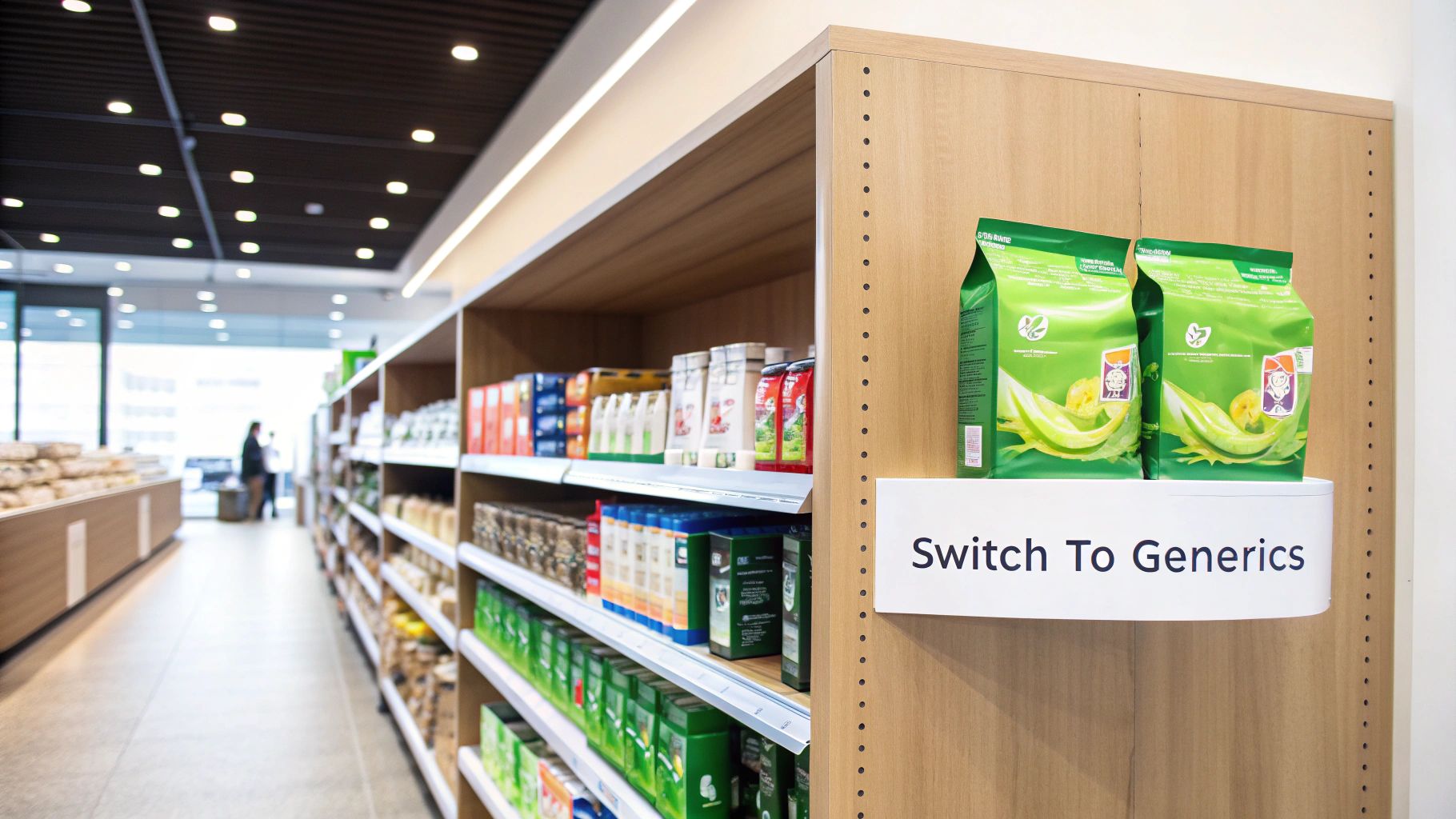
How to Implement Store-Brand Swapping
Integrating this strategy into your shopping routine is a low-effort, high-reward habit. The key is to start small and see how much you save.
- Start with Staples: Begin by swapping items where the brand has minimal impact on performance. This includes basics like flour, sugar, salt, canned tomatoes, pasta, and rice.
- Compare the Ingredients: Take a moment to read the nutrition label and ingredient list. You’ll often find that the store brand is an exact or near-exact match to the name-brand product right next to it.
- Test and Evaluate: For items where personal preference is a factor, like coffee or sauces, buy the store brand once to try it. If you can’t tell the difference, you’ve found a new way to save.
- Look for Premium Tiers: Many stores now offer high-quality generic lines, such as Kroger’s Simple Truth or Target’s Good & Gather, which provide organic and specialty options at a lower cost than national organic brands.
Key Insight: The savings from buying generic aren’t just from a few cents here and there; consistently choosing store brands for pantry staples can free up a significant portion of your food budget each month, allowing you to reallocate those funds toward your financial goals.
Switching to store brands is a fundamental part of building an affordable shopping routine. For more ideas on what to buy, check out our guide to creating an inexpensive healthy grocery list, which highlights many items where generic options offer the best financial value.
4. Shopping Sales Cycles and Seasonal Produce
A powerful way to save money on groceries involves aligning your shopping habits with retail and agricultural cycles. Grocery stores operate on predictable sales cycles, typically marking down specific product categories every four to six weeks. By understanding these patterns and combining them with the practice of buying produce when it’s in season, you can drastically reduce your spending on both pantry staples and fresh foods, ensuring you get the best price and maximize your budget.
How to Implement This Strategy
Mastering this approach requires a bit of observation and flexibility, but the financial payoff is significant. You’ll transition from buying what you want now to buying what’s smart to buy now.
- Track the Cycles: Start a simple price book or use a notes app to log the prices of your most-purchased items. You’ll soon notice that items like certain proteins, cereal, or coffee go on a deep discount at regular intervals. When they hit their low point, stock up.
- Buy Produce Seasonally: Purchase fruits and vegetables during their peak growing season when they are abundant and cheap. For example, buying strawberries in June might cost $2 per pound, versus $5 or more in January.
- Leverage Your Freezer: Your freezer is your best tool for this strategy. When you find a staple protein marked 30% off, buy several packs and freeze them for future use. The same goes for seasonal produce or sale-priced bread.
- Shop Farmers Markets Strategically: For seasonal produce, visit local farmers markets near closing time. Vendors are often willing to offer end-of-day discounts to avoid taking unsold inventory home.
Key Insight: This strategy shifts your mindset from short-term shopping to long-term provisioning. By stocking up during sales, you are essentially “shopping” from your own well-stocked pantry and freezer, insulating your budget from price fluctuations.
Embracing this method is one of the most effective ways to save money on groceries over the long term. If you want to learn more about identifying your local harvest seasons, a quick search for a “[Your State] seasonal food guide” will provide a calendar of what’s fresh and affordable each month.
5. Buying in Bulk and Warehouse Shopping
One of the most powerful ways to save money on groceries is to leverage the economy of scale offered by warehouse clubs. Stores like Costco and Sam’s Club allow you to purchase everyday items in bulk, often at a significantly lower per-unit cost than traditional supermarkets. This strategy is particularly effective for non-perishable pantry staples, frozen foods, and household supplies that you use consistently, transforming routine purchases into long-term savings for your financial plan.

How to Implement Bulk Buying
A warehouse membership is an investment, so a strategic approach is necessary to ensure it pays off. The key is to focus on items that provide a clear financial advantage without leading to waste.
- Do the Math First: Before committing to an annual fee, calculate your break-even point. Determine if the projected savings on your regular purchases will exceed the cost of the membership. For a family of four, saving just $10 a month makes a $120 membership worthwhile.
- Focus on Staples: Prioritize items with a long shelf life. Canned goods, pasta, rice, cooking oils, frozen proteins, and paper products are excellent candidates for bulk purchasing.
- Split the Cost: If you have a smaller household, team up with a friend or family member. You can split the membership fee and divide large purchases, gaining the cost benefits without being overwhelmed by quantity.
- Compare Per-Unit Prices: Don’t assume a bulk item is always cheaper. Use your phone’s calculator to compare the price per ounce, pound, or unit against your local grocery store’s sale prices. This ensures you’re making a truly cost-effective choice.
Key Insight: The goal of warehouse shopping is not just to buy more, but to buy smarter. A disciplined approach focused on per-unit cost and non-perishables can easily save a family hundreds of dollars per year, offsetting the membership fee within months.
A common pitfall of warehouse shopping is the impulse buy. To combat this, always enter the store with a strict list and stick to it. Avoiding the tempting deals on items you don’t truly need is crucial for making this strategy a successful part of your financial plan. For more tips on optimizing your shopping trips, our article on creating an effective grocery budget provides a detailed framework.
6. Reducing Food Waste Through Smart Storage
One of the most overlooked ways to save money on groceries happens after you leave the store. Food waste is a silent budget killer, with studies showing the average family discards hundreds of dollars worth of food each year. By implementing smart storage techniques, you can significantly extend the life of your purchases, ensuring that what you buy actually gets used. This strategy maximizes the value of every dollar spent, preventing spoiled produce and expired goods from undermining your financial progress.
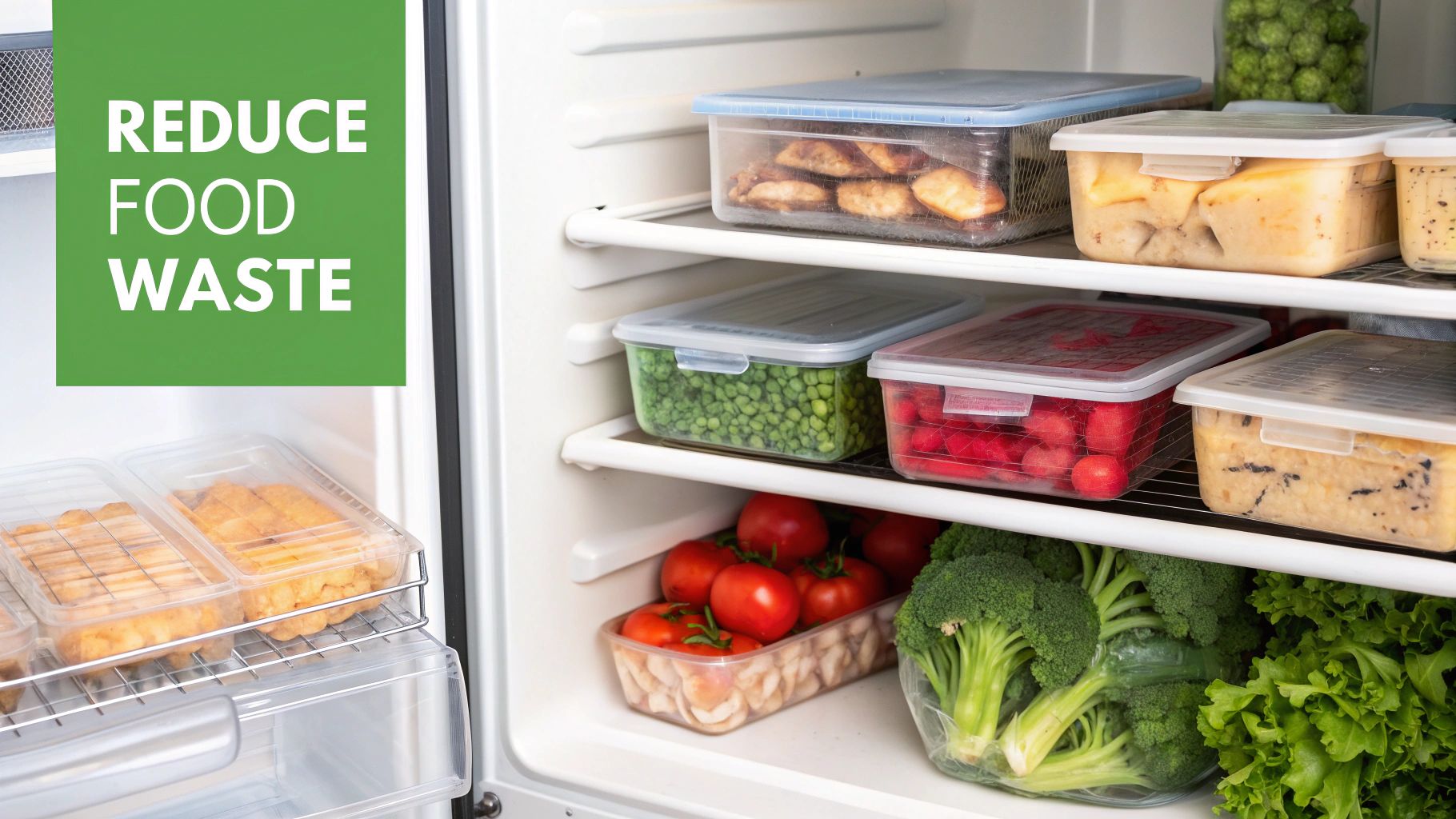
How to Implement Smart Storage
Adopting better storage habits doesn’t require expensive equipment; it’s about understanding how to treat different types of food to preserve their freshness and quality.
- Know Your Produce: Store ethylene-producing items (like apples, bananas, and avocados) separately from ethylene-sensitive ones (like leafy greens, carrots, and broccoli) to prevent premature ripening and spoilage.
- Use Your Freezer Strategically: The freezer is your best tool against food waste. Freeze overripe bananas, bread before it goes stale, and leftover portions of soups or stews for future use.
- Organize for Visibility: Practice the “First In, First Out” (FIFO) method. Place newer items at the back of your fridge and pantry, moving older items to the front so they get used first.
- Extend Freshness: Store fresh herbs like flowers, with their stems in a jar of water. A paper towel placed in a container of berries can absorb excess moisture and dramatically reduce spoilage.
Key Insight: Reducing food waste is a direct way to recover money already spent. Every item you save from the bin is a victory for your wallet, reinforcing mindful consumption habits that support financial freedom.
For a visual guide on how to store common groceries to make them last longer, the video below offers practical demonstrations and simple tips you can start using today.
7. Price Matching and Price Adjustment Guarantees
One of the best ways to save money on groceries without visiting multiple stores is by leveraging price matching and price adjustment guarantees. Many retailers will match a competitor’s lower advertised price on an identical item at the point of sale. Furthermore, some stores offer price adjustments, refunding you the difference if an item you purchased goes on sale within a specific period, typically 7 to 14 days. This strategy ensures you secure the lowest possible price with minimal extra effort, maximizing your purchasing power.
How to Implement Price Matching and Adjustments
Taking advantage of these policies requires a bit of awareness but can lead to significant savings on your grocery bill. The key is to know your local stores’ policies and stay organized.
- Check Policies Online: Before you shop, visit the websites of your favorite grocery stores to read their current price match and adjustment policies. Retailers like Target and Walmart clearly outline which competitors they match.
- Use Price Tracking Apps: Apps like Flipp or Reebee consolidate weekly flyers from various local stores. You can easily find the lowest price on items on your list and show the digital ad at the register.
- Keep Your Receipts: Hold onto your grocery receipts for at least two weeks. If you notice an item you bought is now on sale, you can bring the receipt back to customer service for a price adjustment refund.
- Know Your Competitors: Understand which stores are considered “local competitors” under the policy. A store might match the grocery store across the street but not an online-only retailer or a warehouse club.
Key Insight: Price matching isn’t just about getting a discount; it’s about optimizing your time and money, allowing you to complete a cost-effective shop at a single, convenient location.
For example, if you see that a specific brand of coffee is $2 cheaper at Safeway but you are already shopping at Fred Meyer, you can simply show the Safeway ad at the Fred Meyer checkout to get the lower price. This simple habit turns awareness into real savings, contributing directly to your financial goals.
8. Shopping Less Frequently and Planning Mega-Trips
One of the sneakiest ways your grocery budget gets derailed is through frequent, unplanned trips to the store. Planning strategic “mega-trips” once a week or even bi-weekly is a powerful way to save money on groceries by drastically reducing opportunities for impulse buys. This method forces you to be intentional, turning your shopping into a focused mission rather than a casual browse that adds unplanned items to your cart and undermines your budget.
How to Implement Less Frequent Shopping
Adopting a mega-trip strategy requires more planning upfront but pays off with significant savings and less time spent in the supermarket. The key is building discipline and a solid system.
- Plan the Full Period: Before you shop, create a meal plan that covers the entire period until your next trip, whether it’s seven or fourteen days. This is non-negotiable for success.
- Create a Comprehensive List: Your shopping list is your roadmap. Organize it by store layout to make your trip efficient and prevent you from wandering into aisles filled with temptations.
- Eat Before You Go: This is a classic but crucial tip. Shopping on an empty stomach makes you susceptible to buying expensive snacks and other items that aren’t on your list.
- Stick to the Mission: Get in, get what’s on your list, and get out. Avoid browsing end caps or promotional displays unless they contain an item you had already planned to purchase.
Key Insight: Every extra trip to the grocery store is another chance to spend money you didn’t plan on. By reducing your visits, you’re not just saving on gas; you’re building a defense against the impulse purchases that silently drain your budget.
This approach is highly effective for families looking to cut down on the $20-40 often wasted on small, frequent “top-up” trips for just a few items. It requires effective use of your pantry and freezer, but the control it gives you over your spending is a significant step toward achieving your financial goals.
9. Growing Your Own Produce and Herbs
One of the most direct ways to save money on groceries is to become a producer yourself. Home gardening cuts out the supermarket entirely for certain items, providing fresh produce for a fraction of the retail price. Even those in apartments or with limited outdoor space can cultivate herbs, salad greens, and vegetables in containers. While there might be an initial setup cost, the ongoing expenses are minimal, leading to significant long-term savings and higher quality produce.
How to Implement Home Gardening
You don’t need a large yard or extensive experience to start reaping the financial benefits of a home garden. The key is to begin with manageable, high-value plants.
- Start with Easy Herbs: Begin indoors with a windowsill garden. Basil, parsley, cilantro, and mint are simple to grow and can save you over $50 annually compared to buying them fresh.
- Grow High-Value Crops: Focus your efforts on items that are expensive at the grocery store. Salad greens, cherry tomatoes, and berries offer a great return on your investment.
- Use Containers: If you lack yard space, use containers, pots, or hanging baskets. This method is perfect for balconies, patios, or even sunny indoor spots, making gardening accessible to everyone.
- Join a Community Garden: For a small membership fee, community gardens provide a dedicated plot and a supportive environment. This can yield hundreds of dollars worth of produce each season.
Key Insight: Growing your own food is an investment in both your wallet and your well-being. The initial effort pays dividends in reduced grocery bills and a more sustainable lifestyle, contributing positively to your financial picture.
To get started, explore resources like the Gardening Know How app for plant care tips or YouTube channels dedicated to small-space gardening. A family vegetable garden, for example, can easily reduce produce spending by $40 to $60 per month during peak season, directly impacting your financial goals.
10. Building a Strategic Pantry and Rotating Stock
Creating a strategic pantry is one of the foundational ways to save money on groceries by shifting from reactive buying to proactive stocking. This approach involves purchasing shelf-stable staples like pasta, rice, and canned goods when they are on sale, effectively creating your own personal supermarket where prices are always low. A well-managed pantry provides flexibility, reduces reliance on expensive convenience foods, and empowers you to build meals from ingredients you bought at their cheapest price point.
How to Implement a Strategic Pantry
Building a functional pantry is about creating a system, not just buying in bulk. The goal is to have a reliable inventory that supports your financial planning and budget.
- Start with Staples: Begin by stocking up on versatile ingredients you use frequently. When canned beans, broth, or pasta go on sale, purchase enough to last 2-3 months.
- Rotate Your Stock (FIFO): Implement the “First-In, First-Out” method. When you bring new items home, place them behind the older ones. This ensures you use everything before it expires and eliminates waste.
- Track Your Inventory: Use a simple spreadsheet or a dedicated inventory app to keep track of what you have and note expiration dates. This prevents overbuying and helps you see what needs to be used soon.
- Invest in Proper Storage: Use airtight containers for dry goods like flour, sugar, and rice. This protects them from pests and moisture, extending their shelf life and safeguarding your investment.
Key Insight: A strategic pantry isn’t about hoarding; it’s an intentional financial tool that insulates your food budget from price fluctuations and eliminates the need for last-minute, full-price grocery runs.
By building a reliable stock of foundational ingredients, you gain the power to create a wide variety of meals without constant trips to the store. For inspiration on using your pantry items in a cost-effective way, explore our guide on creating budget-friendly meals from scratch.
10-Point Grocery Savings Comparison
| Approach | Implementation Complexity 🔄 | Resources & Cost ⚡ | Expected Outcomes 📊 | Ideal Use Cases 💡 | Key Advantages ⭐ |
|---|---|---|---|---|---|
| Meal Planning and Weekly Prep | Moderate — upfront planning & weekly prep | Time (1–3 hrs/wk), minimal monetary cost | 20–35% savings; less waste; weekly time savings | Budget-conscious families; those seeking healthier routines | Reduces impulse buys; predictable budgeting |
| Using Coupons and Cashback Apps | High — research, app management, tracking | Time investment; multiple apps/accounts (low $) | 5–15% savings; ~$30–50/mo for regular users | Deal-oriented shoppers; those who buy specific brands | Stackable discounts; passive cashback rewards |
| Buying Store Brands and Generic Products | Low — simple product swaps | Minimal time; immediate shelf savings | 15–25% savings switching ~50% purchases | Anyone wanting easy, consistent savings on staples | Substantial immediate savings with little effort |
| Shopping Sales Cycles & Seasonal Produce | Moderate — monitoring cycles and seasonality | Time to track prices; storage/freezer helpful | 20–40% savings when timed with season/sales | Flexible meal planners; regional shoppers | Large discounts on peak-season items; fresher produce |
| Buying in Bulk & Warehouse Shopping | Low–Moderate — membership + planning | Membership fee ($50–130), storage space, upfront capital | $40–120/mo; 10–50% per-unit savings | Large households; frequent shoppers; bulk users | Dramatic per-unit savings; fewer shopping trips |
| Reducing Food Waste Through Smart Storage | Moderate — learning storage & rotation techniques | Low–moderate (containers, freezer, labeling) | $30–80/mo; significant spoilage reduction | Bulk buyers; households with high spoilage | Extends shelf life; enables bulk purchasing safely |
| Price Matching & Price Adjustment Guarantees | Moderate — track competitor prices & keep receipts | Time to monitor prices; no major monetary cost | $10–30/mo; pay lowest available price | Shoppers buying expensive or time-sensitive items | Ensures lowest price without switching stores |
| Shopping Less Frequently & Planning Mega-Trips | Moderate — comprehensive planning & discipline | Fewer trips → lower transport cost; storage required | $15–50/mo; fewer impulse purchases | Those prone to quick-trip impulse buys | Reduces impulse spending; saves time and gas |
| Growing Your Own Produce & Herbs | Moderate — setup and seasonal care | Initial cost $50–200; ongoing time for maintenance | $30–80/mo during season; fresh produce supply | Garden-capable households; apartment herb growers | Very low recurring cost; fresh chemical-free produce |
| Building a Strategic Pantry & Rotating Stock | Moderate — inventory management and rotation | Upfront investment; pantry/storage space needed | $25–60/mo; meal flexibility and fewer convenience buys | Meal planners; sale-and-bulk shoppers | Enables bulk/sale use; reduces reliance on convenience foods |
Turn Savings into Financial Security: Your Next Steps
You’ve just navigated a comprehensive roadmap detailing ten powerful and distinct ways to save money on groceries. From the strategic foresight of meal planning and the digital savvy of cashback apps to the long-term benefits of reducing food waste and growing your own produce, you are now equipped with a formidable financial toolkit. The journey to meaningful savings isn’t about a single, dramatic change; it’s about the cumulative impact of small, consistent, and intelligent choices. Each strategy represents a deliberate step toward reclaiming control over your household budget and achieving financial freedom.
From Grocery Savings to Financial Freedom
The true power of these grocery-saving methods isn’t just about having more cash in your wallet at the end of the month. It’s about what you do with that reclaimed money. The estimated savings we’ve discussed, whether it’s $50 or $250 per month, are not just discounts. They are financial assets you can redirect to build a more secure future and move away from the stress of financial worry.
Think of it this way: every dollar saved by comparing unit prices or using a coupon is a dollar that can be put to work for you. It’s a dollar that can:
- Build Your Emergency Fund: Creating a financial safety net that protects you from unexpected life events.
- Accelerate Debt Repayment: Paying down high-interest credit cards or loans faster, saving you hundreds or even thousands in interest charges over time.
- Boost Your Investments: Contributing to a low-cost ETF or a retirement account, allowing your money to grow through the power of compounding.
- Fund Major Life Goals: Saving for a down payment on a home, funding education, or planning for a comfortable retirement.
By reframing your grocery shopping from a mundane chore into a strategic financial activity, you transform one of your largest variable expenses into a powerful engine for wealth creation.
Your Actionable Path Forward
The sheer number of options can feel overwhelming, but progress is about starting small and building momentum. Don’t try to implement all ten strategies at once. Instead, choose one or two that resonate most with your current lifestyle and commit to mastering them over the next month.
Here’s a simple, actionable plan to get started:
- Choose Your Starting Point: Select one high-impact, low-effort strategy. For many, this is Meal Planning (Strategy #1) or Switching to Store Brands (Strategy #3). These offer immediate, tangible results with minimal disruption.
- Track Your Progress: For the next four weeks, diligently track your grocery spending. Note how much you saved by implementing your chosen strategy. Seeing the numbers will provide powerful motivation.
- Layer a Second Strategy: Once your first strategy becomes a habit, introduce a second. If you started with meal planning, perhaps now you can integrate Cashback Apps (Strategy #2) or begin to Shop Sales Cycles (Strategy #4).
- Automate Your Savings: As soon as you see the savings materialize, transfer that exact amount from your checking account into a separate savings or investment account. This crucial step ensures your grocery savings are actively working toward your bigger financial goals.
By adopting this incremental approach, you avoid burnout and build sustainable habits that will pay dividends for years to come. Each small win reinforces your ability to manage your money effectively, creating a positive feedback loop that leads to greater financial confidence and security. You have the knowledge and the plan; now it’s time to take that first, decisive step toward transforming your grocery bill into a cornerstone of your financial freedom.
Ready to take control of your entire budget, not just your groceries? The Collapsed Wallet app helps you track all your spending, set savings goals, and visualize your progress toward financial freedom in one simple, powerful platform. Take the next step in your financial journey by visiting Collapsed Wallet to see how our tools can simplify your path to a more secure future.
