

Table of Contents
- 1. Adopt the 50/30/20 Budgeting Rule for Effortless Financial Clarity
- 2. Automate Savings with High-Yield Accounts
- 3. The 24-Hour Rule for Impulse Purchases
- 4. Give Every Dollar a Job with Zero-Based Budgeting
- 5. Review and Optimize Your Mortgage and Loans
- 6. Conduct Regular Subscription Audits
- 7. Invest for the Future with ETFs
- 8. Embrace a “Secondhand-First” Mentality
- 9. Master Energy Efficiency to Dramatically Reduce Utility Costs
- 10. Unlock New Income Streams with Side Gigs and Skill Monetization
- 10 Budget Living Tips — Side-by-Side Comparison
- Your Journey to Financial Freedom Starts Now
This blog post may contain affiliate links. As an Amazon Associate I earn from qualifying purchases.
In today’s complex economic landscape, achieving financial freedom can feel like a distant dream. Many people find themselves trapped in a cycle of living paycheck to paycheck, overwhelmed by debt, and anxious about the future. The good news is that taking control of your finances doesn’t require a lottery win or a drastic career change; it begins with small, intentional adjustments to your daily habits. This guide cuts through the noise to offer actionable, no-nonsense budget living tips designed to empower you. We’ll explore proven strategies that go beyond just cutting costs, focusing instead on building sustainable financial systems that align with your long-term goals.
The aim of our blog is to provide valuable insights and practical tips to help readers manage their money more effectively. However, the information shared here is for general guidance and educational purposes only. It should not be regarded as professional financial advice. Any actions taken based on our content are entirely the responsibility of the reader, and we accept no liability for the outcomes of those actions. If you require financial advice tailored to your personal circumstances, we strongly recommend seeking assistance from a qualified financial adviser.
This comprehensive listicle moves past generic advice to deliver practical, implementable steps. We will cover a range of powerful techniques, from mastering structured spending plans like the 50/30/20 Rule and Zero-Based Budgeting to automating your savings so you build wealth without thinking about it. You’ll discover how to curb impulse buying with simple psychological tricks, slash your utility bills through smart energy efficiency, and even monetize your skills to open up new income streams. These budget living tips are your roadmap to escaping financial worries and building a life of greater security and choice.
1. Adopt the 50/30/20 Budgeting Rule for Effortless Financial Clarity
As a foundational framework for modern personal finance, the 50/30/20 rule offers a brilliantly simple way to manage your money without getting lost in complex spreadsheets. Popularized by financial experts, this method allocates your after-tax income into three straightforward categories: 50% for essential needs like housing and utilities, 30% for personal wants such as entertainment and hobbies, and a crucial 20% for savings and debt repayment. Its power lies in its simplicity, providing a clear, balanced structure that helps you enjoy life today while actively building wealth for tomorrow.
How It Works in Practice
The 50/30/20 rule is one of the most effective budget living tips because it simplifies decision-making. Instead of tracking every single penny, you focus on three macro-level buckets, which prevents financial fatigue and makes budgeting sustainable long-term.
- 50% for Needs: This covers your absolute essentials. Think of costs like your mortgage or rent, utility bills, groceries, transportation, and insurance.
- 30% for Wants: This is your lifestyle fund. It includes non-essential spending that enhances your quality of life, like streaming subscriptions, travel, hobbies, and gym memberships.
- 20% for Savings & Debt: This is the wealth-building portion. This money should go directly towards paying down high-interest debt (like credit cards), building an emergency fund, and investing for retirement.
Key Insight: This framework isn’t about restriction; it’s about intentionality. By assigning every dollar a job, you gain control over your financial destiny and ensure you are consistently working towards your long-term goals.
Actionable Steps to Get Started
- Calculate Your After-Tax Income: Determine your monthly take-home pay to establish your baseline budget.
- Track Your Spending: For one month, track all your expenses to see where your money currently goes. This will reveal if your current habits align with the 50/30/20 targets.
- Automate Your Allocations: Set up automatic transfers from your checking account. On payday, have 20% moved directly to a high-yield savings account or investment account and another portion to a separate “wants” account. This “pay yourself first” approach ensures you prioritize your financial future.
2. Automate Savings with High-Yield Accounts
The “pay yourself first” principle is a cornerstone of personal finance that flips the traditional budgeting script. Instead of saving what’s left after spending, you treat savings as your most important bill. By setting up automatic transfers from your checking to a high-yield savings account (HYSA) the day you get paid, you prioritize your financial future before daily expenses can derail your goals. This method enforces discipline effortlessly and builds wealth consistently through higher interest rates.

How It Works in Practice
Automating your savings is one of the most powerful budget living tips because it removes willpower and emotion from the savings equation. By making consistent saving the default setting, you turn a difficult habit into an effortless background task that fuels your journey to financial freedom.
- Set It and Forget It: A salaried employee can set an automatic transfer of 10% of their paycheck to an HYSA. Over a year, this small, automated action builds a significant savings balance without any ongoing effort.
- Leverage Technology: Modern savings apps can analyze your spending and automatically move small, unnoticeable amounts of money into savings, a technique known as micro-saving.
- Harness Compound Interest: Placing your savings in a high-yield account allows your money to grow faster. The interest earned then earns its own interest, accelerating your wealth accumulation over time.
Key Insight: This strategy transforms saving from an afterthought into a non-negotiable priority. This simple psychological shift is the key to building an emergency fund, investing for retirement, and escaping financial worries.
Actionable Steps to Get Started
- Open a High-Yield Savings Account (HYSA): Choose an account that offers a competitive interest rate to make your savings work harder for you. Ensure it’s at a different bank than your checking account to reduce the temptation for easy withdrawals.
- Schedule Automatic Transfers: Log into your bank account and set up a recurring transfer to your HYSA. Align the transfer date with your payday to ensure the money is moved before you even see it.
- Explore Savings Apps: Consider using technology to enhance your strategy. Discover the best savings apps on collapsedwallet.com for options that automate micro-saving and round-ups.
3. The 24-Hour Rule for Impulse Purchases
This powerful behavioral technique is designed to curb one of the biggest budget-breakers: impulse spending. The 24-hour rule is a simple yet profound decision-making framework that requires you to wait a full day before making any non-essential purchase. This mandatory cooling-off period separates the emotional “want-it-now” impulse from a rational, value-based decision, preventing buyer’s remorse and keeping your financial goals on track. It leverages concepts from behavioral economics by creating a deliberate pause that allows the initial dopamine rush of a potential purchase to fade.
How It Works in Practice
The 24-hour rule is one of the most effective budget living tips because it directly targets the emotional triggers that lead to overspending. By inserting a deliberate pause, you give your logical mind time to evaluate the purchase against your budget and long-term goals. Many people find that after 24 hours, the intense desire to buy has significantly diminished or disappeared entirely.
- Online Shopping: An online shopper adds several items to their cart but closes the tab. After 24 hours, they review the cart and realize they only truly need one item, deleting the rest and saving significant money.
- Subscription Services: A remote worker sees an ad for a new productivity tool. Instead of signing up immediately, they wait a day. The next day, they realize their existing software is sufficient and avoid another recurring monthly charge.
- In-Store Purchases: You see a jacket you love. Instead of buying it on the spot, you take a photo and go home. The next day, you decide it’s too similar to one you already own.
Key Insight: This rule isn’t about denial; it’s about intentionality. It transforms you from a reactive consumer, driven by marketing and emotion, into a conscious spender who makes purchases that genuinely add value to their life.
Actionable Steps to Get Started
- Set a Price Threshold: Decide on a minimum amount for the rule to apply, such as any non-essential purchase over $25. This prevents decision fatigue for minor buys while still capturing significant impulse spends.
- Create a “Wishlist” Note: When the urge to buy strikes, add the item to a dedicated note on your phone or in a notebook. Document what it is and why you want it. This action satisfies the initial urge without spending money.
- Unsubscribe and Reduce Temptation: Mass unsubscribe from promotional retail emails. The fewer “limited-time offers” you see, the fewer impulses you’ll have to fight.
- Re-evaluate with Intention: After 24 hours, revisit your wishlist item. Ask yourself: “Do I still want this? Do I truly need it? Does it align with my financial goals?” More often than not, the answer will be no.
4. Give Every Dollar a Job with Zero-Based Budgeting
For those who want maximum control and intentionality over their finances, the zero-based budgeting method is a game-changer. Popularized by financial authorities like Dave Ramsey, this system requires you to assign every single dollar of your income to a specific category, from rent to savings, until your income minus your expenses equals zero. Unlike other methods that might leave a “buffer” of unallocated cash, this approach forces you to proactively decide where your money will go before the month even begins, eliminating mindless spending.
How It Works in Practice
Zero-based budgeting is one of the most powerful budget living tips for people who feel their money disappears without a trace. By planning for every dollar, you create a detailed spending plan that aligns perfectly with your financial priorities, whether that’s aggressive debt repayment or maximizing savings. For example, if you earn $3,000 after tax, your budget might look like this:
- Mortgage/Rent: $1,200
- Utilities: $300
- Transportation: $200
- Debt Repayment: $500
- Savings/Investing: $400
- Groceries: $400
Key Insight: This method transforms you from a passive observer of your finances to an active, engaged manager. It ensures no money is wasted and that every dollar is working towards a specific goal you have set for yourself.
Actionable Steps to Get Started
- List Your Monthly Income: Calculate your total take-home pay for the month. If your income is variable, use a conservative, reliable estimate as your baseline.
- Itemize All Expenses: List every single anticipated expense, from fixed costs like your mortgage to variable ones like entertainment. Don’t forget to include savings goals and debt payments as “expenses” in your plan.
- Allocate Until You Reach Zero: Assign dollar amounts to each category until your total expenses match your total income exactly. Use a spreadsheet or budgeting apps like YNAB or EveryDollar to simplify this process.
- Track and Adjust: Throughout the month, track your spending against your budget. If you overspend in one area, you must intentionally pull funds from another category to maintain a zero balance, forcing conscious trade-offs.
5. Review and Optimize Your Mortgage and Loans
Your largest debts, like your mortgage or personal loans, often represent the biggest opportunities for long-term savings. Actively managing these debts instead of passively paying them can free up thousands of pounds over the loan’s lifetime. Strategies like making overpayments or refinancing to a lower interest rate are powerful tools for accelerating your journey to financial freedom. This proactive approach turns your largest liabilities into a powerful wealth-building opportunity.

How It Works in Practice
Optimizing your loans is one of the most impactful budget living tips because it reduces the total amount of interest you pay, which is essentially money lost. For example, making a consistent monthly overpayment of just £100 on a typical mortgage could save you over £20,000 in interest and allow you to become mortgage-free several years earlier.
- Mortgage Overpayments: Paying more than your required monthly payment directly reduces the principal balance, meaning future interest is calculated on a smaller amount.
- Refinancing/Remortgaging: If interest rates have dropped or your credit score has improved, you may qualify for a new loan with better terms, lowering your monthly payments and total interest paid.
- Debt Consolidation: Combining multiple high-interest debts (like credit cards) into a single personal loan with a lower interest rate can simplify payments and save you money.
Key Insight: This isn’t just about paying bills; it’s about actively managing your debt to minimize its cost and shorten its lifespan. Every extra pound paid towards the principal is a direct investment in your financial future.
Actionable Steps to Get Started
- Use an Overpayment Calculator: Find a mortgage overpayment calculator online to see the exact impact of extra payments. Visualizing the potential savings in both time and money provides powerful motivation.
- Check Your Loan Terms: Before making overpayments, review your loan agreement to ensure there are no penalties for early repayment. Many lenders allow you to overpay by up to 10% per year without fees.
- Shop Around for Better Rates: Regularly compare current interest rates for mortgages and loans. If you find a significantly better offer, contact your current lender to negotiate or consider switching providers.
6. Conduct Regular Subscription Audits
In the age of streaming services, software subscriptions, and monthly delivery boxes, it’s easy to accumulate recurring charges that quietly drain your bank account. A subscription audit is a systematic review of all your automatic monthly and annual payments. This process helps you identify and cancel services you no longer use or value, instantly freeing up cash flow and preventing “subscription creep” from derailing your financial goals.
How It Works in Practice
This is one of the most effective budget living tips for immediate results because it targets automated spending that often goes unnoticed. A person might find they are paying for three different streaming services, a gym membership they haven’t used in months, and a premium app they forgot they subscribed to. Cancelling just these few items could easily save over £50 per month, or £600 per year.
- Identify All Subscriptions: Comb through your bank and credit card statements from the last few months to list every single recurring charge.
- Evaluate Value vs. Cost: For each subscription, ask yourself: “How often do I use this?” and “Does the value I get justify the cost?” Be honest with your answers.
- Cancel and Consolidate: Ruthlessly cancel anything that doesn’t provide significant value. Look for opportunities to consolidate, such as switching to a family plan or choosing one service over another.
Key Insight: Subscription audits are about aligning your recurring spending with your current lifestyle and priorities. It ensures your money is actively working for you, not passively draining away on autopilot.
Actionable Steps to Get Started
- Schedule a Quarterly Audit: Set a recurring reminder in your calendar every three months to perform a subscription review. This makes it a regular financial habit.
- Use a Subscription Management App: Tools like Rocket Money or Trim can automatically identify your subscriptions and make it easier to cancel them from a central dashboard.
- Negotiate for Better Deals: For services you want to keep, like your mobile phone or internet provider, don’t be afraid to call and ask for a better rate. Mentioning competitor offers can often lead to a discount.
7. Invest for the Future with ETFs
Investing is a critical component of achieving long-term financial freedom, and Exchange-Traded Funds (ETFs) offer one of the most accessible ways for beginners to start. An ETF is a collection of hundreds or thousands of stocks or bonds bundled into a single fund that you can buy and sell like a single share. This approach provides instant diversification, reduces risk compared to picking individual stocks, and is a cornerstone of a passive investing strategy designed to build wealth steadily over time.
How It Works in Practice
Investing in broad-market ETFs is one of the most powerful budget living tips for wealth creation because it allows you to participate in the growth of the entire economy. Instead of trying to pick winning companies, you are betting on the market as a whole. This is a strategy championed by renowned investors like Warren Buffett for the average person.
- Diversification: By buying one share of an S&P 500 ETF, for example, you gain ownership in 500 of the largest U.S. companies, spreading your risk across different industries.
- Low Costs: ETFs typically have much lower management fees (known as expense ratios) than traditional mutual funds, meaning more of your money stays invested and working for you.
- Compound Growth: Reinvesting the dividends paid out by your ETFs allows your investment to grow exponentially over time, a process known as compounding.
Key Insight: The goal of this strategy is not to get rich quick, but to build wealth systematically over the long term. Consistency is more important than timing the market.
Actionable Steps to Get Started
- Open a Stocks and Shares ISA or Brokerage Account: Choose a low-cost platform to start your investment journey. These accounts offer tax-efficient ways to invest.
- Start with a Broad-Market Index ETF: Look for ETFs that track major indices like the S&P 500 (U.S. market) or the FTSE All-World (global market). These are excellent starting points for a diversified portfolio.
- Automate Your Investments: Set up a regular monthly investment, even if it’s a small amount. This practice, known as dollar-cost averaging, removes emotion from investing and ensures you are consistently buying, regardless of market fluctuations.
8. Embrace a “Secondhand-First” Mentality
Adopting a secondhand-first mindset is a powerful strategy to drastically cut spending on everything from clothing to furniture without sacrificing quality. This approach involves intentionally purchasing used items from charity shops, consignment stores, and online platforms like Facebook Marketplace. By embracing pre-owned goods, you can furnish a home, build a wardrobe, and acquire high-quality items for a fraction of their retail price, promoting both financial wellness and sustainable consumption.
How It Works in Practice
Shopping secondhand is one of the most effective budget living tips because it directly combats depreciation, the rapid value loss new items experience. For example, a family might furnish an entire apartment for under £500 using quality secondhand pieces, compared to spending over £3,000 on new, lower-quality items. This frees up significant cash for savings and debt repayment.
- Clothing & Accessories: Find high-quality, brand-name apparel, often with original tags still attached, at 70-90% off retail prices.
- Furniture & Home Decor: Acquire solid wood furniture, unique decor, and essential household items that are built to last, unlike many modern fast-furniture alternatives.
- Electronics & Appliances: Purchase tested, pre-owned appliances and devices from reputable sellers or certified refurbished programs for 50-60% savings.
Key Insight: The value isn’t just in the low price; it’s in accessing higher-quality goods than your budget would otherwise allow. You can own a durable, well-made item for the price of a cheap, disposable one.
Actionable Steps to Get Started
- Shop with a List: Just like with groceries, go thrifting with specific needs in mind. This prevents impulse buys and keeps you focused on your goals.
- Inspect Everything Carefully: Check clothing for stains or tears, test electronics to ensure they work, and examine furniture for structural integrity before purchasing.
- Leverage Online Marketplaces: Use platforms like Facebook Marketplace and Gumtree for larger items. You can often find incredible deals from people who are moving and need to sell quickly. Join local “Buy Nothing” groups for opportunities to get items entirely for free.
9. Master Energy Efficiency to Dramatically Reduce Utility Costs
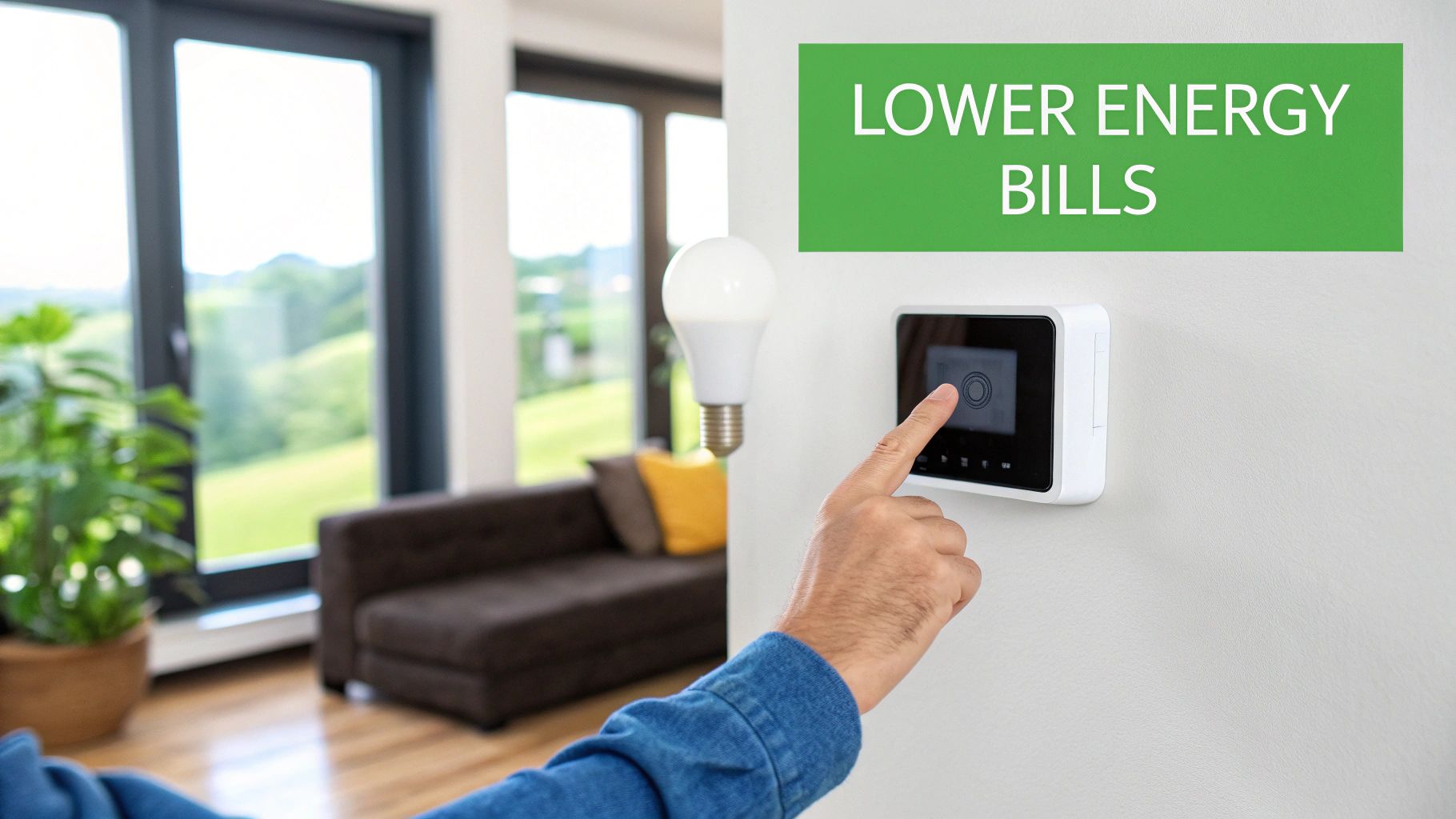
Your monthly utility bills for electricity and heating are not fixed costs; they are variable expenses you can directly control. By adopting energy-efficient habits and making small home improvements, you can systematically lower your consumption and unlock significant savings. This approach transforms your home from a passive energy consumer into an active, cost-saving environment, freeing up hundreds of pounds per year for your financial goals.
How It Works in Practice
Implementing energy efficiency is one of the most impactful budget living tips because it provides recurring monthly savings from one-time actions or minor behavioral shifts. Instead of just paying the bill, you actively manage the resources you use.
- Smart Technology: Investing in a smart thermostat allows you to optimize your heating schedule automatically, ensuring you only use energy when needed. This alone can cut heating costs by over 10%.
- Minor Home Upgrades: Low-cost investments like switching to LED bulbs, sealing air leaks with weatherstripping, and using draught excluders offer a high return on investment.
- Tariff Switching: Regularly use energy comparison websites to ensure you are on the cheapest gas and electricity tariff. Switching providers can save the average household hundreds of pounds a year.
Key Insight: Reducing your utility costs is a powerful form of passive saving. A small investment of time or money today can generate consistent financial returns month after month, directly boosting your cash flow without requiring ongoing effort.
Actionable Steps to Get Started
- Conduct a Home Energy Audit: Contact your utility provider to see if they offer a free or discounted professional audit. Alternatively, perform a DIY audit by checking for drafts around windows and doors.
- Tackle “Phantom Load”: Unplug chargers and electronics when not in use, or connect them to a power strip that you can switch off. This “vampire” power accounts for 5-10% of residential energy use.
- Switch Energy Tariffs Annually: Set a yearly reminder to compare energy deals. The process is quick and simple, and it’s one of the easiest ways to secure large savings. For more information on slashing these expenses, you can learn how to save money on bills on collapsedwallet.com.
10. Unlock New Income Streams with Side Gigs and Skill Monetization
While cutting expenses is a powerful financial lever, increasing your income is an equally transformative strategy for achieving financial freedom. Monetizing your existing skills or developing new ones through side gigs offers a direct path to boosting your cash flow, allowing you to accelerate debt repayment, build savings faster, and create a more resilient financial foundation beyond your primary employment. It’s a proactive approach that turns your talents and free time into tangible assets.
How It Works in Practice
Leveraging the gig economy and freelance platforms is one of the most effective budget living tips because it empowers you to actively increase your earning potential. Instead of solely relying on one paycheck, you create diversified income streams. This could mean offering virtual assistant services, freelance writing, or turning a hobby like graphic design into a profitable venture.
- Freelancing: Offering professional services like writing, web development, or social media management on platforms like Upwork or Fiverr.
- Gig Economy Work: Participating in on-demand services such as pet sitting through Rover or completing tasks on platforms like TaskRabbit.
- Digital Products: Creating and selling assets that generate passive income, such as online courses, ebooks, or design templates on Etsy.
Key Insight: The goal isn’t to work yourself into burnout; it’s to strategically convert small pockets of free time into meaningful income. Even an extra £300-£500 per month can dramatically accelerate your financial goals.
Actionable Steps to Get Started
- Identify Your Monetizable Skills: Make a list of everything you’re good at, from professional abilities like data entry or project management to hobbies like photography or crafting.
- Start Small on One Platform: Choose one platform that aligns with your skills (e.g., Upwork for writing) and focus on building a strong profile and getting your first few positive reviews.
- Track Everything Meticulously: Use a simple spreadsheet or app to track all income and related expenses (like software for a freelance project). This is crucial for managing your finances and preparing for tax season.
10 Budget Living Tips — Side-by-Side Comparison
| Item | 🔄 Implementation complexity | ⚡ Resource / Time | 📊 Expected outcomes | 💡 Ideal use cases | ⭐ Key advantages |
|---|---|---|---|---|---|
| 50/30/20 Budgeting Rule | Low — simple percentage split | Low — no tools required (optional apps) | Moderate — balanced spending & steady savings | Beginners, stable-income households | Easy to adopt; psychologically balanced; flexible |
| Automated Savings / HYSA | Low — setup automatic transfers | Low — bank accounts, minimal setup time | High — consistent savings growth; harnesses compound interest | Anyone seeking disciplined, effortless saving | Removes reliance on willpower; maximizes interest earnings |
| 24‑Hour Rule for Impulse Purchases | Low — behavioral habit change | Low — no monetary cost, small time delay | High — reduces 40–80% of impulse buys; less regret | Impulse buyers, online shoppers, subscription decisions | Immediate reduction in impulsive spending; zero cost |
| Zero‑Based Budgeting | High — detailed monthly allocations & tracking | Medium — time each month, budgeting app or spreadsheet | High — full cash‑flow visibility; accelerates goals/debt payoff | People needing tight control, debt repayment planners | Total accountability; aligns spending with priorities |
| Optimize Mortgage & Loans | Medium — research & application process | Medium — time to research, potential fees | Very High — can save thousands in interest over time | Homeowners, individuals with significant personal loans | Huge long-term interest savings; shortens debt lifespan |
| Subscription Audits | Low — regular review of bank statements | Low — 1-2 hours per quarter | Moderate — saves £20-£100+ per month by cutting waste | Anyone with multiple recurring payments | Quick wins; stops “subscription creep”; instant cash flow boost |
| Investing with ETFs | Medium — account setup & initial research | Low–Medium — consistent contributions | Very High — potential for significant long-term wealth growth | Long-term investors, retirement planners | Low cost; high diversification; harnesses market growth |
| Secondhand-First Mentality | Medium — time to search & inspect items | Low — time investment; may need cleaning/repair supplies | High — 40–90% savings on goods; sustainability gains | Budget shoppers, apartment furnishers, families | Major discounts; access to higher quality; reduces waste |
| Energy Efficiency & Utility Reduction | Medium — upgrades + behavioral changes | Medium — upfront investment (thermostat), time to switch | High — 15–40% utility reduction; annual savings | Homeowners, long-term renters, eco-conscious households | Ongoing bill savings; improved comfort; environmental benefits |
| Side Gigs & Skill Monetization | Medium–High — platform setup & skill development | Medium — time (5–20+ hrs/wk), possible small startup costs | High — £300–£1,500+/month typical; scalable income | People seeking to boost income and build skills | Increases earnings; diversifies income; accelerates goals |
Your Journey to Financial Freedom Starts Now
We’ve explored a wide array of powerful strategies throughout this guide, from the structured elegance of the 50/30/20 rule to the disciplined foresight of the 24-hour rule for purchases. Each of these budget living tips serves as a vital tool in your financial toolkit, designed not to restrict your life, but to empower it. The journey toward financial mastery isn’t about adopting every single tip overnight; it’s about recognizing that small, consistent actions compound into significant, life-altering results over time.
Think of these principles as building blocks. Implementing a Zero-Based Budget gives every dollar a purpose, transforming your income from a passive resource into an active agent working toward your goals. Automating your savings ensures that you are prioritizing your future self without relying on willpower alone. Even seemingly minor adjustments, like optimizing your home’s energy efficiency or embracing a secondhand-first mindset, create financial breathing room that reduces stress and opens up new possibilities. The true power lies in the momentum you build.
From Knowledge to Action: Your First Steps
The most critical step is the one you take right now. Information without implementation is simply entertainment. To turn these concepts into tangible progress, you must bridge the gap between knowing and doing. Don’t feel overwhelmed by the number of options; instead, choose one or two that resonate most with your current situation and commit to them for the next 30 days.
Here are some immediate, actionable steps you can take today:
- Challenge an Impulse: The next time you feel the urge to make an unplanned purchase online, actively apply the 24-hour rule. Add the item to your cart, but then close the tab. Set a reminder for the next day to re-evaluate if the want is still as strong as the initial impulse.
- Automate a Micro-Saving: Log into your online banking portal right now and set up a recurring automatic transfer. It doesn’t have to be a large amount. Start with just £25 or even £10 per paycheck moving from your checking to your savings account. The goal is to build the habit.
- Calculate Your Power: Use a free online loan calculator to see the impact of making one extra payment on a credit card or personal loan. Understanding the exact amount of interest you can save provides powerful motivation to find that extra cash in your budget.
The Bigger Picture: Beyond the Budget
Mastering these budget living tips is about more than just saving money. It’s about reclaiming control over your life and your future. It’s about reducing the anxiety that comes with financial uncertainty and replacing it with the confidence that you are prepared for whatever comes your way. Every dollar you intentionally direct toward your goals, whether it’s paying down debt, building an emergency fund, or investing for retirement, is a vote for the life you want to live.
The skills you cultivate through mindful spending and strategic saving are transferable. They foster discipline, forward-thinking, and problem-solving abilities that will benefit you in all areas of your life. This isn’t a temporary diet; it’s a permanent lifestyle shift toward intentionality and freedom. Embrace the process, celebrate the small wins, and remember that every step forward, no matter how small, is a victory on your path to financial independence.
Ready to take the next step and streamline your financial management? The principles we’ve discussed are easier to implement with the right tools, and Collapsed Wallet is designed to give you that power. Our platform helps you track your spending, manage your budgets, and visualize your progress, turning these budget living tips from theory into your daily reality. Start your journey with Collapsed Wallet today and build the financial future you deserve.

1 thought on “Top 10 Essential Budget Living Tips for Financial Freedom in 2025”