

Table of Contents
This blog post may contain affiliate links. As an Amazon Associate I earn from qualifying purchases.
Want to know the fastest way to start saving money on your bills? It's not about making drastic cuts or giving up everything you enjoy. It’s about a simple, powerful first step: auditing your monthly expenses. This one move pulls back the curtain on where your money is really going and instantly shows you the low-hanging fruit—the "quick wins" you can tackle today to move closer to financial freedom.
The aim of our blog is to provide valuable insights and practical tips to help readers manage their money more effectively. However, the information shared here is for general guidance and educational purposes only. It should not be regarded as professional financial advice. Any actions taken based on our content are entirely the responsibility of the reader, and we accept no liability for the outcomes of those actions. If you require financial advice tailored to your personal circumstances, we strongly recommend seeking assistance from a qualified financial adviser.
Build Your Bill-Slashing Blueprint
It’s tempting to jump right in and start calling your service providers or shopping for new insurance. But if you don't have a clear financial snapshot, you're essentially flying blind. The goal here isn't to make painful, unsustainable cuts; it's to make smart, strategic moves that lead to real savings and give you back control, helping you escape financial worries.
This initial review is all about gaining clarity. You might be surprised by what you find. Many of us are victims of 'subscription creep'—that sneaky phenomenon where you're still paying for things you totally forgot about. That free streaming trial from six months ago? The fitness app you haven't opened in a year? Those little charges can easily add up to hundreds of dollars annually.
Gather Your Financial Documents
First things first, pull together your financial statements from the last three months. Why three months? Because it gives you a much better chance of catching those quarterly or less frequent charges that a single month’s statement might miss.
Your mission is to hunt down every single recurring payment. These are the predictable expenses that hit your account every month, quarter, or year. Creating a master list is the most critical part of this whole process.
Be sure to look for:
- Utilities: Electricity, gas, water, and garbage/recycling.
- Connectivity: Internet, mobile phones, and any landlines.
- Housing: Your mortgage or rent payment, plus any HOA fees.
- Insurance: This includes auto, home, renters, health, and life insurance policies.
- Subscriptions & Memberships: Think streaming services, software, gym memberships, subscription boxes—everything.
This simple process of gathering your info, listing it out, and planning your attack is the foundation for a solid savings plan.
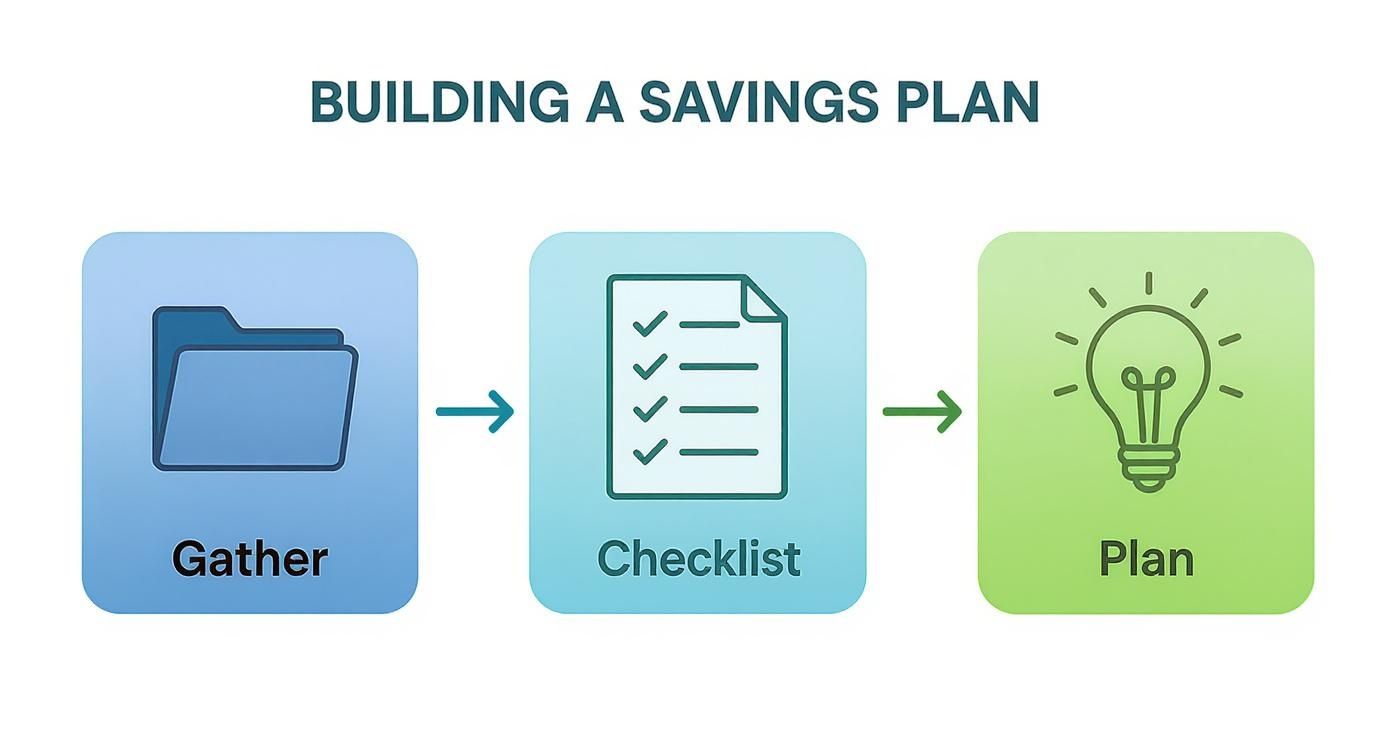
Seeing all your expenses laid out like this turns abstract spending into a concrete, actionable list. It’s no longer just a vague feeling of "spending too much"—it's a clear roadmap.
Create Your Action Plan
With your master list in hand, you've got a powerful tool. It’s time to put it to work. Go through each item, one by one, and ask a few direct questions:
- Is this service truly essential?
- Am I getting the best possible price for it?
- Could I find a cheaper (or free) alternative?
To keep things organized, I highly recommend using a simple checklist. It helps you track your recurring expenses and pinpoint exactly where you can start making cuts.
Your Monthly Bill Audit Checklist
| Bill Category | Current Monthly Cost | Service Provider | Action Item to Reduce Cost |
|---|---|---|---|
| e.g., Internet | $79.99 | Comcast | Call & ask for loyalty discount |
| e.g., Streaming | $15.49 | Netflix | Switch to ad-supported tier |
| e.g., Car Insurance | $145.00 | Geico | Shop for new quotes online |
| e.g., Gym | $39.99 | Planet Fitness | Cancel – not using enough |
Fill this out for every single recurring expense you have. This audit creates the foundation for every other money-saving strategy we're about to cover.
For a deeper dive into finding areas to trim, our guide on how to cut expenses offers even more practical steps. By the time you're done with this exercise, you'll have a targeted plan to start lowering your bills immediately.
Haggle Your Way to Better Rates
Here's a little secret most people don't realize: the prices on your internet, mobile, and insurance bills are often more like suggestions than hard-and-fast rules. Providers build a lot of wiggle room into their pricing, but they certainly won't volunteer a better deal. You have to ask.
It might feel a little awkward, but picking up the phone is genuinely one of the most powerful ways to cut your bills without changing a single thing about your lifestyle.
The entire game is won or lost before you even dial the number. Preparation is everything. Spend just 20 minutes digging into what competitors are charging for a similar service. This single piece of information is your golden ticket.
Do Your Homework First
Your mission is to show your current provider that you have options—better, cheaper options. You don't need a PhD in market research, just a few solid facts from a quick online search. Find out what new customers are paying for plans that look a lot like yours.
Jot down a few key details for two or three competitors:
- Who are they? Note the company's name.
- What’s the price? Look for the monthly rate and be sure to check if it's a temporary "introductory" price.
- What do you get? Are the internet speeds the same? Does the phone plan offer a similar amount of data?
Walking into the conversation with these specifics instantly changes the dynamic. You're no longer just a customer complaining about a high bill; you're an informed consumer with a data-backed request.
Make the Call and Lay Out Your Case
When you call customer service, your first objective is to get to the right person. The agent who answers first probably can't do much for you. Your magic words are "customer retention" or "loyalty department." Ask politely to be transferred. These are the folks who have the real power to offer discounts to stop you from walking away.
Once you’re connected, be pleasant but direct. I always start by mentioning how long I've been a loyal customer and that I'm happy with the service itself, but I'm reviewing my budget. Then, it's time to bring out your research.
Here's a script I've used: "Hi there, I've been with you guys for three years and I'm looking at ways to trim my monthly expenses. I saw that [Competitor's Name] is offering a nearly identical internet plan for $20 less a month. I'd much rather stay put, so I was hoping you could match that price or offer a similar loyalty discount to make it worthwhile."
This approach works because it's not a threat. It positions you as a valuable customer who is giving them a chance to keep your business.
Know What Else to Ask For
What if they can't match the competitor's price exactly? Don't hang up just yet. There are plenty of other ways to save. You just have to know what to ask for.
Try pivoting to one of these questions:
- Promotional Rates: "I see you're offering new customers a great promotional rate. Can you extend that same offer to my account?"
- Loyalty Discounts: "Are there any unadvertised loyalty discounts you can apply for a long-term customer like me?"
- Plan Tweaks: "Is there a slightly different plan that still meets my needs but costs less?"
More often than not, a provider would rather knock 10-20% off your bill than lose you completely. Seriously, a single 15-minute phone call could easily save you hundreds of dollars over the next year. That's a massive return on your time.
Make Your Home More Energy Efficient
Your home’s energy bill is a huge piece of your monthly budget, but it’s also one of the easiest places to find real, lasting savings. We're not just talking about flipping off light switches, either. Let's dig into some high-impact strategies that can seriously lower your utility costs every single month.
A lot of these savings come from smart, targeted upgrades. One of the best things you can do is swap out old, power-guzzling appliances for newer, more efficient models. The average American household burns through about 10,632 kWh of electricity each year, according to the U.S. Energy Information Administration, and a huge chunk of that goes to feeding outdated appliances and lighting.
Upgrading to ENERGY STAR certified appliances can slash their energy use by anywhere from 10% to 50%. That’s a massive long-term win. If you want to dive deeper into the data, SolarTechOnline.com offers a great breakdown of U.S. electricity consumption and savings potential.
Pinpoint Energy Leaks with a DIY Audit
Before you run out and buy a new fridge, you need to figure out where your home is bleeding energy. You don't need a pro for this—a simple DIY energy audit will point you straight to the biggest culprits. The main goal here is to find air leaks that make your furnace and air conditioner work way harder than they should.
Grab a flashlight and start hunting for gaps and cracks in these common problem areas:
- Windows and Doors: Check the weatherstripping and caulk. Is it cracked, peeling, or missing?
- Electrical Outlets and Switches: On a windy day, can you feel a draft coming from outlets on your exterior walls?
- Attic Hatches and Recessed Lighting: These are notorious weak spots where warm air escapes in the winter.
- Plumbing and Ductwork: Look for any unsealed gaps where pipes or vents go through walls, ceilings, or floors.
Sealing these leaks with caulk, fresh weatherstripping, or foam gaskets is one of the cheapest and most effective fixes you can make. You’ll feel the difference almost immediately.
Prioritize Your Appliance Upgrades
When an old appliance finally gives up, see it as an opportunity. Choosing an energy-efficient replacement is one of the smartest financial moves you can make for your home. Yes, the upfront cost might be a little higher, but the return on investment from lower utility bills is undeniable.
An ENERGY STAR certified refrigerator, for instance, uses about 15% less energy than a model that isn't certified. That might not sound like a game-changer, but it adds up to hundreds of dollars in savings over the life of that appliance.
As you shop, keep an eye out for the bright yellow EnergyGuide label. This sticker gives you a clear estimate of the appliance's annual energy use and operating cost, which makes comparing different models a breeze.
Don’t forget about smart thermostats, either. They learn your family’s routine and adjust the temperature automatically, often paying for themselves in less than two years. These kinds of targeted upgrades don't just cut your bills; they make your home more comfortable and even increase its value.
Invest in Your Home for Long-Term Savings
While trimming monthly subscriptions and negotiating better rates are fantastic for immediate relief, the most significant savings often come from smart, one-time investments in your home itself. These upgrades pay you back for years, reducing your reliance on utility companies and inching you closer to real financial freedom.
Thinking bigger can completely change your long-term financial picture. Instead of just trying to use less energy, you can invest in ways to produce your own or slash your home's needs from the get-go. These aren't just expenses; they're investments that make your home a more valuable and efficient asset.
Harnessing Renewable Energy
One of the most powerful moves you can make is installing rooftop solar panels. This can drastically lower or even eliminate your electricity bill entirely, essentially locking in your energy costs for the next couple of decades. It's no surprise that switching to renewables is a major way households are fighting back against unpredictable utility prices.
The upfront cost can seem daunting, but government incentives can significantly soften the blow. Over its lifespan, a solar system can generate tens of thousands of dollars in savings, depending on where you live and what you pay for electricity. You can learn more about how the global investment in energy security is shaping household savings. For anyone serious about long-term savings, it's a compelling path.
The Power of Weatherization
Another high-impact investment is weatherizing your home. This is just a practical way of saying you need to seal up all the tiny cracks and gaps that let your heated or cooled air escape. It’s definitely less glamorous than solar panels, but its effect on your bills is immediate and significant.
Heating and cooling often eat up the largest slice of a home's energy budget. Simply by improving insulation and sealing air leaks, you can cut those costs by up to 20%. Your home stays comfortable, and your HVAC system gets a much-needed break.
Think of it this way: you wouldn't leave a window wide open while the air conditioning is running. Air leaks around doors, windows, and pipes have the exact same effect, constantly draining your wallet.
Here’s where to focus your efforts for the biggest bang for your buck:
- Boost Attic Insulation: Heat rises, so your attic is a prime suspect for energy loss. Making sure it meets modern standards is crucial.
- Seal the Gaps: Get friendly with caulk and weatherstripping. Go around all your windows and exterior doors to create a tight seal.
- Check Ductwork: This is a big one. Leaky ducts in basements or attics can lose up to 30% of the air passing through them before it ever reaches your rooms.
These kinds of strategic investments do require an initial outlay, but they are foundational to building real financial resilience. They systematically chip away at your largest recurring expenses, creating a more cost-effective home for years to come.
Let Technology Automate Your Savings
Manually tracking every penny is a drag. What if you could put your savings on autopilot instead? Using the right tech can do the heavy lifting for you, turning the chore of saving money into something that just happens in the background. It’s all about working smarter, not harder, on your journey to financial independence.
The right tools can automatically sort your spending, spot savings opportunities, and even get rid of those subscriptions you forgot you had. This frees you up to focus on the bigger picture.
Tame Your Spending with Budgeting Apps
Budgeting apps are a must-have if you're serious about getting a handle on your finances. They link securely to your bank accounts and credit cards, sorting every transaction as it happens. You get a real-time, no-fluff view of where your money is going, no spreadsheets required.
These apps can be a game-changer.
- Set spending alerts: Get a heads-up when you're about to go over budget in a certain category.
- Visualize your habits: Simple charts and graphs show you exactly where you can pull back the reins.
- Track your progress: Watching your savings climb and your debt fall is some of the best motivation you can get on the path to financial freedom.
Some of the more popular apps will even scan your recurring bills and tell you if they find a better rate for your internet or cell phone plan. It’s an easy way to make sure you’re not getting ripped off.
Get Rid of Subscription Creep
One of the sneakiest ways your budget gets drained is through "subscription creep"—all those little monthly charges for services you don't even use anymore. This is where a subscription management service really shines.
These tools scan your accounts to find every single recurring payment. You'll see a clean list of everything you're paying for, from Netflix to that free-trial-turned-paid-service you forgot about. The best part? They often let you cancel the ones you don't want with just a click.
Putting your recurring charges under a microscope is one of the fastest ways to find extra cash. We're talking about reclaiming what could easily be hundreds of dollars a year.
Optimize Your Home with Smart Devices
It’s not just about apps on your phone. Smart home tech can make your home more efficient and cut your costs without you even thinking about it. These devices work behind the scenes to slash energy waste, which is often one of the biggest and most unpredictable household expenses.
Take smart plugs, for example. They completely cut power to devices that suck up "phantom" energy even when they're turned off, like your TV or computer setup. You can set a schedule to power them down at night, chipping away at your electricity bill with zero ongoing effort.
For a deeper dive, we've put together a full breakdown of the best money-saving tips that can help you find even more ways to trim your expenses.
Got Questions? Here Are Some Straight Answers
Jumping into the world of bill reduction can feel a little overwhelming, and it's natural to have questions. Getting past these initial uncertainties is the key to making real, lasting progress. Let's tackle some of the most common things people ask when they start trying to lower their bills.
Just a quick heads-up: our goal here is to give you helpful, practical ideas for managing your money. Think of this as educational content, not professional financial advice. Any decisions you make based on what you read are your own, and if you need advice specific to your situation, please connect with a qualified financial adviser.
What’s The Best Way To Start Saving Immediately?
The fastest way to see an impact is to do a full-blown audit of everything you pay for on a recurring basis. This isn't just about the big utility bills; it’s about sniffing out all those little subscriptions that have crept into your budget. Canceling services you no longer use is the quickest win you can get.
When it comes to your bigger bills, like internet or cell phone, one of the easiest moves is to simply call your provider. Mention you're shopping around and have seen better offers from their competitors. It's amazing how often this can lead to an instant discount of 10-20%. It’s a five-minute call that could save you hundreds over a year.
Don't sleep on the power of a quick review. I've seen people realize they're paying for three different music streaming services or for a gym membership they haven't used in six months. Getting that money back in your pocket is the fastest way to feel like you're winning.
Are Smart Home Devices Really Worth The Investment?
In most cases, absolutely. Yes, there's an upfront cost, but something like a smart thermostat can cut your heating and cooling costs by 10-15% a year—and that’s usually the biggest chunk of your energy bill.
Typically, you’ll make back the cost of a smart thermostat in just a year or two. Even something as simple as a smart plug can make a difference by killing the "phantom power" that your electronics sip on even when they're turned off. The trick is to focus on devices that control your biggest energy hogs; that's where you'll get the best return on your investment.
How Often Should I Review And Negotiate My Bills?
I recommend setting a calendar reminder to do a complete review of all your bills and subscriptions at least once a year. It's one of those things that's easy to forget, but it's so important for keeping costs down.
This is especially critical for any service that has a contract. Those introductory rates usually expire after 12 or 24 months, and your bill can shoot up without warning. For things like car and home insurance, you should be shopping for new quotes before every renewal period. The market is always changing, and your loyalty to one company often costs you money. A yearly check-up keeps you from overpaying.
And while you're getting your household budget in order, why not tackle another major expense? We use a lot of the same strategies in our guide on how to save money on groceries.
At Collapsed Wallet, our mission is to give you clear, no-nonsense advice to help you get a handle on your finances. Check out more of our guides and start building a stronger financial future today at https://collapsedwallet.com.

4 thoughts on “How to Save Money on Bills A Practical Guide”