
Table of Contents
This blog post may contain affiliate links. As an Amazon Associate I earn from qualifying purchases.
Learning how to budget on a low income starts with one simple, non-negotiable step: you have to know exactly where your money is going. This isn't about feeling restricted. It's about getting the clarity you need to make smart choices and finally feel in control, even when every pound counts.
The aim of our blog is to provide valuable insights and practical tips to help readers manage their money more effectively. However, the information shared here is for general guidance and educational purposes only. It should not be regarded as professional financial advice. Any actions taken based on our content are entirely the responsibility of the reader, and we accept no liability for the outcomes of those actions. If you require financial advice tailored to your personal circumstances, we strongly recommend seeking assistance from a qualified financial adviser.
Building Your Financial Foundation
Before you can tell your money where to go, you need to see where it’s been going on its own. That means getting serious about tracking every penny coming in and going out for at least one full month. The goal here isn't to judge yourself for past spending, but to create an honest, real-world picture of your financial life.
This first step is often a real eye-opener. You might find a forgotten subscription quietly draining your account or realize that some recurring small purchases add up to a shocking amount by the end of the month.
Calculating Your True Income
If you get the same pay cheque every month, this part is easy. But for many of us—especially those in the gig economy, on zero-hours contracts, or with fluctuating pay—it’s not so simple. Budgeting based on a good month is a recipe for stress.
Instead, look at your income over the last 3 to 6 months. Find the average, but then build your budget around your lowest-earning month from that period. This conservative number becomes your baseline.
This approach means you can always cover your essentials, even in a slow month. Any money you earn above that baseline is a welcome bonus. You can throw it at debt, boost your savings, or put it towards a specific goal.
Tracking Your Expenses Effectively
Now for the other side of the equation: your spending. There are tons of ways to do this. The best method is whichever one you’ll actually use consistently.
Choosing the right tool to track your income and expenses is a personal decision, but it's a crucial one. What works for one person might feel like a chore to another. Let's look at the most common methods to help you find your perfect fit.
Income and Expense Tracking Methods
| Method | Pros | Cons | Best For |
|---|---|---|---|
| Notebook & Pen | – Inexpensive and simple to start. – Physically writing it down helps with memory. |
– Requires manual calculations. – Easy to misplace or forget to update. |
The tactile person who prefers a screen-free, hands-on approach. |
| Digital Spreadsheet | – Free tools like Google Sheets are available. – Automates maths and can be customised. – Accessible from any device. |
– Steeper learning curve if you're not familiar with spreadsheets. – Requires consistent manual data entry. |
The DIY-er who likes control and wants to see all their data in one place. |
| Budgeting App | – Automatically imports and categorises transactions. – Visual tools like charts make it easy to see spending. – Often includes goal-setting and bill reminders. |
– Some of the best apps have subscription fees. – Can feel less hands-on; you might not "feel" the spending. |
The tech-savvy person who wants automation and a clear, at-a-glance overview of their finances. |
No matter which method you land on, the key is to stick with it. Consistency is what will give you the clear financial picture you need to make real progress.
The first month of tracking is purely for observation. Don't try to change anything just yet. Your only job is to gather the data. This information is the power you need to make meaningful changes down the road.
This process is a fundamental part of building strong money management skills. It’s the shift from just reacting to financial surprises to proactively directing your own future. After one month, you'll have a complete financial snapshot that will guide every decision you make from here on out.
Forget the Rules—Build a Budget That Actually Works
You’ve probably seen the popular budgeting rules plastered all over the internet. The 50/30/20 rule is a big one. But let’s be honest: when you’re trying to make ends meet on a tight income, those neat little percentages can feel like a slap in the face. They often lead to frustration before you even get started.
This is where you need to throw the rulebook out the window. Your most powerful financial tool isn't a spreadsheet or an app; it's a flexible mindset. The goal is to adapt these concepts to fit your life, not to squeeze your finances into a box that was never made for you.
Why the "Expert" Rules Often Fall Flat
So many financial gurus swear by the 50/30/20 rule, which breaks down like this: 50% of your income for needs, 30% for wants, and 20% for savings and debt. It’s a solid principle in theory, but it can feel completely out of reach when money is tight.
The truth is, for most people on a low income, essential "needs" like rent, council tax, and transport can easily eat up 70% or even 80% of what you bring home.
If you try to force your numbers into a 50% box when your rent alone is 45% of your pay, you're just setting yourself up for stress. So, instead of giving up, let's redefine the game. A successful budget is one you can actually stick to, not one that looks perfect on paper.
Forget what your budget is "supposed" to look like. Your only job is to create a plan that reflects your real income and costs, even if your 'needs' category swallows up most of the pie.
Crafting Your Own Budgeting Ratio
Instead of 50/30/20, we’re going to build your personal ratio from the ground up. Now that you've tracked your spending, you have the real data you need to make this work. It's all about giving every pound a specific job, starting with the most important ones.
First, lock down your non-negotiables. These are the bills you absolutely have to pay to keep the lights on and a roof over your head.
- Housing: Rent or mortgage. This is always priority number one.
- Utilities: Gas, electricity, water, and council tax.
- Transportation: The cost of getting to work, whether it’s a bus pass or petrol.
- Groceries: Your essential food budget.
- Minimum Debt Payments: The absolute minimum you must pay to keep your accounts from going into default.
Once you’ve covered those essentials, what’s left? That remaining percentage is what you have to work with for everything else—wants, extra debt payments, and savings.
A Real-World Example
Let's look at how this plays out in the real world, because financial advice often misses the mark here. A single parent earning £1,500 a month might have £800 in fixed costs for rent and utilities right off the bat. That leaves just £700 for absolutely everything else—from the food shop and the bus fare to any hope of putting money aside. As you can imagine, this situation leaves almost no room for the traditional 'wants' or 'savings' buckets. If you want to dig deeper into this, you can read more about specific budgeting strategies on a low income.
This is exactly why a custom budget—maybe an 80/10/10 (Needs/Wants/Goals) or even a 90/5/5 split—is so much more realistic and empowering.
Don't Underestimate Small Percentages
It’s easy to feel defeated when you see your savings percentage is a tiny, single-digit number. But the real power isn’t in the size of the percentage—it’s in the consistency.
Think about it. Saving just 2% of a £1,500 monthly income is £30. Doesn't sound like much, right? But over a year, that’s £360.
That £360 is the difference between a broken washing machine sending you into a spiral of high-interest debt and being able to handle it. It's a financial cushion you built yourself, one small step at a time. The same goes for debt. Chucking an extra £15 a month at a credit card might feel like a drop in the ocean, but it chips away at the principal faster and saves you money on interest in the long run.
Focus on building the habit, not on hitting some arbitrary number. That's how you win.
Finding Savings That Make a Real Difference
Okay, you've got the lay of the land—you know exactly where your money is going. Now it’s time to switch from tracking to taking action. This is where you can start to claw back some serious cash, not by giving up every little thing that brings you joy, but by making smart, targeted cuts to your biggest expenses. We're not talking about skipping non-essentials; we're hunting for the big wins that will actually free up your money.
Your largest bills are almost always hiding the biggest potential savings. These are the costs you probably pay automatically each month, but spending a few hours digging into them can pay off way more than a month of meticulous penny-pinching.
This is the tough reality for many of us on a tight budget—the "Needs" just eat up everything, leaving almost nothing for wants or getting ahead.
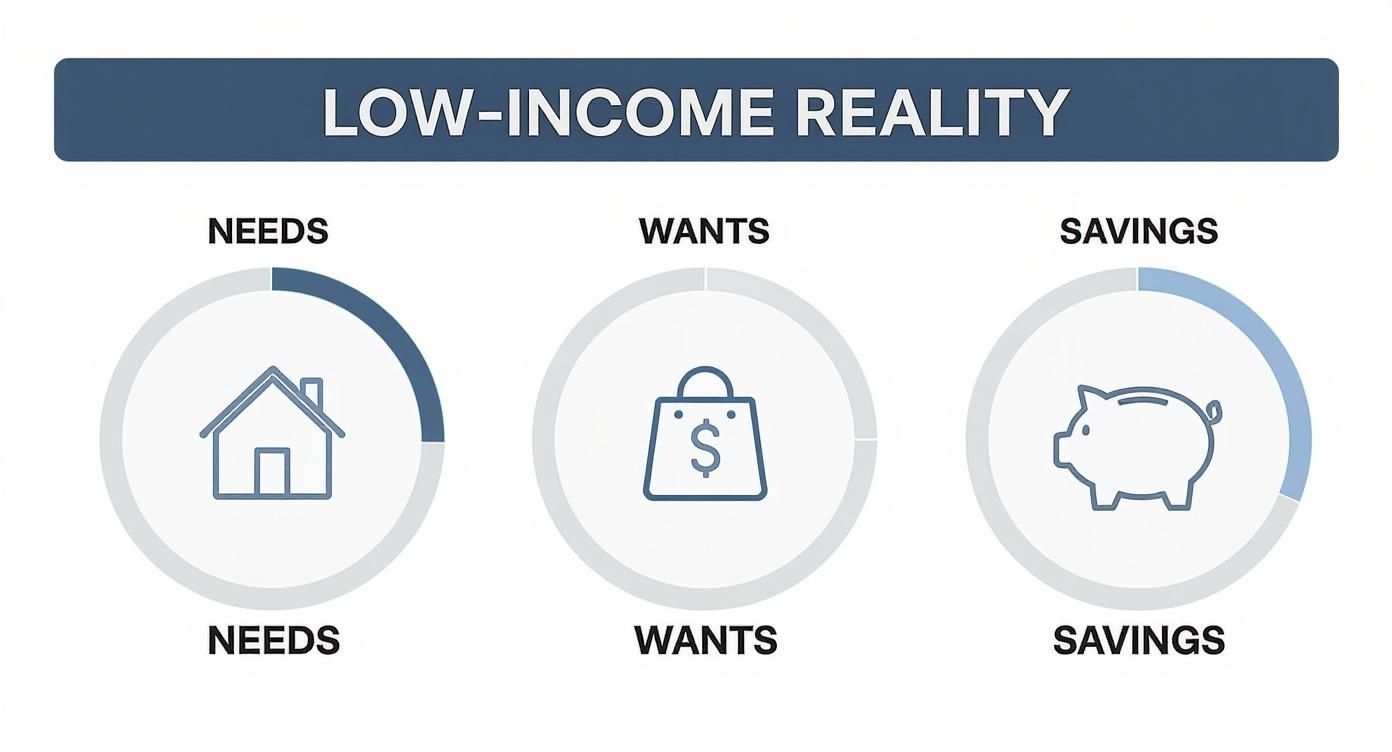
That image really drives it home, right? It shows exactly why cutting the cost of essentials is the most powerful move you can make to give yourself some breathing room.
Audit Your Essential Contracts
Most of us are guilty of this: we sign up for things like energy, a mobile phone, or broadband and then completely forget about them. But loyalty rarely pays. Companies constantly roll out their best deals to attract new people, often leaving their long-term customers on older, more expensive plans. It’s time to shake things up.
Grab your latest bills for these big three. Don't just glance at the total; really look at the details.
- Energy Bills: Are you on a fixed or variable rate? When does your deal expire? Hop on a comparison site and see what you could be paying. It’s not uncommon for households to save hundreds of pounds a year just by making a switch.
- Mobile Phone Contract: Check your data usage. Are you paying for more than you use? If you’ve finished paying off your phone, you could move to a much cheaper SIM-only deal and keep the handset you already have.
- Broadband and TV: Are you paying for a ton of channels you never watch? Or for internet speeds you don’t really need? Sometimes, just calling your provider and hinting that you might leave is enough to unlock a surprisingly good loyalty discount.
Don't be afraid to haggle. When you call, tell them you've found a better price elsewhere and ask if they can beat it. The worst they can do is say no, but you'd be surprised how often they'll pull a discount out of thin air to keep you.
Slay the Subscription Dragons
Those little recurring payments are silent budget killers. A few pounds here for a streaming service, a few there for an app—it doesn't feel like much, but it can add up to a serious monthly drain.
Print out your bank statement and get a highlighter. Go through it line by line and mark every single recurring payment. For each one, ask yourself:
- Did I even realize I was still paying for this?
- Honestly, when was the last time I used it?
- Is it really worth the cost to me right now?
Be ruthless. If the answer is no, cancel it immediately. You can always sign back up later if you genuinely miss it.
Find Major Savings in Your Day-to-Day Spending
To find those big, high-impact savings, I always tell people to look at the areas where they spend the most. The table below highlights some of the most common budget-busters and gives you concrete actions you can take to lower the cost.
High-Impact Areas for Potential Savings
| Expense Category | Actionable Tip | Potential Monthly Saving |
|---|---|---|
| Groceries | Plan your essential food needs for the week. Stick to your list and avoid non-essential impulse buys. | $50 – $150 |
| Utilities | Switch to a cheaper energy provider using a comparison site. Unplug electronics when not in use. | $20 – $75 |
| Mobile Phone | Your contract ended? Switch to a SIM-only plan. You can often cut your bill by 50% or more. | $15 – $40 |
| Subscriptions | Audit all streaming, app, and membership fees. Cancel any you don't use at least weekly. | $10 – $50 |
| Transportation | Optimise routes to save on fuel, or explore carpooling options if available. | $15 – $60 |
Even tackling just one or two of these areas can make a noticeable difference in your monthly cash flow.
While fixed contracts offer those satisfying one-off wins, your variable spending—especially on food—is where you can save money week after week. This isn't about restrictive eating; it's about being a smarter shopper.
The single best thing you can do is plan your essential food needs before you even think about heading to the store. This stops you from making impulse buys and ensures every item in your cart has a purpose. There are fantastic guides out there to help, including how to build an inexpensive healthy grocery list that keeps you and your wallet happy.
By focusing on these key areas, you're not just trimming fat—you're taking control and consciously deciding where your money should go. That freed-up cash is what will help you build that emergency fund, get rid of debt, and finally feel a little less stressed.
Building Your Financial Safety Net
A budget tells your money where to go, but a financial safety net gives you the strength to handle a crisis. This is where you break the exhausting cycle of borrowing money just to cover an unexpected bill. It's all about creating a buffer between you and life's curveballs.
This next part is your roadmap for tackling debt and starting an emergency fund, even when it feels like there’s nothing left to save. It might seem impossible right now, but a smart strategy and a little consistency can build the financial stability you deserve.
Choosing Your Debt Repayment Strategy
Debt can feel like an anchor, dragging down every bit of financial progress you make. Paying it off frees up your income—your most powerful tool for building a better future. When it comes to getting out of debt, there are two popular methods. The best one for you usually depends on what keeps you motivated.
The debt snowball method is all about momentum. You list all your debts from the smallest balance to the largest, completely ignoring the interest rates for a moment. You’ll make the minimum payment on everything except for the smallest debt. You throw every spare pound you can find at that one.
Once it's gone, you take the money you were paying on it and roll it over to the next-smallest debt. This creates a "snowball" effect. Wiping out those first few debts gives you a huge psychological boost, which is often exactly what you need to keep going.
The debt avalanche method, on the other hand, is the most efficient choice if you're looking at the numbers. With this approach, you list your debts from the highest interest rate to the lowest. You'll still make minimum payments on everything, but all your extra cash goes toward the debt with the highest interest rate.
This strategy saves you the most money in the long run because you're getting rid of the most expensive debt first. It might take a bit longer to feel that first "win," but the savings can be significant. It’s a great fit if you're driven by logic and efficiency.
Comparing Debt Snowball vs. Debt Avalanche
| Strategy | How It Works | Best For | Key Benefit |
|---|---|---|---|
| Debt Snowball | Pay off debts from smallest to largest balance. | People who need quick wins to stay motivated. | Psychological Boost: Seeing debts disappear quickly builds momentum. |
| Debt Avalanche | Pay off debts from highest to lowest interest rate. | People who are disciplined and focused on the numbers. | Saves Money: Minimises the total interest you pay over the long run. |
Honestly, neither one is "better" than the other. The most effective strategy is the one you’ll actually stick with. Pick the one that speaks to you.
Starting Your Emergency Fund with Almost Nothing
When you’re just trying to cover this month's bills, the idea of saving for an emergency can feel completely out of reach. But an emergency fund isn't a luxury; it's a vital survival tool when you're on a tight budget. It’s what prevents a flat tyre from spiralling into high-interest credit card debt.
The trick is to start small. Impossibly small. Forget the standard advice about saving three to six months of expenses—that goal is just overwhelming right now. Your first mission is much simpler.
Your initial mission is to save your first £100. Then aim for £500. Starting with tiny, achievable goals builds the saving habit and proves to you that it’s possible.
Start with just £5 a week. If that's too much, start with £2. Seriously. The amount is less important than the act of doing it consistently. A great way to do this is to set up an automatic transfer from your main account to a separate savings account for the day you get paid. You're "paying yourself first," so the money is tucked away before you even have a chance to miss it.
This small, steady action builds a powerful buffer over time. For a more detailed walkthrough, you can learn more about how to build an emergency fund in our comprehensive guide. That little pot of money is your first line of defence, giving you options and breathing room when life gets messy.
Using Technology for Smarter Budgeting
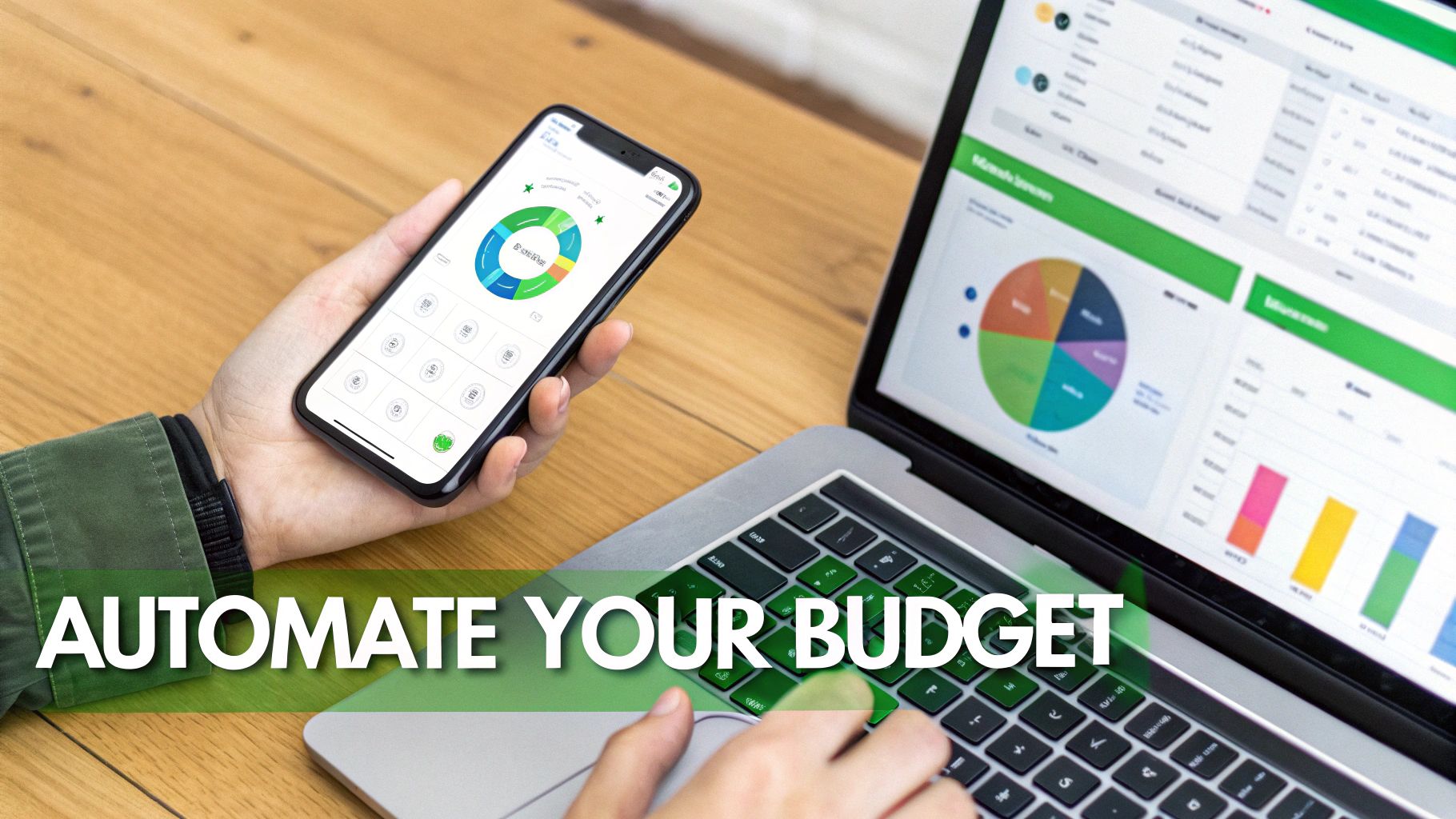
Let's be honest, tracking every single penny in a notebook or spreadsheet can feel like a part-time job. While it's a solid method, technology can do most of the heavy lifting for you, turning your phone into a powerful financial ally. This is about working smarter, not harder, and freeing up your mental energy.
Today's budgeting apps are so much more than digital ledgers. They connect directly to your bank accounts to automatically track and categorise your spending, ping you when a bill is due, and show you exactly how close you are to your savings goals. That kind of automation is a genuine lifesaver when you're learning how to budget on a low income.
Let an App Do the Hard Work
The real magic of a good budgeting app is seeing where your money is going in real-time. No more waiting until the end of the month and wondering where it all went. You get instant feedback, which means you can course-correct halfway through the month instead of after the damage is done.
Many of these apps use something called open banking. It sounds technical, but it’s just a secure way to let an app see your financial information from different banks and credit cards, all in one place. You get a single, clear picture of your finances without having to juggle a dozen different logins.
The point here isn't to add another complicated task to your plate. It's to find a tool that makes managing money feel less like a chore and more like you're in the driver's seat. The right app feels like having a friendly financial coach right in your pocket.
What to Look for in a Budgeting App
Not all apps are built the same, and what works for one person might not work for you. But for anyone on a tight budget, there are a few features that are absolute must-haves.
Look for apps that offer:
- Automatic Transaction Sorting: The app should be smart enough to see a purchase from Tesco and file it under 'Groceries' for you.
- Custom Budget Categories: Your budget is unique. A good app lets you create your own spending categories and set limits that make sense for your life.
- Bill Reminders: A late fee is the last thing you need. Look for apps that send you a heads-up before a bill is due so you can avoid those punishing extra charges.
- Savings Goal Trackers: Nothing keeps you motivated like watching a progress bar fill up as you build your emergency fund.
Finding the Right App for You
There are tons of apps out there, and thankfully, many of the best ones have free versions that are perfectly capable. Some, like Snoop or Emma, are known for their simple interfaces and automatic tracking. Others are built around specific methods, like the "give every pound a job" approach.
Before you download the first one you see, think about:
- The Cost: Stick with free apps to start. You can get all the essential features you need without paying for a subscription.
- How it Feels to Use: If the app is clunky or confusing, you'll stop using it. Find one with a clean layout that you actually enjoy looking at.
- Security: This is non-negotiable. Make sure the app uses bank-level security and encryption to keep your financial data safe.
The best way to find your perfect match is to try a couple out. The goal is to find a system that helps you feel in control, not overwhelmed. When you find the right one, technology can be one of your biggest assets on the path to feeling more secure about your finances.
Got Questions About Budgeting on a Low Income?
Sooner or later, you're going to hit a bump in the road. That's just part of the process when you're learning how to budget, especially on a tight income. It’s completely normal to feel a bit stuck or even discouraged, but having some answers lined up can make all the difference. Let's tackle some of the most common hurdles people run into.
Of course, everyone's situation is unique. Budgeting looks completely different depending on where you are and what you're working with. Just look at the global picture: in the 10 poorest countries, the average person has a purchasing power of around $1,600 a year. Compare that to over $118,000 in the 10 richest, and you can see how wildly different financial realities can be. You can dig into more of those numbers and what they mean for families on gfmag.com.
What Should I Do If an Unexpected Expense Wrecks My Budget?
First things first: don't panic. An unexpected bill isn't a sign that you've failed; it's a test of the system you're building. This is exactly why an emergency fund, even a tiny one, is a game-changer.
If you've got some emergency savings stashed away, now's the time to use it. That's literally what it's for. If you haven't managed to build one yet, it's time to get creative. Look at your budget and see what "wants" you can slash temporarily to free up some cash. You might need to skip an extra debt payment for a month (just make sure you talk to your creditor first) or pause your savings goal. The key is to deal with the immediate problem, make a temporary tweak, and then get back to your plan as soon as you can.
How Can I Possibly Budget with an Irregular Income?
I get it. Trying to stick to a traditional monthly budget when your income is all over the place is a recipe for frustration. When your pay is unpredictable, you need a more flexible approach. I always recommend a "paycheck budget" in these situations.
Instead of trying to plan a whole month at once, you just budget for the money you have right now, every single time you get paid. It's a much simpler system:
- Know Your Deadlines: First, list all your essential bills and when they're due.
- Assign Every Pound: As soon as money comes in, assign it to cover the bills that are due before you expect to get paid again.
- Cover Your Basics: Next, set aside money for things like groceries and petrol.
- Look Ahead: If there's anything left over, it can go toward your bigger goals, like savings or paying down debt.
This way, your most critical expenses are always covered right away, which stops you from accidentally spending money you need for rent later in the month.
How Do I Stay Motivated When Progress Feels So Slow?
This is a big one. It's so easy to lose steam when it feels like you're barely making a dent. The trick is to stop staring at the mountain top and start celebrating the small steps you're taking to climb it.
You have to celebrate the small wins. Seriously. Paid off a tiny debt? Put your first £100 into savings? That's a huge deal. Those little milestones are proof that you're moving in the right direction.
Try using a visual tracker—something you can physically colour in as you get closer to a savings goal or pay off a debt. It sounds silly, but seeing that progress makes it feel real. It also helps to share your "why" with someone you trust. Having a friend who knows why you're working so hard can provide a massive boost when you feel like giving up. Every step forward counts.
At Collapsed Wallet, our entire mission is to give you straightforward, practical advice to help you get a handle on your money. We've got tons of resources to help you on your way to feeling more in control. Explore more of our guides and tools.

2 thoughts on “How to Budget on a Low Income: Steps to Financial Freedom”