

Table of Contents
This blog post may contain affiliate links. As an Amazon Associate I earn from qualifying purchases.
Figuring out how to save money on utilities doesn't have to be a massive, expensive project. The best place to start is with small, simple changes you can make today that cost you nothing. By tackling those sneaky "energy vampires" and tweaking everyday habits like how you do laundry or take showers, you can see a real difference in your electricity, water, and heating bills this very month. These quick wins are incredibly motivating and build momentum for bigger savings down the line.
The aim of our blog is to provide valuable insights and practical tips to help readers manage their money more effectively. However, the information shared here is for general guidance and educational purposes only. It should not be regarded as professional financial advice. Any actions taken based on our content are entirely the responsibility of the reader, and we accept no liability for the outcomes of those actions. If you require financial advice tailored to your personal circumstances, we strongly recommend seeking assistance from a qualified financial adviser.
Your Game Plan for Immediate Utility Savings
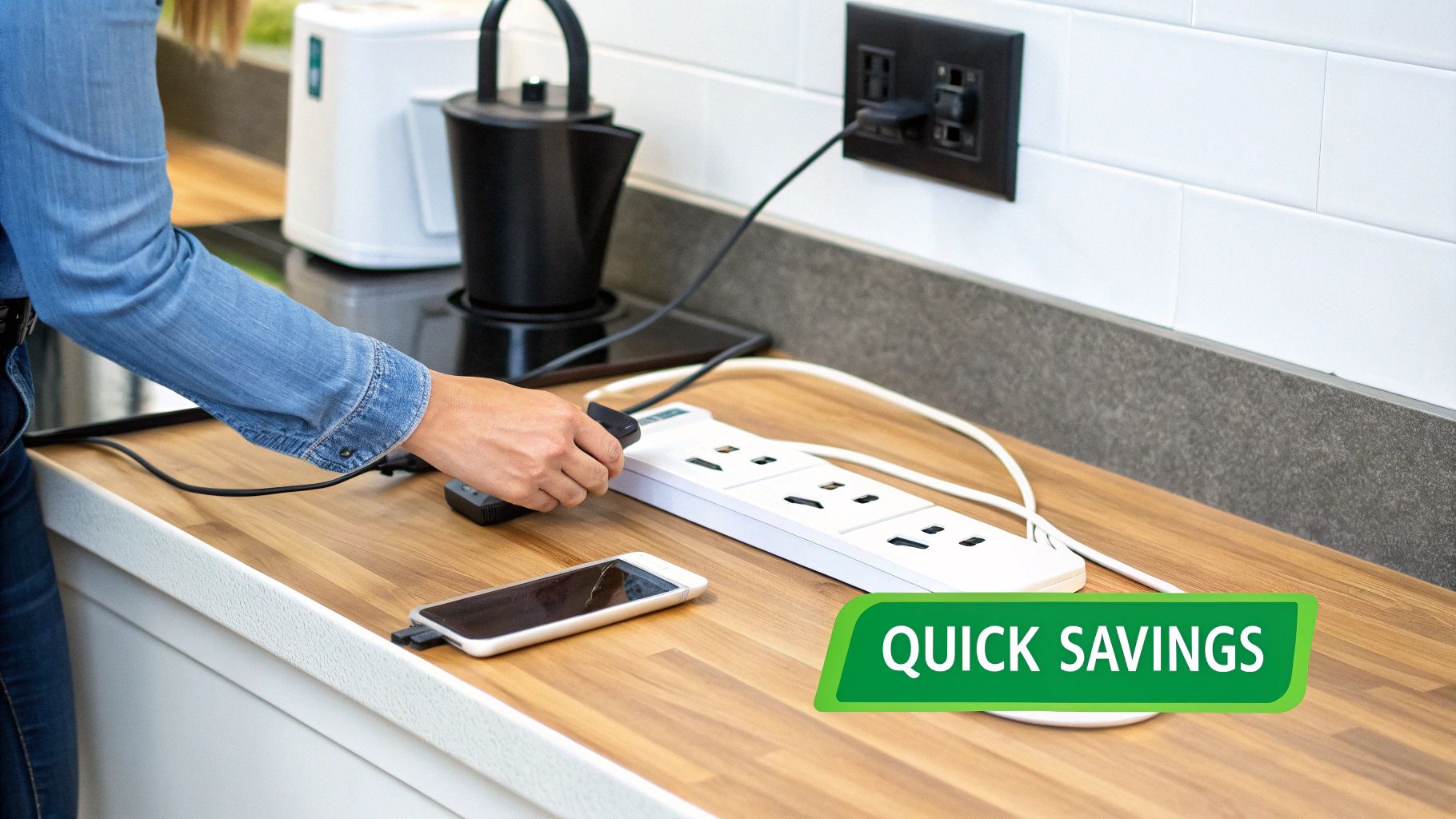
The path to getting your bills under control starts with decisive, immediate action. You don't need a huge budget or a weekend renovation project to start seeing results right now. Honestly, the most powerful first step is just becoming more mindful of the energy you use every single day.
This really boils down to finding and stopping the small, constant drains on your wallet. Most people are genuinely shocked when they realize how much power their electronics are sucking up even when they're supposedly "off." These phantom loads, or "energy vampires," are quietly costing you money around the clock.
Slay the Energy Vampires
Take a look around your home. Your TV, gaming console, coffee maker, and especially all those chargers plugged into the wall are likely pulling power 24/7, even in standby mode. While one device might only sip a tiny bit of electricity, the combined thirst of all of them can add up to a surprising amount over a year.
The easiest fix? Unplug things when you're not using them. For areas with a bunch of electronics, like your entertainment center or home office, a power strip is your best friend. Instead of unplugging five different things, you just flip one switch. Simple.
Optimize Your Daily Routines
Beyond your gadgets, your daily habits hold a huge potential for savings. A few small tweaks can deliver big results without making you feel like you're sacrificing anything.
Here are a few of my favorite no-brainers:
- Laundry Logic: Make it a rule to only wash full loads. Your washing machine uses about the same amount of energy whether it's half-empty or stuffed. Even better, switch to cold water. This can slash the energy used per load by over 75%, since most of the power goes into heating the water, not tumbling the clothes.
- Smarter Showers: Cutting just a couple of minutes off your daily shower can save hundreds of gallons of hot water over the year. That's savings on both your water and your heating bill. A low-flow showerhead is another fantastic, cheap upgrade that cuts water use without you even noticing the difference in pressure.
- Dishwasher Discipline: Same idea as the laundry—run your dishwasher only when it's completely full. When the cycle finishes, crack the door open and let your dishes air-dry. That heated dry setting is a massive energy hog.
With utility companies filing for record rate increases, taking control of your consumption is more critical than ever. The good news is that you have more power than you think. Swapping out your old incandescent bulbs for LEDs can cut lighting electricity use by 75%. Installing a smart thermostat can trim heating and cooling costs by up to 15% a year. For a typical family, just sealing up a few drafts can put hundreds back in their pocket annually.
Below is a quick-reference table to help you get started with some of the most effective, low-effort changes you can make.
Quick Wins for Lowering Your Utility Bills Today
This table highlights some high-impact actions you can take right now, with a rough idea of what you could save over a year.
| Action | Utility Affected | Estimated Annual Savings |
|---|---|---|
| Unplug electronics & use power strips | Electricity | $100 – $200 |
| Switch to cold water for laundry | Electricity/Gas | $50 – $150 |
| Shorten showers by 2 minutes | Water & Heating | $70 – $100 |
| Air-dry dishes instead of heated dry | Electricity | $30 – $50 |
| Wash only full loads of laundry/dishes | Water, Electricity, Gas | $40 – $80 |
These numbers are estimates, of course, but they show how quickly these small changes can add up to real money.
Small, consistent actions are the foundation of financial freedom. The few dollars you save each week by unplugging a charger or washing in cold water compound over time, freeing up cash for your long-term goals.
These initial victories are proof that you're in the driver's seat when it comes to your expenses. For a deeper dive, you can find more excellent advice on how to lower utility bills. Building these smart habits is a key part of a bigger strategy, and if you're feeling motivated, check out our guide on https://collapsedwallet.com/how-to-save-money-fast/ for more ideas.
Become a Home Efficiency Detective
Alright, once you’ve handled the low-hanging fruit—the obvious energy wasters—it’s time to put on your detective hat. I’m talking about a simple, hands-on audit of your home. You don't need fancy tools or an expert on speed dial for this. It’s all about using your own senses to find the hidden culprits that are quietly inflating your bills.
Honestly, you know your home better than anyone, which makes you the perfect person for the job. This isn't just about following generic advice; it's about creating a personalized action plan. Instead of guessing where you might be losing money, you’ll pinpoint the exact spots that need attention and focus your efforts where they'll make a real difference.
Hunt Down Hidden Drafts
Air leaks are one of the biggest, sneakiest money drains in any home. We're talking about those tiny, invisible gaps around windows, doors, and even electrical outlets. They let your expensive heated air slip out in the winter and your precious cool air escape in the summer, forcing your HVAC system to work overtime just to keep up.
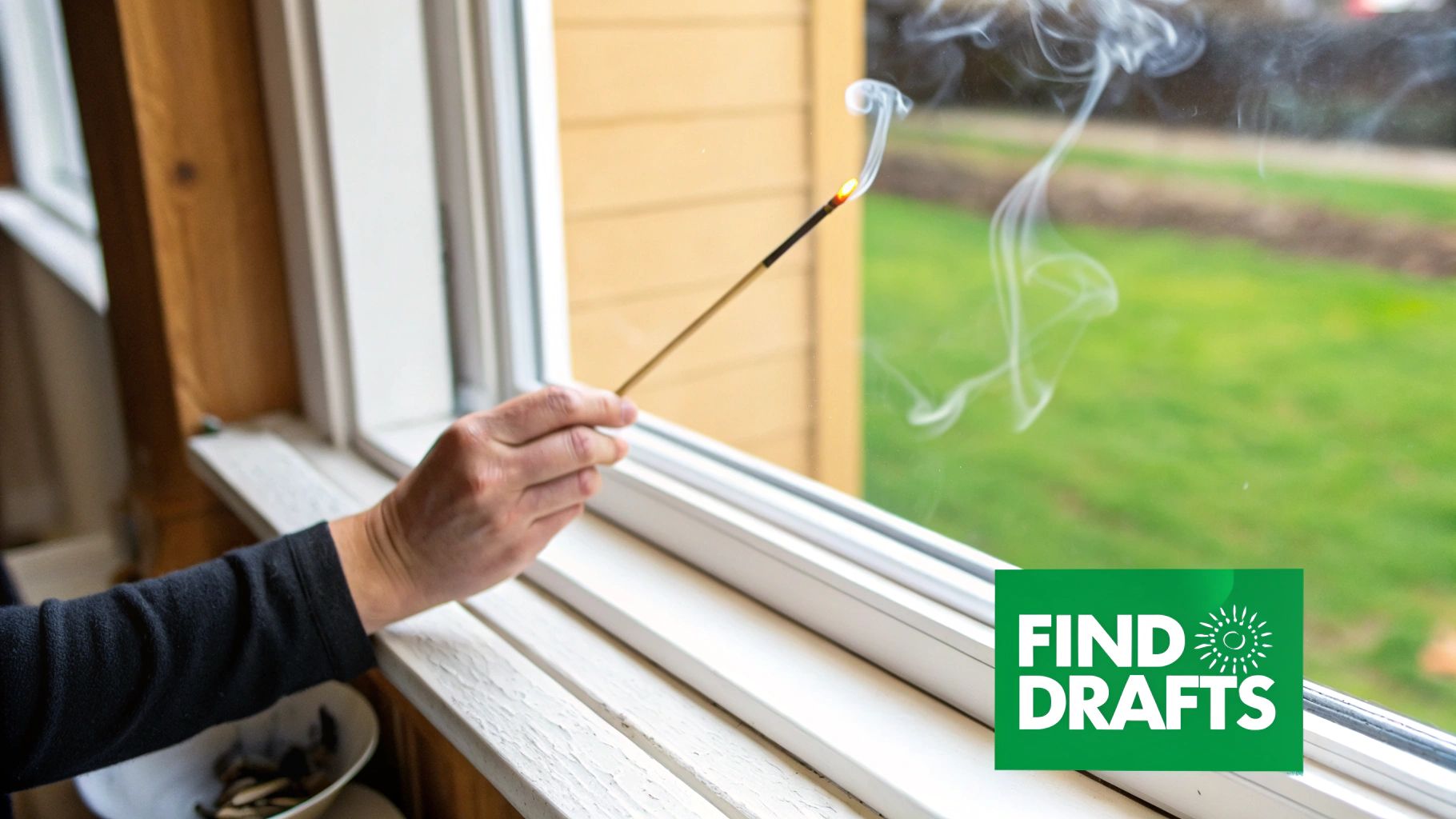
There’s a classic, low-tech way to find them: the incense test. On a calm, cool day, close up the house and turn off any fans. Light an incense stick and slowly pass it along the edges of window frames, door jambs, and anywhere pipes or wires enter your home. If you see the smoke get pulled out or start wavering, bingo. You've found a draft.
The best part? The fixes are usually cheap and straightforward.
- Weatherstripping: This is your best friend for doors and windows. Self-adhesive foam or rubber strips create a tight seal when everything is closed.
- Caulking: Grab a tube of caulk to fill small gaps and cracks in stationary frames or where trim meets the wall. It’s a simple but effective fix.
- Foam Gaskets: These are a game-changer. You can buy pre-cut foam gaskets to place behind the faceplates of outlets and light switches on your exterior walls, stopping a surprising amount of air loss.
These small projects can collectively trim your heating and cooling costs by 5% to 10% a year. It's a tiny investment of your time for a payback that keeps on giving. For more ideas on optimizing your home, check out the resources in our Housing, Energy & Utilities section.
Investigate Your Insulation
Think of your attic as a hat for your house. If it’s poorly insulated, a massive amount of heat is going to escape right through the top. You don't need to be a contractor to do a quick visual check.
Pop your head up into the attic and take a look at the insulation between the floor joists. Can you see the tops of the wooden joists? If so, you almost certainly need more insulation. A well-insulated attic should have insulation that’s at least level with, or ideally, well above the joists. Adding more, like blown-in cellulose or fiberglass batts, is a powerful move for long-term savings.
Unmask Guzzling Appliances and Leaky Plumbing
Not all culprits are invisible drafts. That old refrigerator from the 90s humming away in the garage? It could easily be costing you over $100 a year all by itself. Older appliances are often massive energy hogs compared to their modern, efficient counterparts.
Water leaks are another silent wallet-drainer. A constantly running toilet is especially notorious; it can waste hundreds of gallons of water a day, adding a shocking amount to your bill over time.
Want to check for a silent toilet leak? It's easy. Just add a few drops of food coloring to the tank and walk away for 15-20 minutes. Don't flush! If you come back and see color in the bowl, you have a leak. The good news is it's usually just a faulty flapper—a part that costs a few bucks and is simple to replace.
By systematically going through these key areas—drafts, insulation, old appliances, and leaks—you’re no longer just guessing. You’re building a customized roadmap for how to save money on utilities, ensuring every fix you make is a strategic step toward taking back control of your finances.
Get a Handle on Your Home's Climate
Let's be honest: for most of us, the heating and air conditioning system is the single biggest energy hog in the house. Taming this beast is your most powerful move to slash those utility bills. This isn't about being uncomfortable—no one wants to freeze in the winter or sweat through the summer. It's about making your system work smarter, not harder.
This is where you'll find the most dramatic savings, often with less effort than you'd think. When you take control of your home's climate, you're directly tackling the largest slice of your energy costs, making it the perfect place to start.
Think Smarter About Temperature
The old-school way of cranking the thermostat and then forgetting about it is a costly habit. A programmable or smart thermostat is easily one of the best first investments you can make. Just by dialing back the temperature 7-10°F for 8 hours a day—say, when you're at work or tucked in bed—you can cut your annual heating and cooling costs by up to 10%.
Today's smart thermostats are even more clever. They actually learn your family's routine, sense when the house is empty, and can even tweak the temperature based on the local weather forecast. It’s no longer just a simple schedule; it's a dynamic system that cuts out wasted energy without you even noticing a change in comfort. Think of it as putting your HVAC on autopilot for savings.
Your thermostat is the brain of your home's entire climate system. Upgrading to a smart one is like hiring a tiny efficiency expert who works 24/7, for free, to find you savings.
With utilities across the US pouring money into grid upgrades, customer rates are climbing. Simple defensive moves at home can make a real difference. For example, those programmable thermostats can shave 8-10% off your electricity bill, while insulating hot water pipes can save another 4-25%. As you can see in this utility industry outlook, taking small actions helps you push back against rising prices.
A Little Seasonal Maintenance Goes a Long Way
You don't need to be an HVAC pro to keep your system in good shape. A bit of simple, seasonal maintenance can stop your unit from working inefficiently and, more importantly, help you dodge a costly emergency repair bill. A system that's clogged with dirt has to fight to move air, which burns more energy and shortens its lifespan.
Put these two non-negotiable tasks on your calendar:
- Change Your Air Filters. Seriously, this is the easiest and most impactful thing you can do. A dirty filter suffocates your system, forcing it to run longer and harder. Check it once a month and plan on replacing it every three months, at a minimum.
- Keep Everything Clear. Take a quick walk around your house and make sure furniture, rugs, or drapes aren't blocking any air vents. Head outside and check your AC condenser unit—it needs at least two feet of clear space all around it. Rake away any leaves, trim back weeds, and clear out any debris.
These two habits alone ensure your system can "breathe," keeping it efficient and helping it last longer.
Know When It's Time for a High-Efficiency Upgrade
There comes a point when pouring money into an old, clunky HVAC unit just doesn't make sense anymore. The price tag on a new high-efficiency system can feel steep, I get it. But you have to see it as a long-term investment, not just an expense. Modern Energy Star-rated systems and heat pumps can be 30-50% more efficient than units from just a decade ago.
To see if it makes sense for you, run a quick payback calculation. Start by getting a few quotes for a new system and make sure to ask for its efficiency rating (that's the SEER rating for an AC or AFUE for a furnace).
- First, call your utility company and ask for your total heating and cooling costs over the past year.
- Next, estimate your potential savings. If a new unit is 30% more efficient, you can reasonably expect to save about 30% on that annual cost.
- Finally, divide the total upfront cost of the new system (after any rebates) by your estimated annual savings. That number is roughly how many years it will take for the new system to pay for itself.
And before you sign anything, hunt for rebates! Utility companies and government programs often have great incentives to encourage homeowners to upgrade. These can slash your upfront cost and make the investment a no-brainer.
Smart Investments for Long-Term Savings
Once you've tackled the low-hanging fruit and sealed up your home's most obvious energy leaks, it's time to think bigger. While those quick fixes give you some immediate breathing room, strategic upgrades are what really move the needle, setting you up for major savings year after year.
This is about playing the long game. Investing in high-impact upgrades isn't just an expense; it’s a powerful financial move that can slash your bills for decades to come. You’re not just making your space more comfortable—you’re building a fortress against rising utility rates and adding real value to your property.
Harnessing Solar Power for Your Home
Going solar is arguably the single biggest step you can take toward energy independence. There’s something truly empowering about generating your own clean electricity and essentially "firing" your utility company. The upfront cost can feel intimidating, but the financial reality of solar has shifted dramatically.
Thanks to a global surge in clean energy investment, solar technology is more accessible than ever. With panel costs dropping, a typical residential system can now cover 70-100% of a home's electricity needs. For many, that translates to saving over $1,500 annually. Plus, powerful incentives like the 30% federal solar tax credit (extended through 2032) can slice thousands off the initial price tag.
The decision to go solar has become less about idealism and more about smart financial planning. It’s a calculated move to lock in your electricity costs for the next 25+ years, shielding your budget from whatever the market throws at it.
High-Impact Upgrades Beyond Solar
Solar is a fantastic option, but it’s not the only game in town. Several other major upgrades deliver an excellent return by targeting the other big energy hogs: heating, cooling, and water.
- Energy-Efficient Windows: If you have old, single-pane windows, you're basically throwing money outside. Upgrading to modern double- or triple-pane windows with low-E coatings can cut your heating and cooling costs by a whopping 10-25%. The added comfort and noise reduction are just bonuses.
- Tankless Water Heaters: Think about it—your traditional water heater is working 24/7 to keep a giant tank of water hot, even when you're sleeping. A tankless (or on-demand) water heater only fires up when you turn on the hot tap, which can reduce your water heating energy costs by 24-34%.
- Modern Insulation: As we touched on earlier, you can't overstate the importance of good insulation. Upgrading the insulation in your attic is often one of the most cost-effective home improvements you can make, paying you back every single season.
Another smart move is to look into energy-efficient ceiling fans. They can make a room feel several degrees cooler, allowing you to give your air conditioner a much-needed break.
This infographic breaks down a few simple climate control habits that form the foundation for an efficient home.
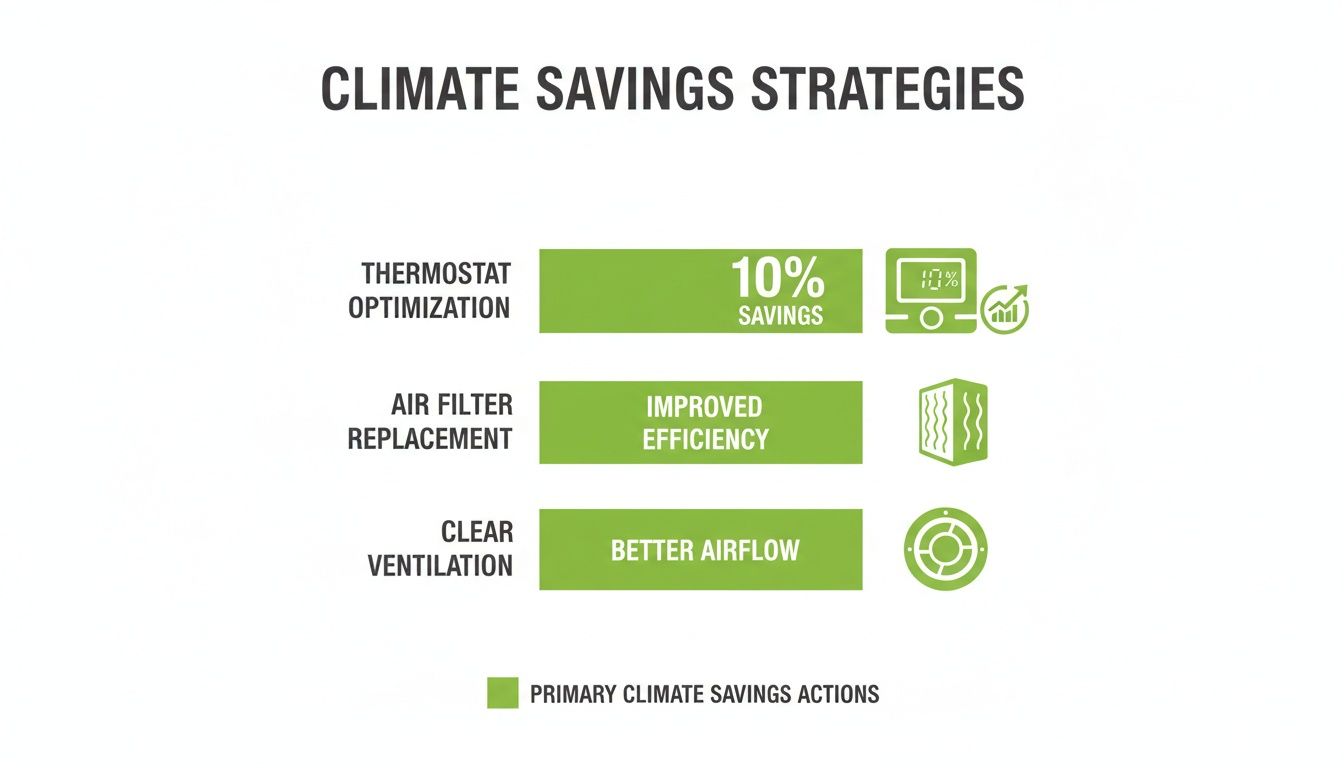
As you can see, getting the basics right—like your thermostat settings and airflow—is crucial. Each of these upgrades works in concert, creating a highly efficient home that not only saves you money but also builds lasting value.
ROI Comparison of Major Home Energy Upgrades
When deciding where to invest your money, it helps to look at the numbers. This table breaks down the typical costs, savings, and payback periods for some of the most popular energy-efficiency projects.
| Upgrade | Average Upfront Cost | Estimated Annual Savings | Typical Payback Period |
|---|---|---|---|
| Attic Insulation | $1,500 – $3,500 | $200 – $600 | 3 – 6 years |
| Tankless Water Heater | $2,000 – $5,500 | $100 – $250 | 8 – 15 years |
| Energy-Efficient Windows | $8,000 – $24,000 | $300 – $800 | 10 – 20 years |
| Residential Solar Panels | $15,000 – $25,000 | $1,000 – $2,000+ | 7 – 12 years |
While solar panels and new windows represent a significant investment, their long-term savings are substantial. For those on a tighter budget, starting with attic insulation offers one of the quickest and most impressive returns.
Take Control of Your Utility Bills and Providers
Most of us treat our utility bills as a fixed expense. The bill comes, we pay it, and we move on. But that’s a costly habit. Utility companies rely on this passive approach, and it often means you’re leaving money on the table every single month.
Taking an active role in managing your accounts is a game-changer. It starts with understanding what you’re actually paying for. Too many people just look at the total due, completely missing the story the rest of the bill is telling. Let’s change that.
Learn to Read Your Utility Statement
Your utility bill is more than just a demand for payment—it’s a detailed report on your consumption habits. Grab your latest electricity, gas, and water statements and let’s decode them. Forget the big number at the top for a second.
Instead, zoom in on these key areas:
- Usage History: Most bills have a chart showing your consumption over the last 12 months. Is your usage trending up? Can you tie that spike last July to that brutal heatwave? This data tells you where you stand.
- Rate Schedule: This is the big one. What are you actually paying per kilowatt-hour (kWh) of electricity or therm of gas? This is your baseline. Sometimes this rate changes with the season or even the time of day.
- Fees and Surcharges: Hunt down all the extra charges beyond your raw usage. These can be delivery fees, administrative charges, taxes, and other line items. While often non-negotiable, knowing what they are is crucial.
Once you know what’s “normal” for your household, you’ll be able to spot problems immediately. A sudden, unexplained jump in your water bill could be the first sign of a hidden leak. An electricity bill that feels way too high might point to a billing error or an appliance on the fritz.
Use Different Rate Structures to Your Advantage
Believe it or not, not all electricity is priced the same. Many providers offer different rate plans that can unlock serious savings if they fit your lifestyle. It’s all about using information to your advantage.
Here are a couple of common structures to look for:
- Time-of-Use (TOU) Plans: These plans are fantastic for the right person. They charge more for electricity during peak demand hours (think late afternoon and early evening) and much less during off-peak hours (like overnight). If you can shift heavy energy use—running the dishwasher, doing laundry, charging your EV—to those cheap hours, you can cut your costs without using a single watt less.
- Tiered Rates: With this model, you pay a lower rate for your first “block” of energy. Once you pass that threshold, you start paying a higher rate for every kilowatt-hour after that. This structure directly rewards conservation; the less you use, the more you save.
Switching to a Time-of-Use plan is like finding a secret discount. By simply changing when you use energy, you can unlock savings that weren’t previously available, turning your daily schedule into a money-saving asset.
Shop Around for a Better Deal
If you live in a state with a deregulated energy market, you have the power of choice. You aren’t stuck with one default provider for electricity or natural gas. You can actually shop around for different suppliers who might offer better rates, longer-term contracts, or even plans that source from renewable energy.
Treat it just like you would when shopping for car insurance. Start by checking your state’s public utility commission website. They often have tools to compare certified providers and their current offers. Don’t be afraid to pick up the phone and negotiate. Sometimes, just letting your current provider know you’re thinking about switching is enough to get them to offer you a better retention rate.
You can find more in-depth strategies in our complete guide on how to save money on bills. Taking control of who provides your energy is one of the most direct ways to lower your monthly expenses.
Have More Questions? We’ve Got Answers.
Even with the best plan, you’re bound to run into a few tricky situations when you start cutting down your utility costs. We get it. That’s why we’ve rounded up some of the most common questions we hear from people just like you.
Think of this as the final piece of the puzzle. We’ll cover everything from what you can do as a renter to whether those flashy smart home gadgets are actually worth the money.
I’m a Renter—What Can I Actually Do?
It’s easy to feel like your hands are tied when you’re renting. You can’t exactly go installing new windows or solar panels. But don’t despair! There are plenty of high-impact, non-permanent changes you can make. The trick is to focus on upgrades you can easily install and take with you when you leave.
Here’s where I’d start if I were renting again:
- Slay the “Energy Vampires”: The easiest win is swapping out any old lightbulbs for efficient LEDs. Next, grab a few smart power strips for your entertainment center and home office. This lets you kill all standby power to your devices with one click, stopping that slow, silent drain on your wallet.
- Upgrade Your Shower: A low-flow showerhead is a fantastic, cheap investment. They’re simple to screw on (just remember to save the original!) and can make a serious dent in your hot water usage, which saves both water and the energy used to heat it.
- Master Temperature Control: Blackout curtains are your best friend. They act as another layer of insulation over drafty windows, keeping the sun’s heat out in the summer and your cozy warmth in during the winter. A few simple draft stoppers for the bottom of your doors can make a big difference, too.
And remember to be a proactive tenant. If you spot a dripping faucet or feel a major draft, let your landlord know. These are maintenance issues they are typically responsible for, and getting them fixed is a win for both of you.
Are Smart Home Devices Really Worth the Money?
Yes, but with a big caveat: you have to use them strategically. Just loading up your house with smart gadgets won’t do much. Their real power comes from automating your savings and giving you a clear picture of where your energy is actually going.
The smart thermostat is the poster child for this. It does way more than a programmable one by actually learning your family’s routine and adjusting the temperature automatically when you’re out or asleep. These devices can consistently trim heating and cooling costs by 10-15%. For most homes, that means it pays for itself in under two years.
Smart plugs are another great, low-cost way to get started. They let you turn things off from anywhere, but their secret weapon is energy monitoring. Plug your old chest freezer or entertainment center into one, and it will tell you exactly how much power it’s guzzling. This is the perfect way to identify your home’s worst energy hogs and decide what to unplug or upgrade first.
The true power of smart home technology isn’t just convenience; it’s the data. By showing you exactly where your energy is going, these devices empower you to make targeted, informed decisions that lead to real, sustainable savings.
Where Can I Find Rebates for Energy-Efficient Upgrades?
This is one of the most important steps people miss. Before you buy any major appliance, you absolutely have to hunt for rebates and tax credits. Stacking these incentives can slash the upfront cost and make a pricey upgrade a no-brainer.
Start your treasure hunt in these two places:
- Your Utility Company’s Website: This should always be your first stop. Utilities often have their own exclusive rebates for customers who buy specific Energy Star-rated appliances, add insulation, or install things like smart thermostats.
- The DSIRE Database: The Database of State Incentives for Renewables & Efficiency (DSIRE) is an incredible, comprehensive resource. It catalogs pretty much every federal, state, and local program out there, from tax credits to grants and special loans.
The real magic happens when you combine them. You might find a federal tax credit for a new heat pump and discover your local utility is offering a separate rebate for the very same purchase. That’s how you “double-dip” and maximize your return.
Help! My Utility Bill Suddenly Spiked. What Do I Do?
That heart-sinking moment when you open a bill that’s double what you expected—we’ve all been there. Don’t panic. A little methodical detective work will almost always uncover the culprit.
First, analyze the bill itself. Compare your usage (the kilowatt-hours or therms), not just the final dollar amount, to the same month last year. Was there an unusual heatwave or cold snap that had your HVAC system working overtime? Did you miss an announcement about a rate increase?
If the bill doesn’t give you any obvious clues, it’s time to do a walkthrough of your home. Check for these common offenders:
- Hidden Leaks: Look for dripping faucets and listen for a toilet that constantly runs. A running toilet can waste hundreds of gallons a day. If you can’t hear it, put a few drops of food coloring in the tank, wait 15 minutes, and see if any color appears in the bowl without flushing.
- Failing Appliances: Is your fridge or freezer door sealing tightly? Is the water heater making weird noises or showing signs of a leak at the base? A malfunctioning appliance can become a massive energy hog overnight.
- Billing Errors: It happens. If you can’t find a logical reason for the spike, give your utility company a call. Politely ask them to confirm if your latest bill was based on an actual meter reading or just an “estimate.” They can also review your usage history with you to help pinpoint the irregularity.
By tackling it step-by-step, you’ll find the root of the problem and get your bills back under control.
At Collapsed Wallet, we’re dedicated to giving you the clear, practical guidance you need to manage your money with confidence. For more actionable strategies on everything from budgeting to smart spending, explore more at our website.
